Black Diamonds: Myths, Facts and Fine Jewelry Expertise
Key takeaways from this guide:
Black diamonds have the same hardness as white diamonds, but differ in their luster, appearance and quality criteria. This guide explores the key characteristics of black diamonds, D.Bachet's selection standards and the specific expertise required to set them.
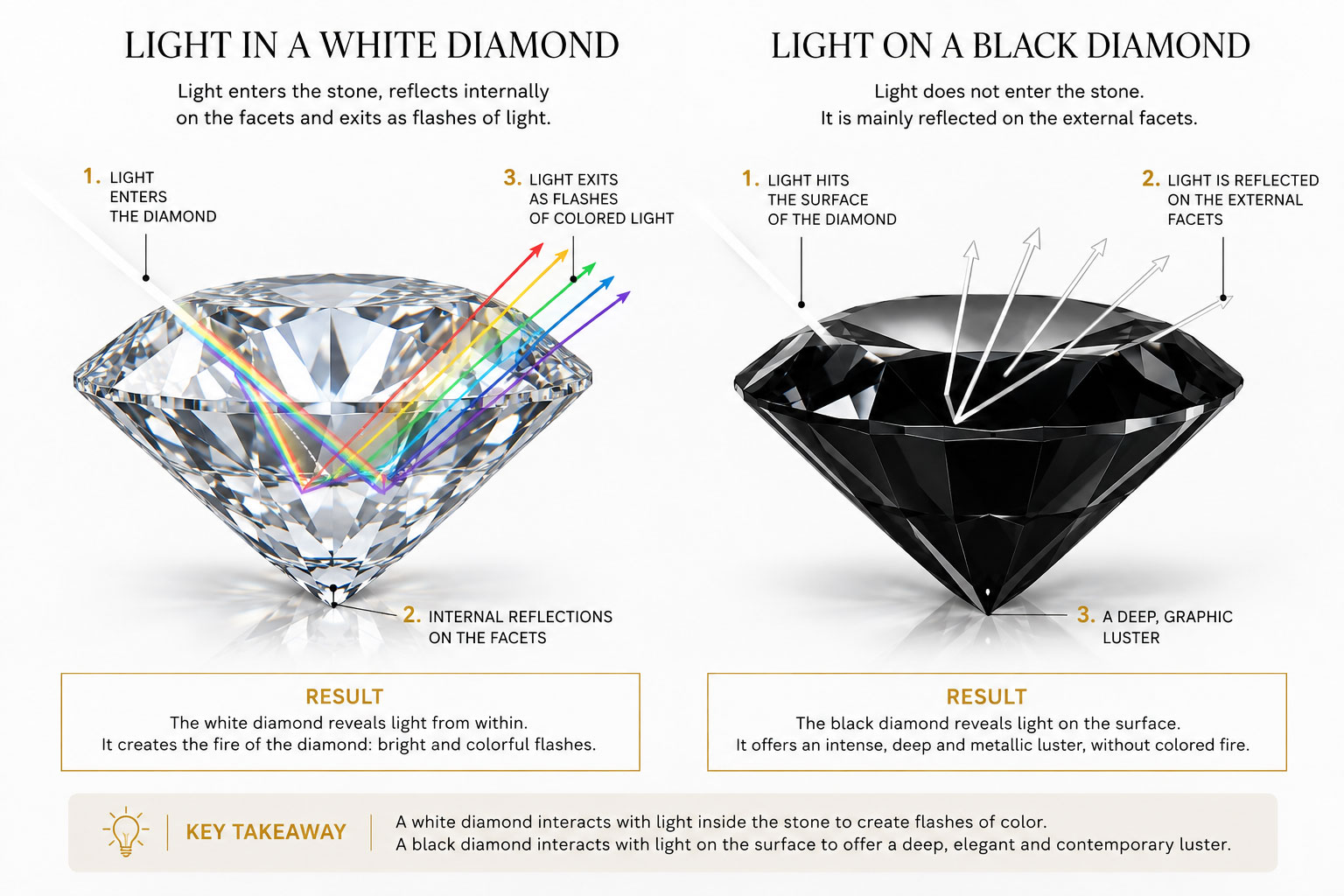
- A deep, opaque luster: Unlike white diamonds, which disperse light, black diamonds primarily reflect it from the surface of their facets, creating a deep, almost metallic appearance.
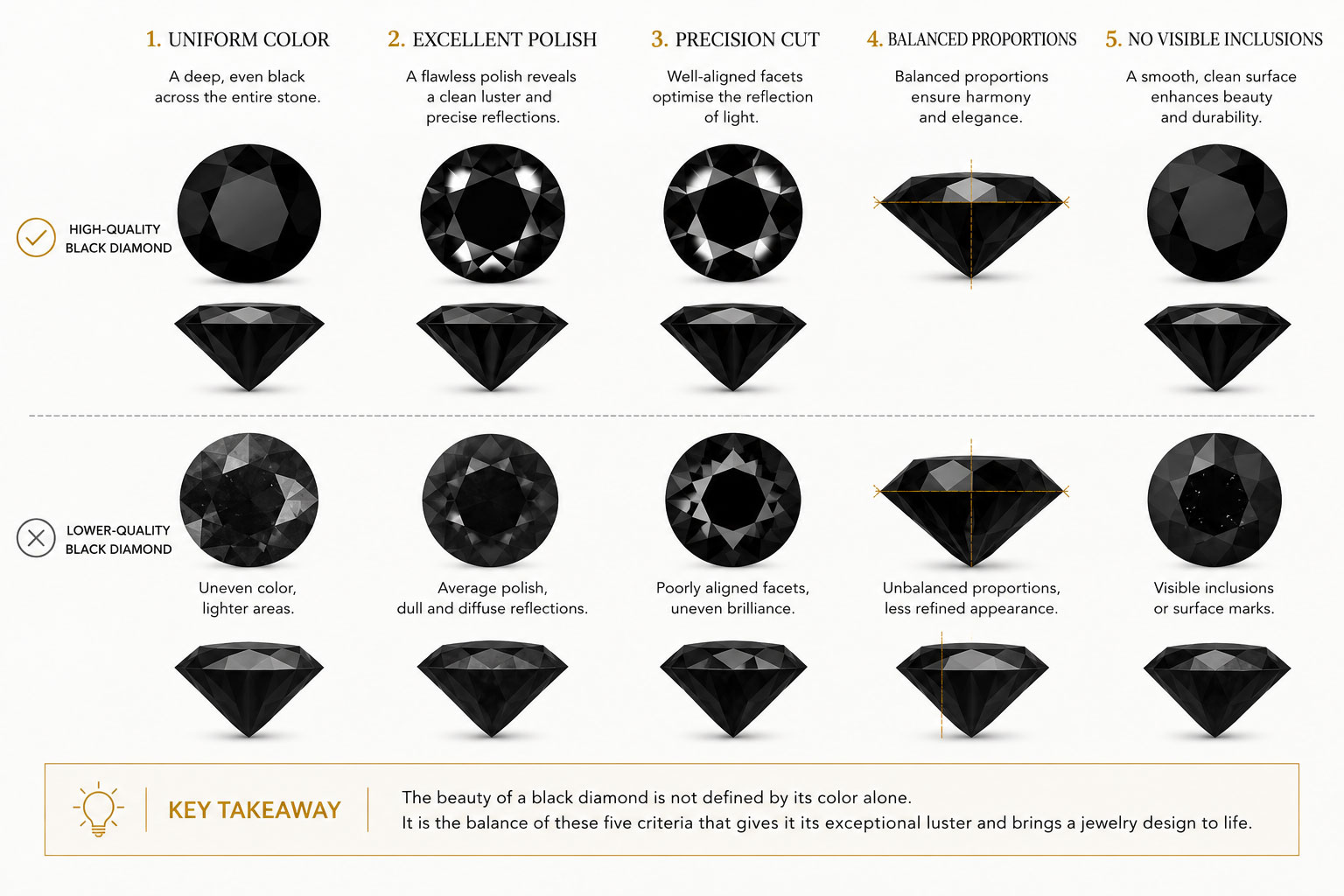
- AAA-grade selection: The opaque appearance of a black diamond makes even the slightest imperfection immediately visible. Our workshop exclusively selects AAA-grade black diamonds for their uniform color, excellent polish and impeccable visual appearance.
- Hand-set with precision: In our French workshop, each stone is positioned with meticulous precision, defining the lines of our settings crafted in 950 platinum or 18k gold.
At the heart of D.Bachet's identity, the black diamond holds a special place. Its intense color, graphic appeal and distinctly contemporary character have made it a signature of many of our creations.
Yet black diamonds remain relatively little known. Are they real diamonds? Are they natural? What gives them their black color? Do they sparkle like white diamonds? And why are there such significant differences in quality and price?
In this guide, we answer the most frequently asked questions to help you better understand the characteristics, quality and distinctive features of black diamonds.

Is a black diamond a real diamond?
Yes, absolutely.
Black diamonds share the same fundamental physical properties as white diamonds. Composed of crystallized carbon, they rank 10 on the Mohs scale, the highest level of hardness found in a natural gemstone.
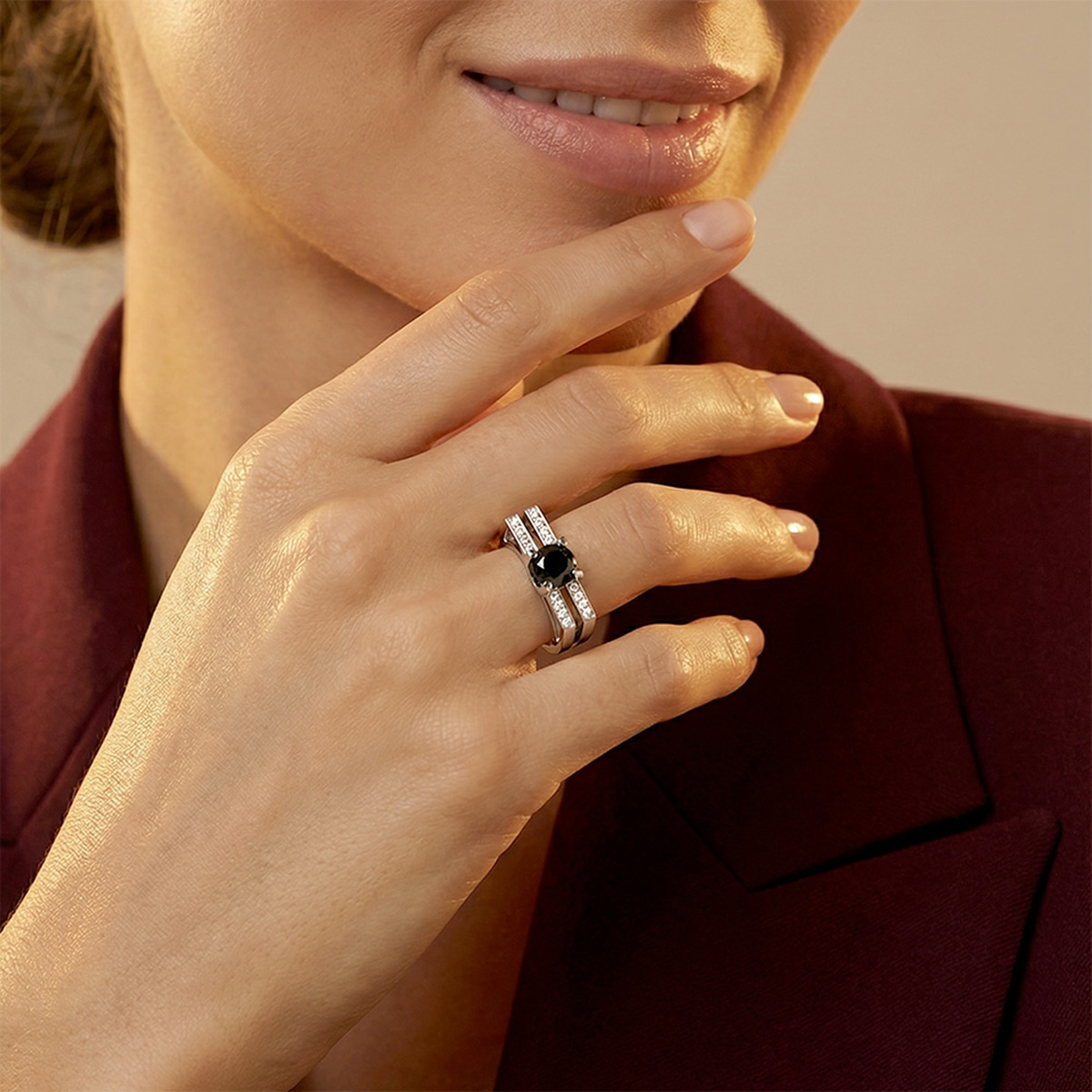
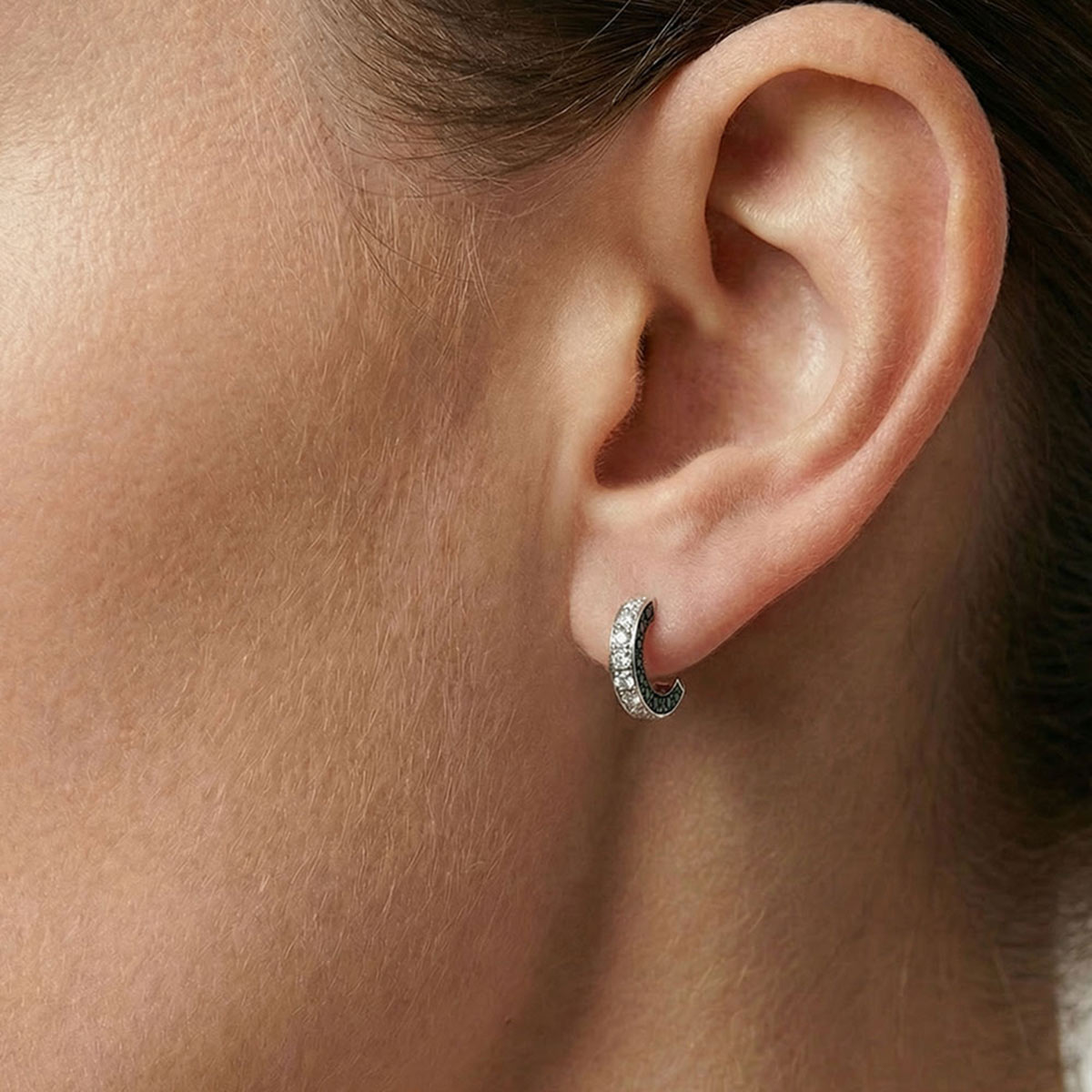
They offer the same resistance to everyday wear, making them perfectly suited to jewelry designed to be worn regularly, whether an engagement ring, a ring, a signet ring, a wedding band, a pendant, a bracelet or earrings.
The difference between black and white diamonds lies not in their fundamental nature, but in their optical properties and the way they interact with light.
What gives a black diamond its color?
Naturally black diamonds do exist, but they are extremely rare. Their highly heterogeneous internal structure makes them particularly challenging to cut and making their use in jewelry more limited.
For this reason, most black diamonds used in jewelry today are genuine natural diamonds whose color has been enhanced and made uniform through a traditional heat treatment.
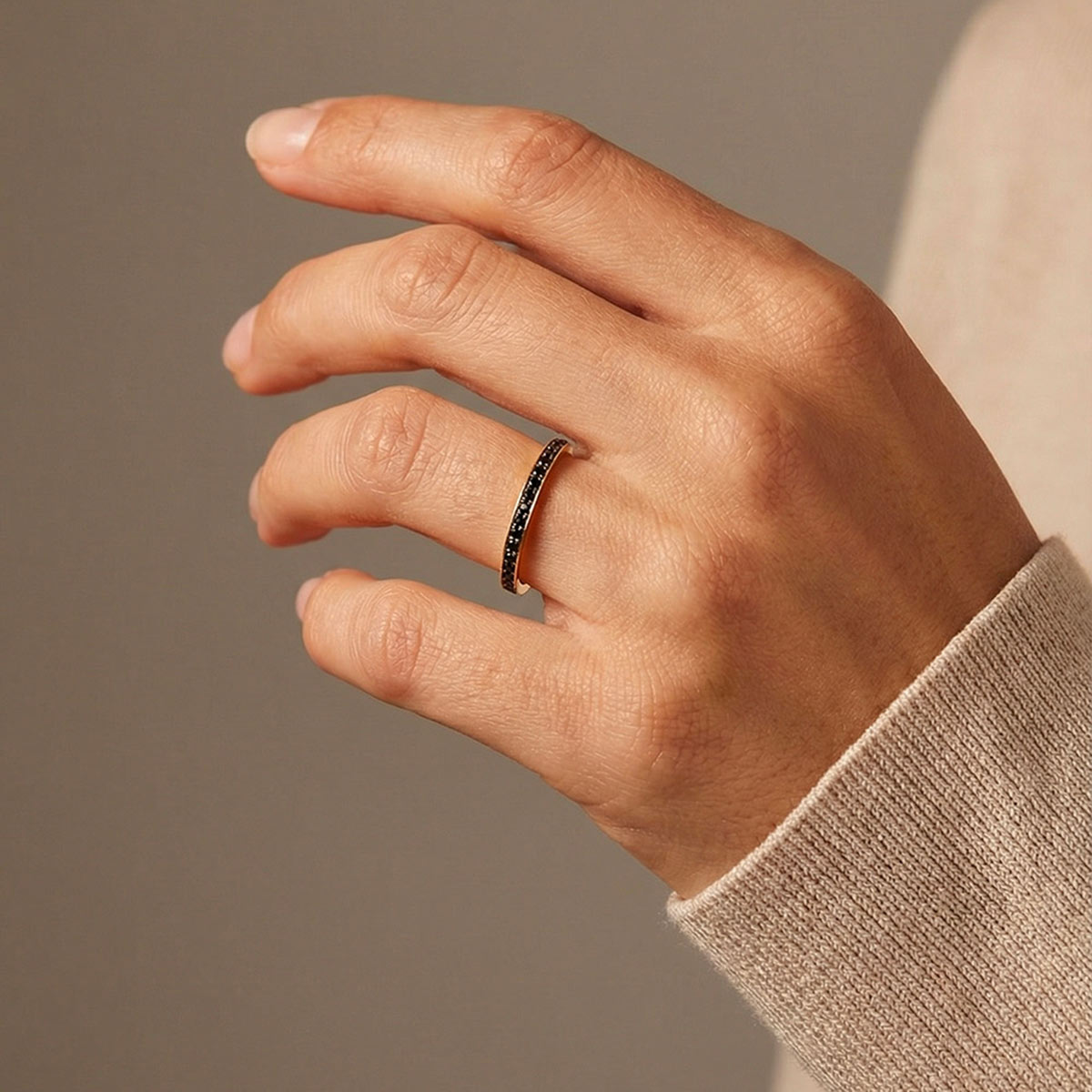
This process produces a deep, even and stable black color while preserving the diamond's physical properties: its crystallized carbon structure and its maximum hardness of 10 on the Mohs scale. This intense, uniform color is what allows us to achieve the precise graphic effect of our diamond pavé settings.
When a stone is submitted for certification, this treatment is simply disclosed by independent gemological laboratories.
A D.Bachet creation
D.Bachet has notably created a high jewelry piece featuring a naturally black 8.85-carat diamond. Discover the characteristics of this rare stone and how our workshop approached its setting and design.
Discover this high jewelry creation
Do black diamonds sparkle like white diamonds?
Not in the same way.
White diamonds are prized for their fire and their ability to disperse light into flashes of color.
Because of their opacity, black diamonds interact with light primarily at the surface.
Their distinctive luster comes from light reflecting off the highly polished surface of their facets.
The result is a deeper, more graphic, almost metallic luster. Rather than replicating the sparkle of a white diamond, a black diamond offers a distinctly different aesthetic - more contemporary and architectural - which gives our black diamond creations their distinctive character.
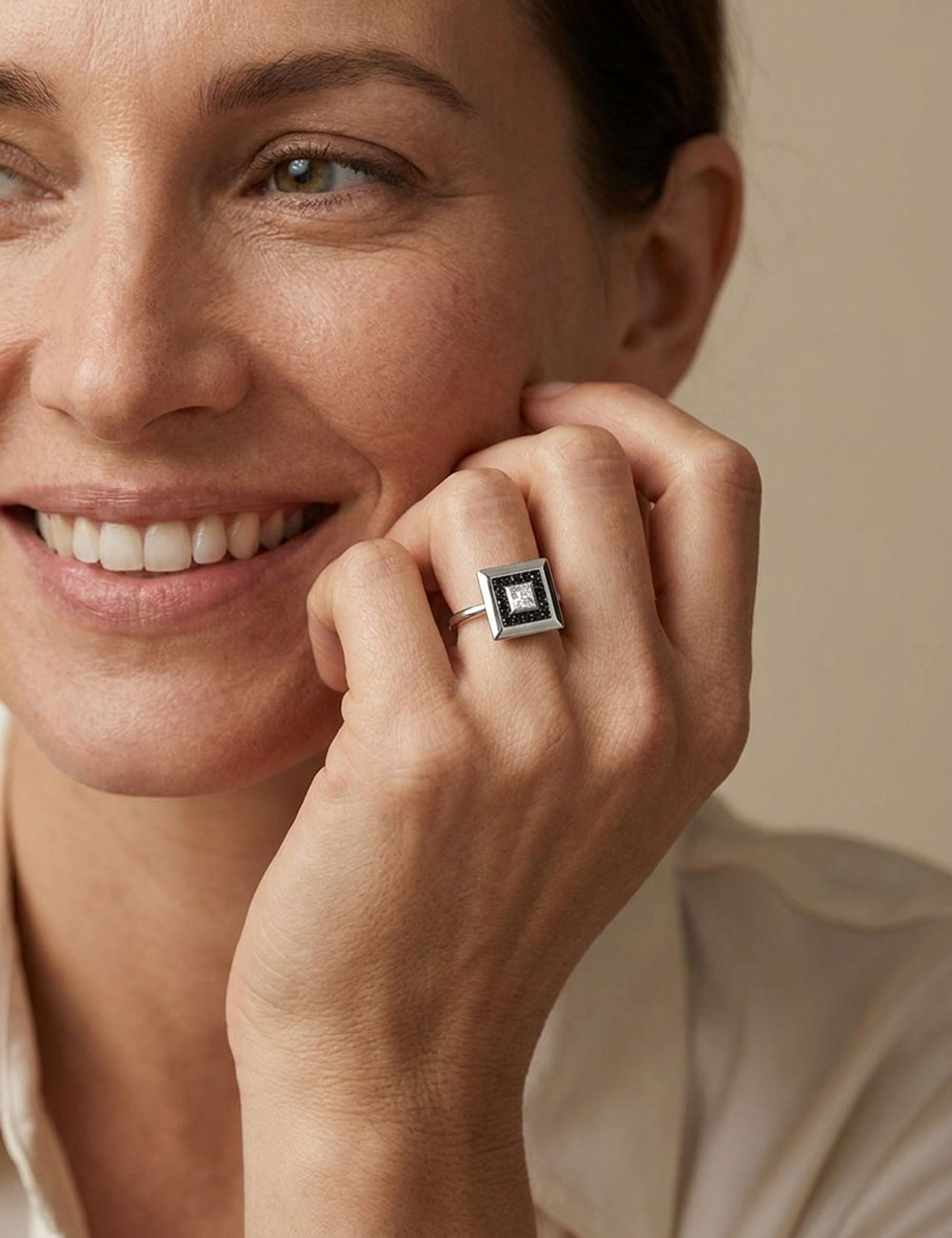
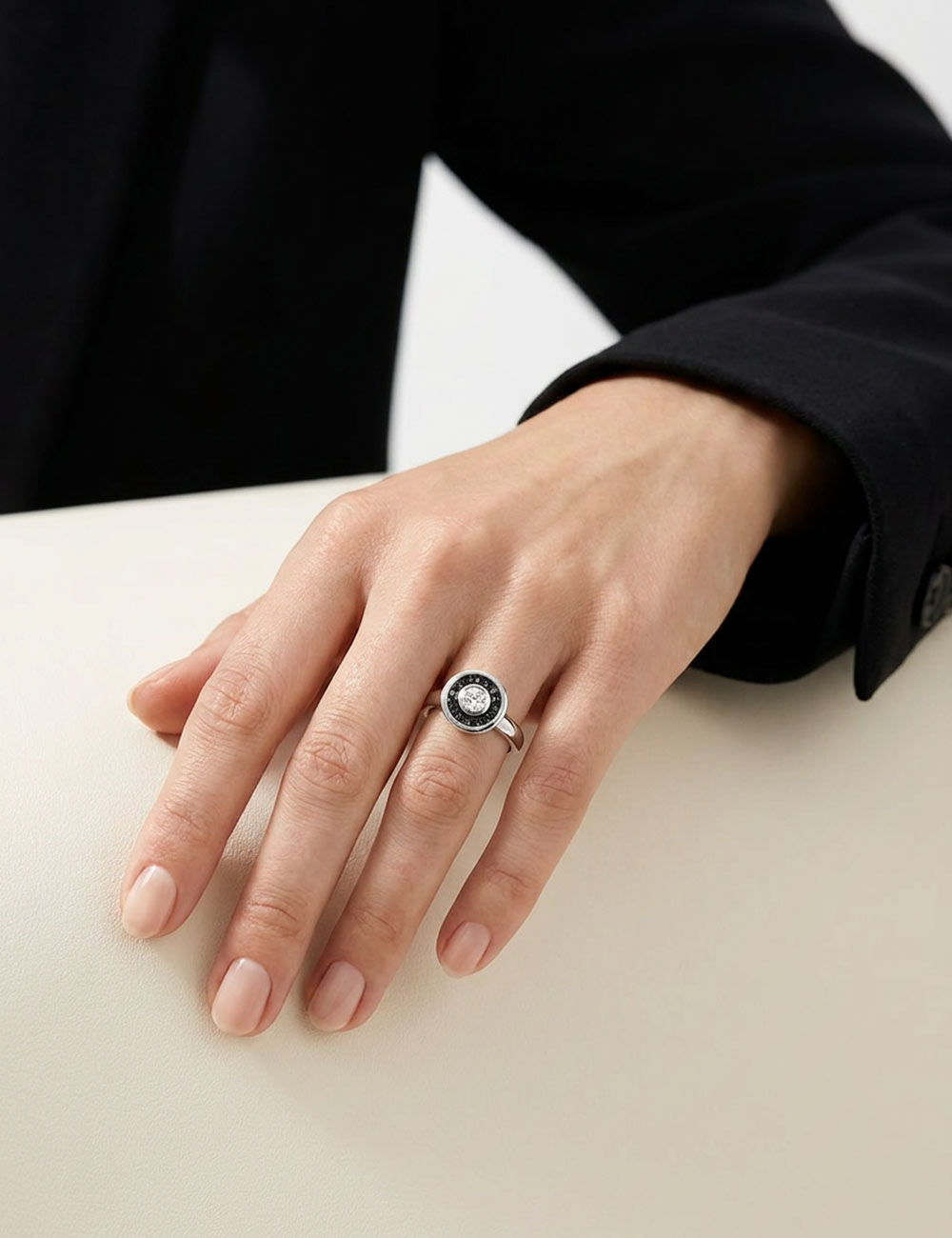
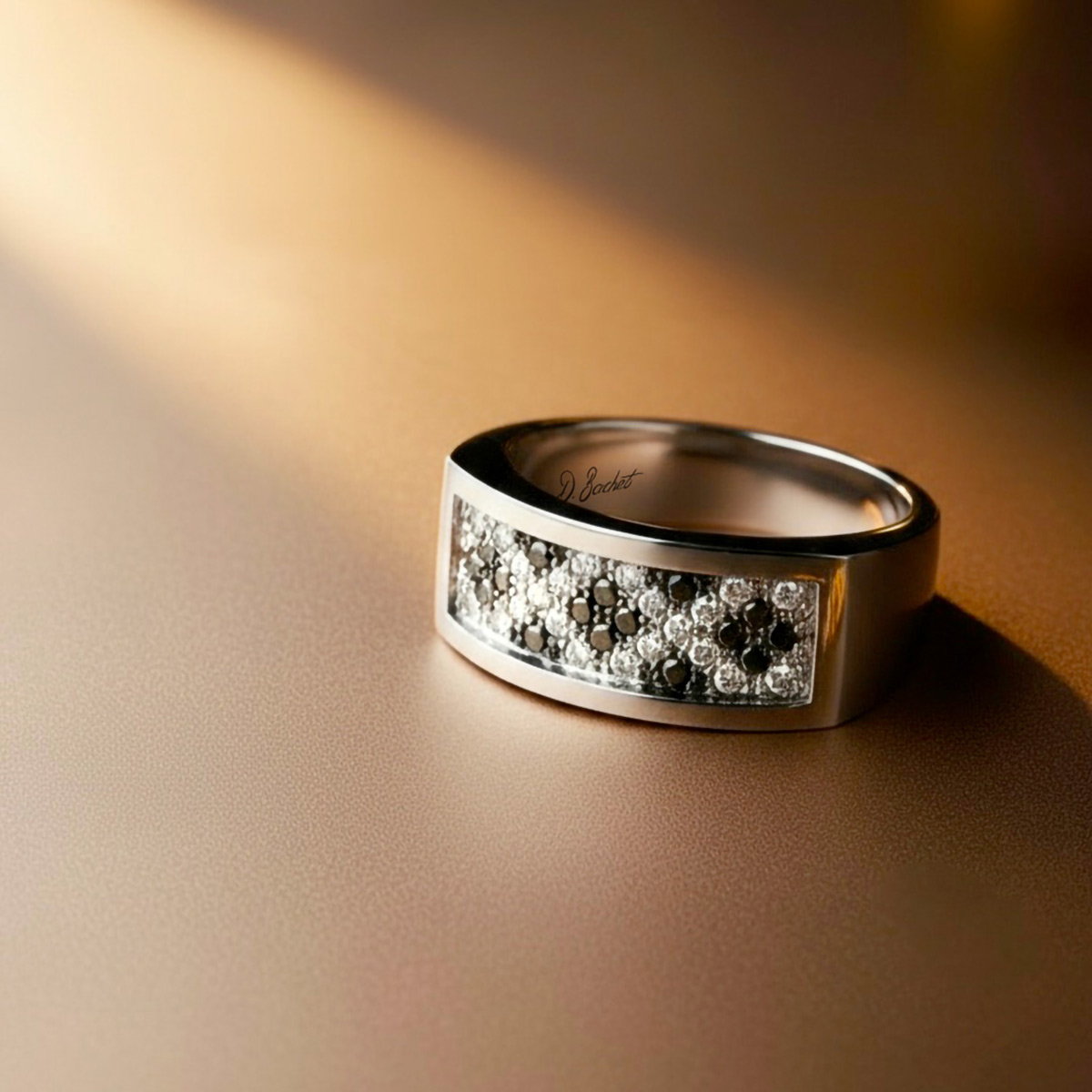
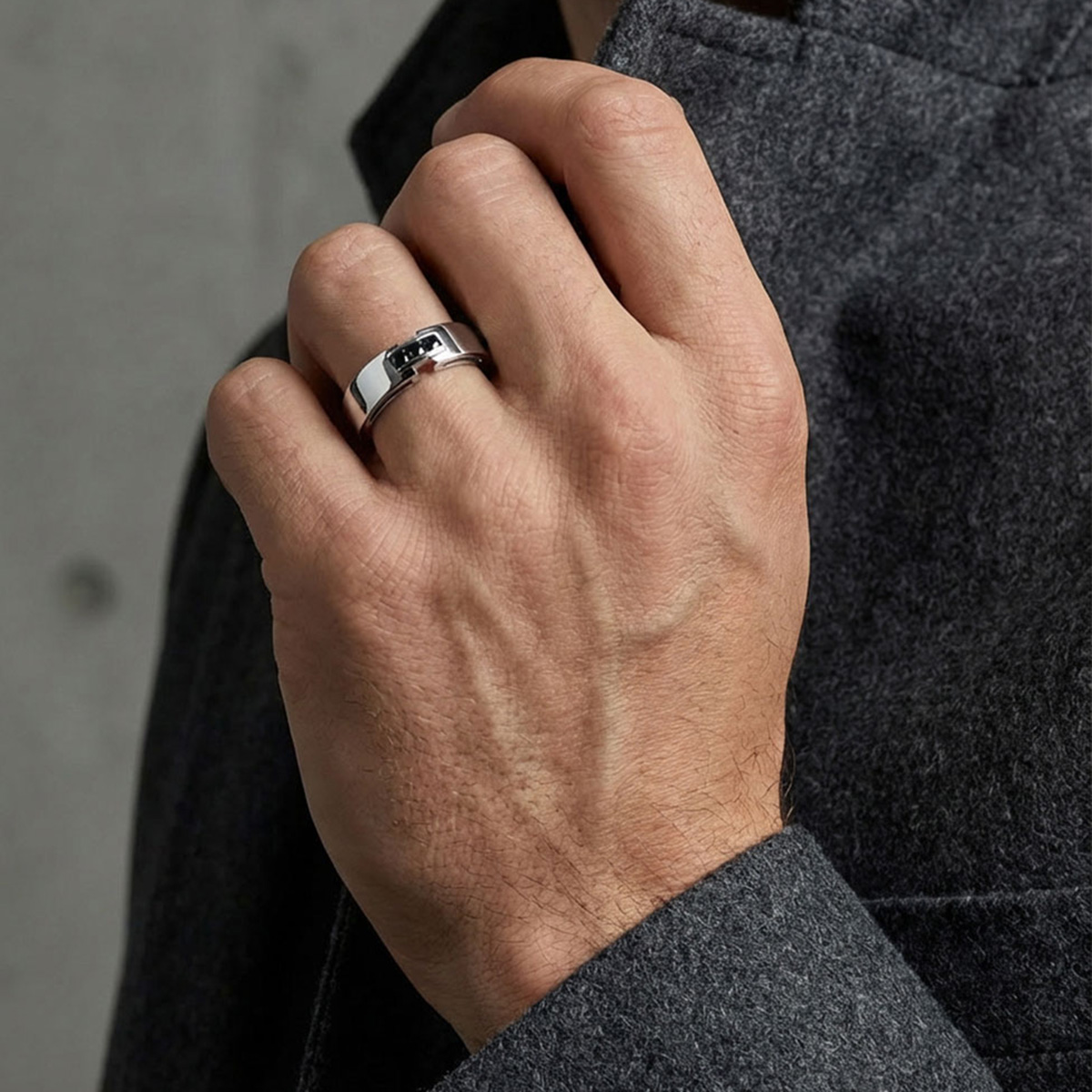
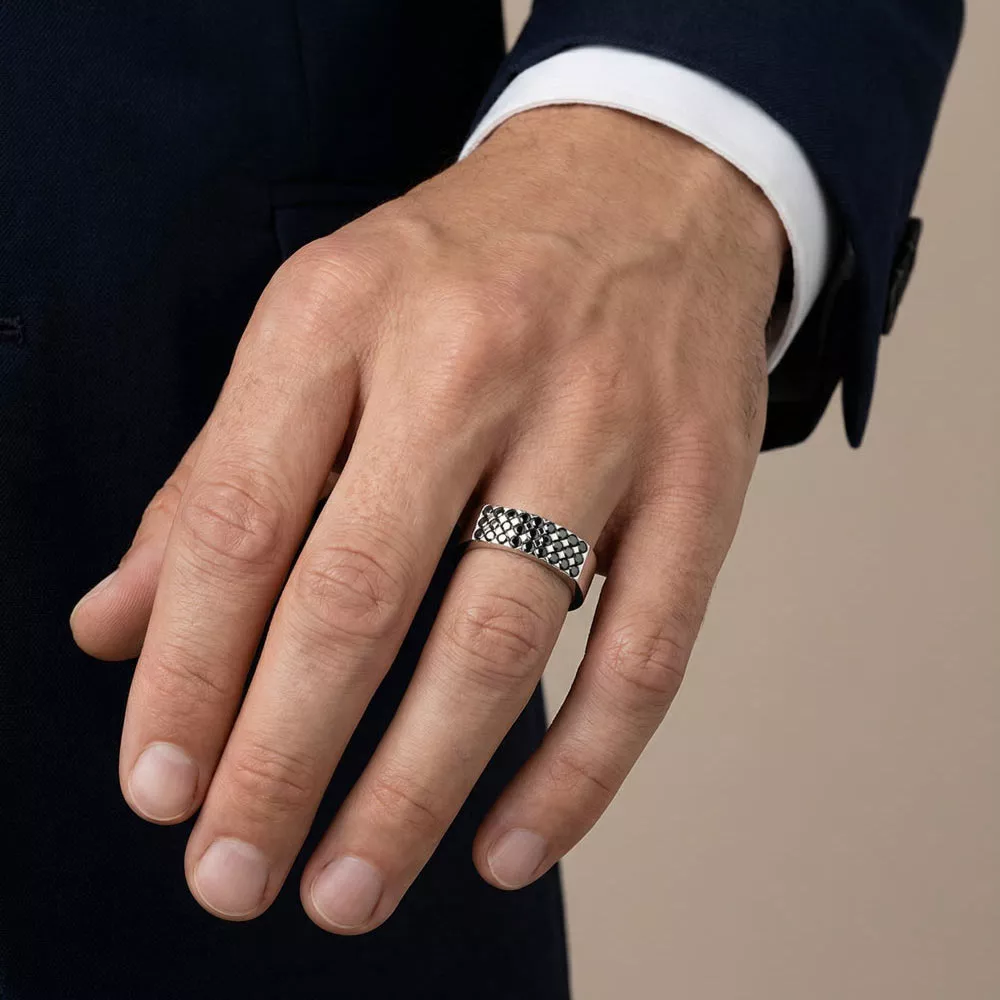
This quality also makes black diamonds particularly suited to contrasting combinations within our collections of wedding bands and women's and men's rings, where the mirror-like luster of black diamonds meets the fire of white diamonds.
Why is the cut of a black diamond so important?
The opacity of a dark stone leaves no room for approximation: a black diamond immediately reveals the quality of the work behind it.
A stone with irregular facets or an imperfect polish can quickly appear dull.
By contrast, when each facet is precisely cut and polished, light reflects intensely from the surface, creating the deep luster characteristic of the finest black diamonds.
At the D.Bachet workshop, each stone is selected according to exacting criteria, including visual consistency, quality of cut, polish and color uniformity. These standards are an integral part of our French jewelry craftsmanship.
We select only AAA-grade black diamonds to ensure perfect visual harmony across our jewelry creations.

L'engagement éthique de la Maison D.Bachet
Au-delà de la perfection technique de la taille, notre atelier s'engage à sélectionner chaque diamant naturel et chaque métal précieux (or 18 carats et platine 950) dans le respect de critères éthiques, sociaux et environnementaux rigoureux.
Why do some black diamonds look better than others?
At first glance, two black diamonds may appear very similar.
Yet a trained eye can immediately identify several essential quality factors: the uniformity of the black color, the quality of the polish, the precision of the cut, the consistency of the proportions and the absence of visible surface imperfections.
These factors directly influence the overall appearance of the finished piece.
Black diamond setting: precision and craftsmanship
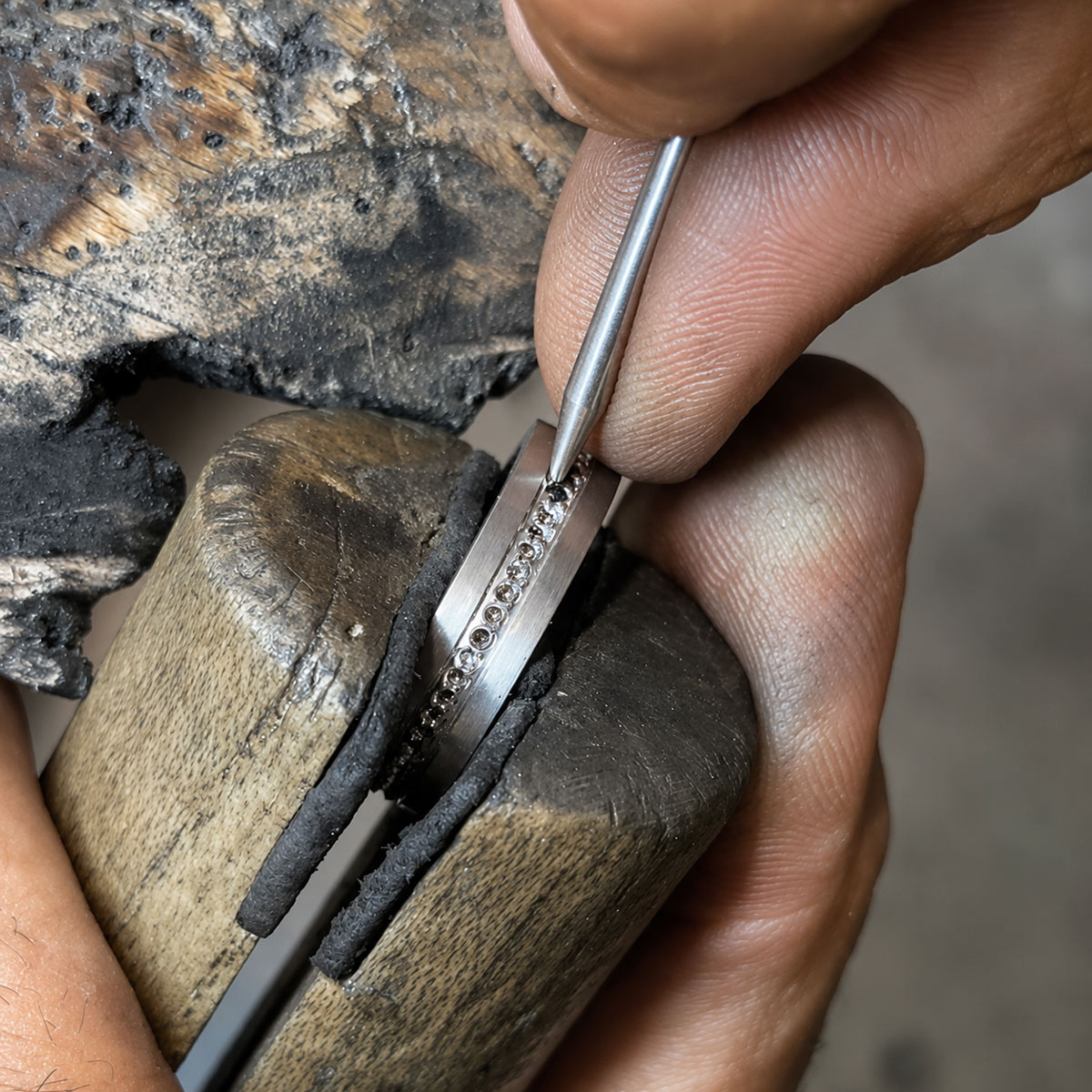
Setting black diamonds requires exceptional precision.
The quality of the stone alone does not determine the final result. The skill of the setter plays an essential role in bringing out the character of each diamond.
In our French workshop, stone setting is an integral part of the jewelry design. Each diamond is positioned with precision to preserve the balance of the lines, respect the proportions of the design and fully reveal the character of the stone.
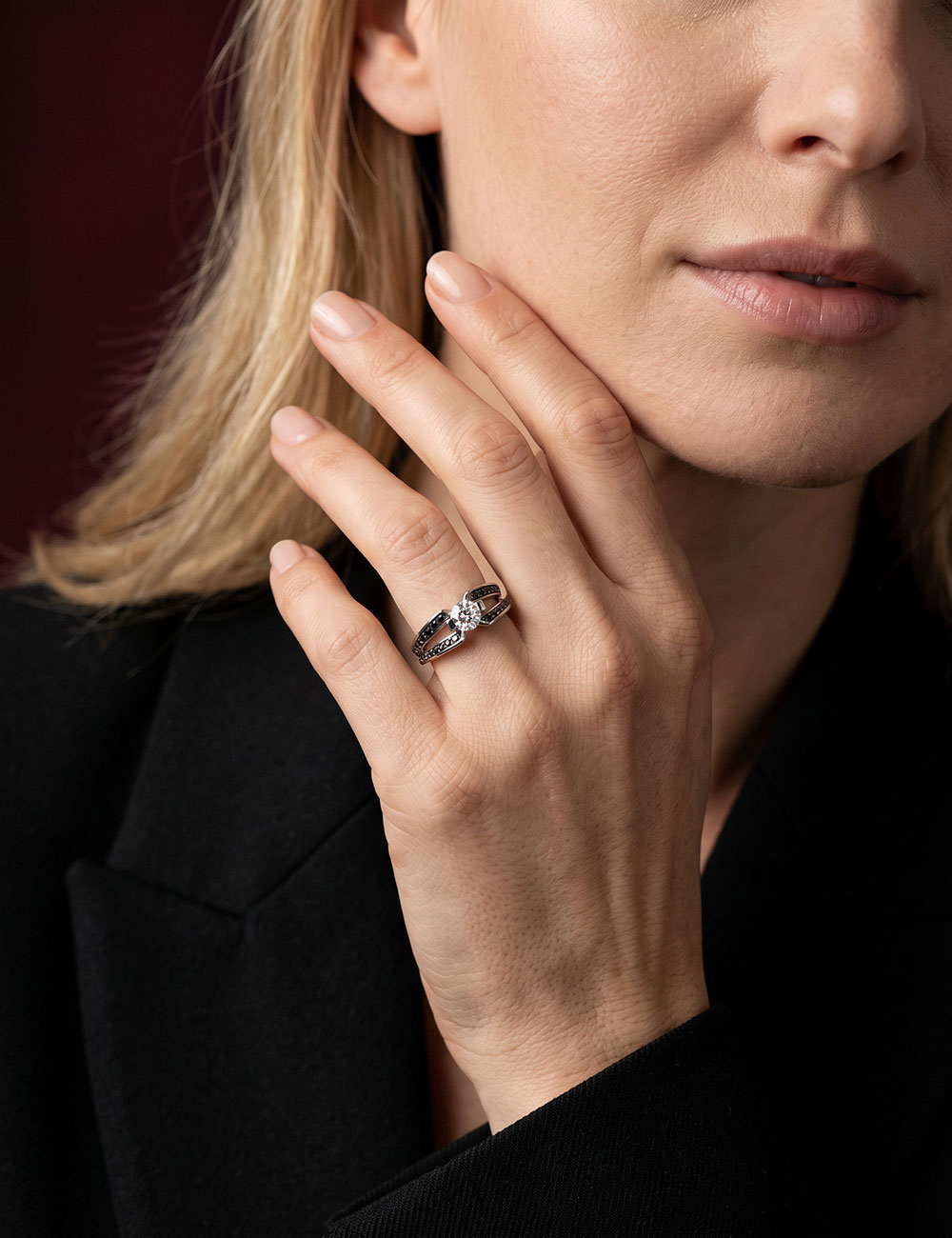
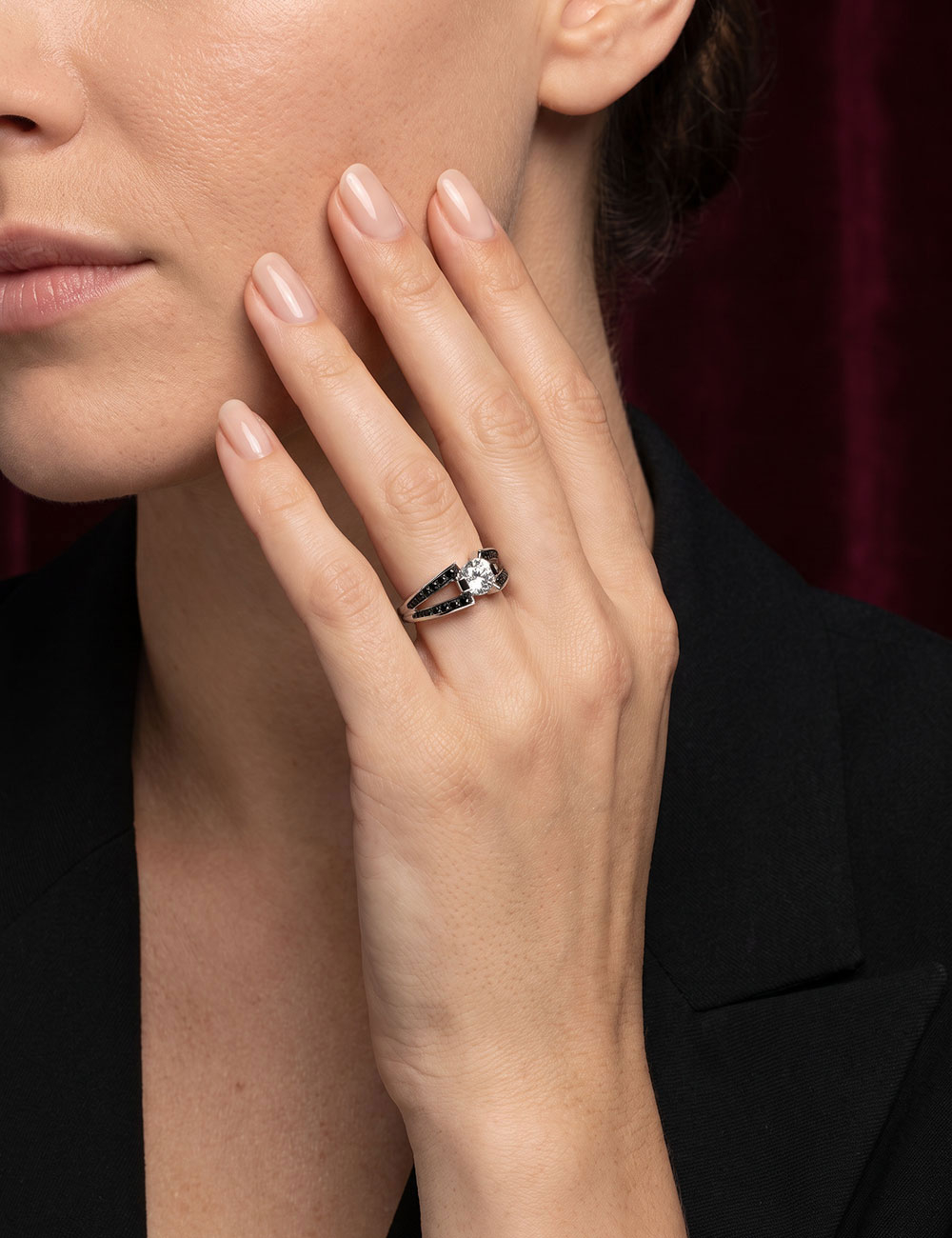
When a design features diamond pavé, the stones are carefully matched for consistency before being set with meticulous precision.
Uniformity in diameter, color and orientation creates a harmonious surface that catches light evenly. This attention to detail contributes to the distinctive identity of each of our jewelry creations.
Why combine black and white diamonds?
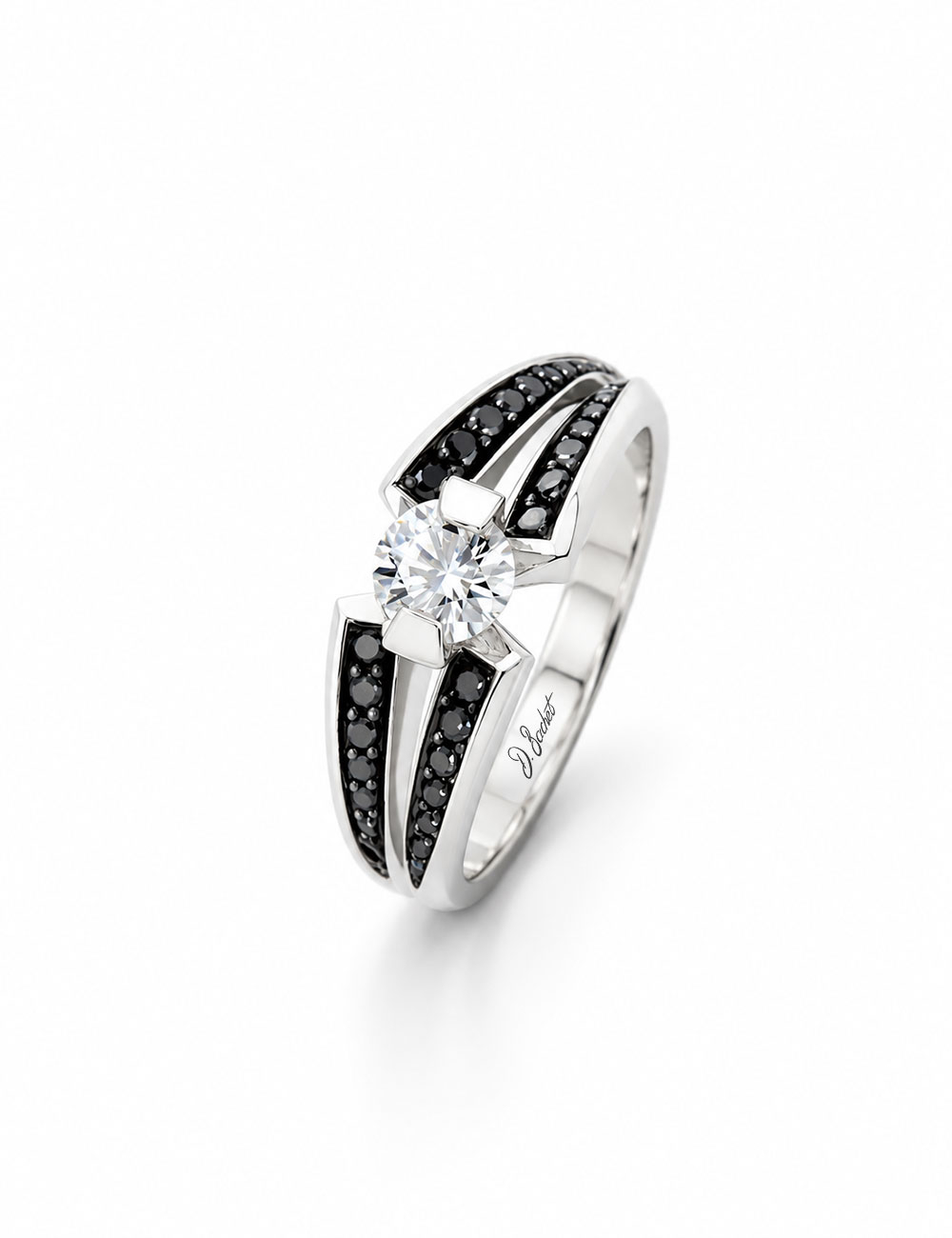
The combination of black and white diamonds is one of D.Bachet's distinctive design codes.
This contrast is used to emphasize the lines, volumes and architecture of our creations.
White diamonds, selected according to our natural diamond selection criteria, bring light and brilliance, while black diamonds add depth and enhance the visual contrast.
Featured across many of our creations, this signature combination is expressed in 950 platinum as well as 18k white, yellow and rose gold.
Discover the BlackLight Collection
Are black diamonds certified?
Like white diamonds, larger black diamonds may be accompanied by a certificate issued by an independent gemological laboratory, such as the GIA or HRD. The certificate details the characteristics of the stone and provides its identification.
Smaller black diamonds used in the pavé setting of a ring or pendant, however, are generally not certified individually. In this case, quality depends above all on the jeweler's selection standards.
Explore further
For more than twenty years, black diamonds have played a central role in D.Bachet's identity. Discover how this stone became one of our distinctive design codes through our collections and our history.
Discover black diamonds at D.Bachet
Choosing a distinctive piece of jewelry
Choosing a black diamond is not about seeking the same brilliance as a white diamond.
It is about choosing a different aesthetic. More graphic, more contemporary and distinctly bold.
At D.Bachet, every black diamond is selected according to the same exacting standards as our white diamonds, before becoming part of a piece designed and handcrafted in our French workshop.
Beyond the stone itself, it is the balance between diamond quality, precision setting and the design of the piece that creates jewelry made to stand the test of time.
Considering a diamond creation?
Discover our jewelry collections or book an appointment in Nîmes, Paris or Lyon to discuss your project with our Maison.