


 Français
 English
How to Choose an Engagement Ring: The Complete Guide




blanc-0-50-ct-diamants-noirs-evidence.jpg)



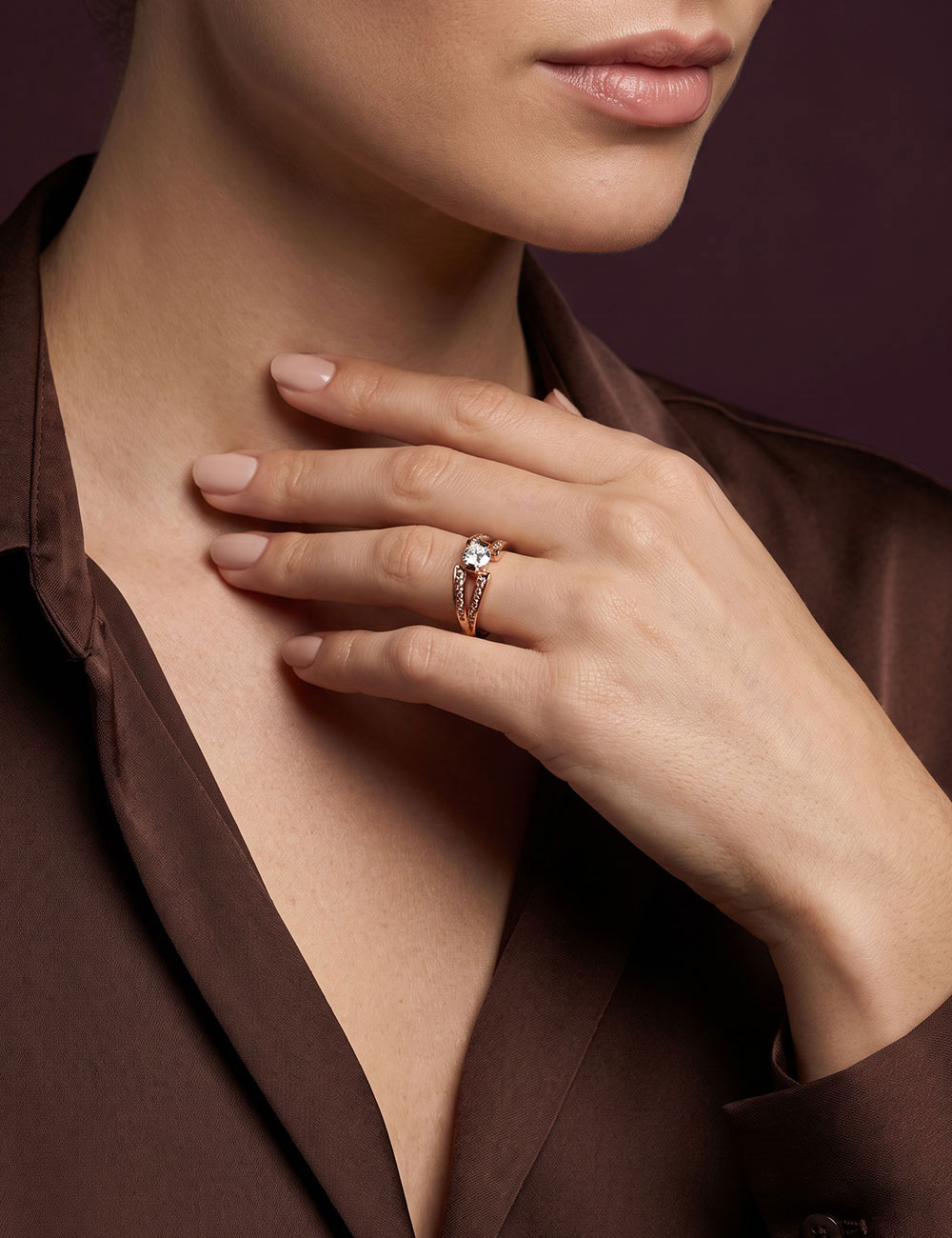
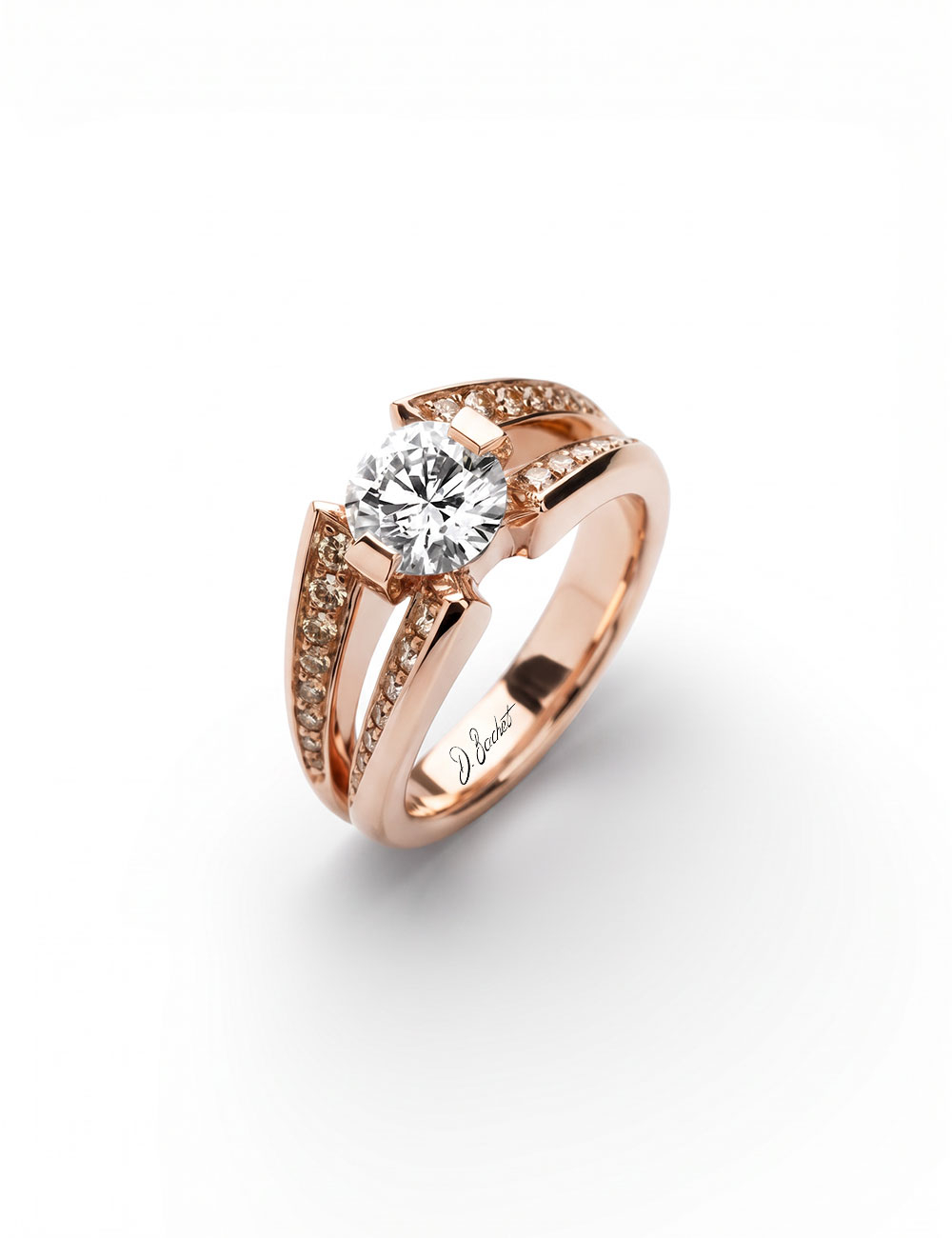
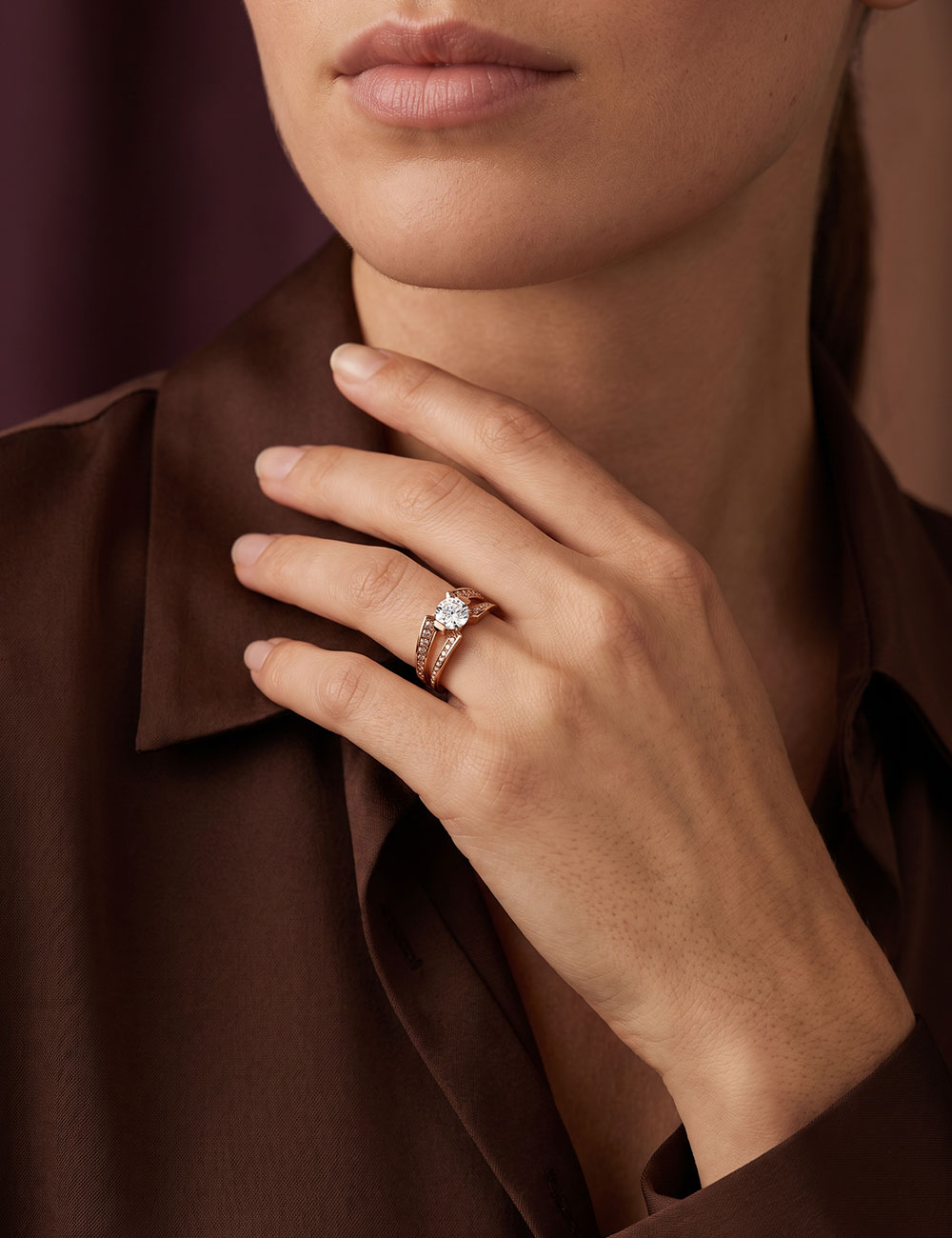

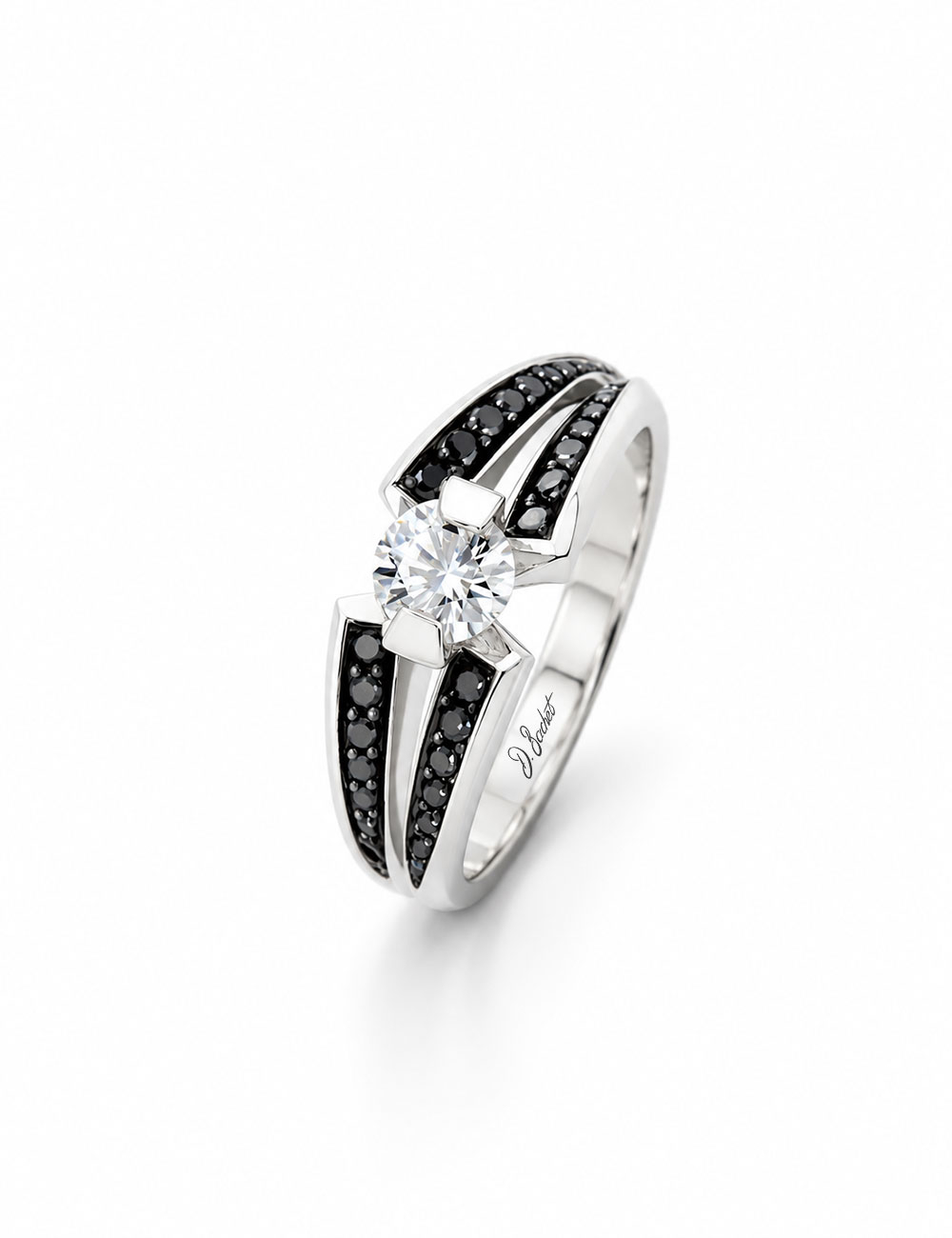






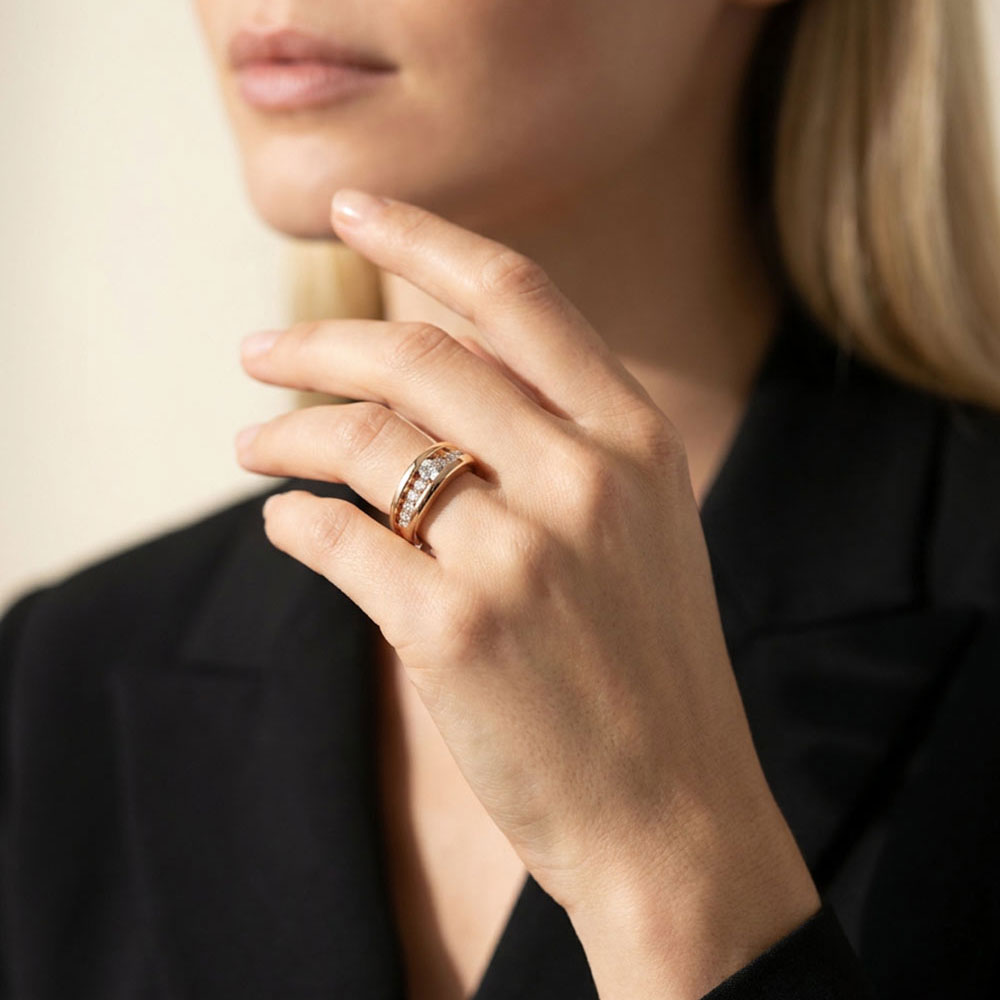
A marriage proposal marks a special moment in life. The engagement ring that accompanies it becomes a visible symbol of that promise.
Style, precious metal, diamond, setting… every detail contributes to the balance of the design.
This guide will help you understand the essential criteria and refine your choice before discovering our collection of gold and platinum engagement rings.
When it comes to the most beautiful engagement rings, there is no single answer: the most beautiful ring is often the one that reflects the personality of the person wearing it and the meaning the couple wishes to give it.
An engagement ring is traditionally given during a marriage proposal. It is most often distinguished by a central diamond, known as a solitaire in its most classic form.
Depending on the design, the central diamond may be complemented by additional diamonds set along the band. This is known as a diamond-set solitaire.
The engagement ring symbolizes the promise of commitment.
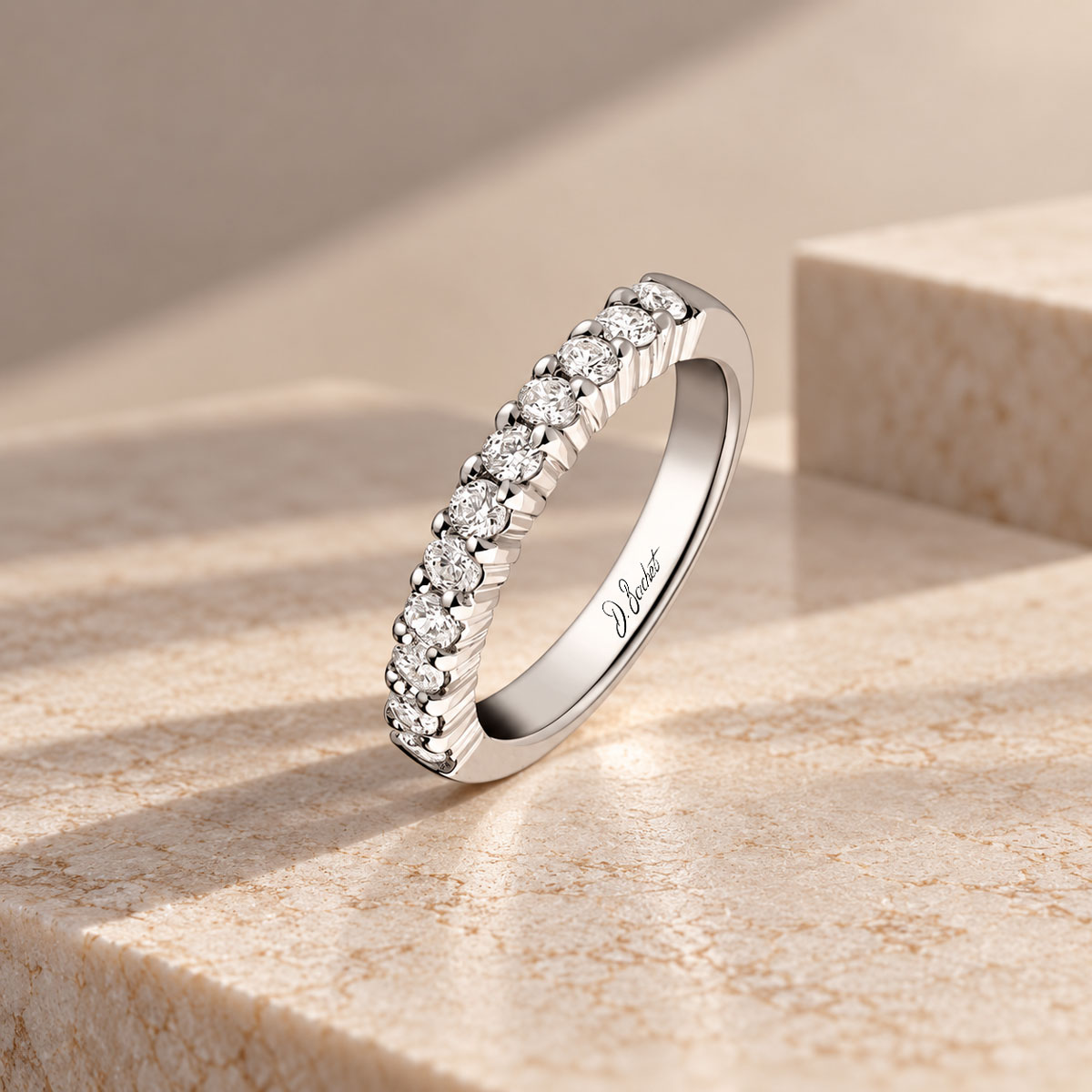
The wedding band, or wedding ring, is exchanged during the wedding ceremony. This ring symbolizes the couple’s union and mutual commitment.
Traditionally designed as a simple band, wedding bands are now available in a variety of styles: crafted in gold or platinum, set with diamonds or designed with a more understated aesthetic, depending on individual preferences.
Unlike an engagement ring, which generally features a central diamond, a wedding band is characterized by a more continuous design, created to be worn either on its own or alongside an engagement ring.
To explore the subject further, discover our guide to choosing a women’s wedding band.
The style of a diamond engagement ring defines its character. Whether classic, contemporary or more structured, the design influences the overall look of the ring and the way the diamond is showcased. Among the most popular styles is the solitaire, set on a slender or wider band and sometimes complemented by pavé-set diamonds.
Other designs feature more architectural lines, playing with volume, contrast and proportions. The choice of style depends both on the desired aesthetic and on the personality of the person who will wear the engagement ring.
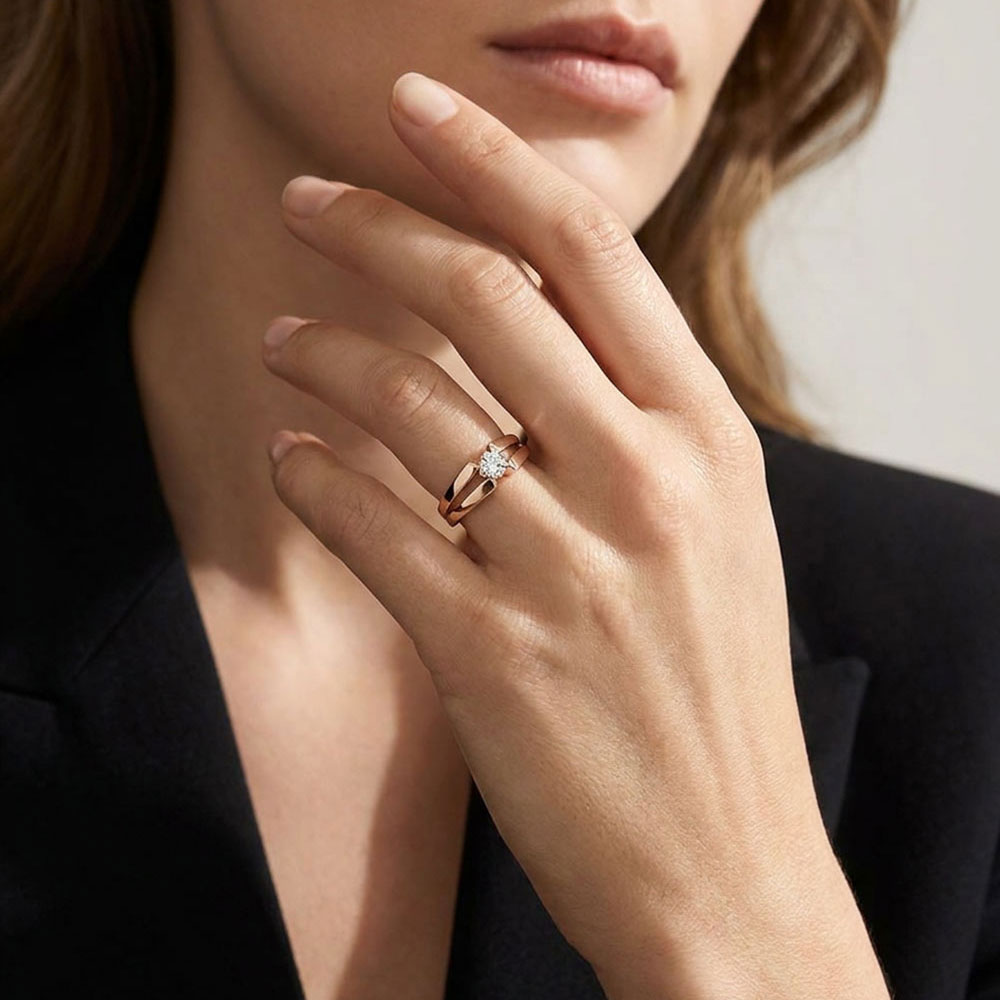
The solitaire is one of the most popular styles for an engagement ring. It features a central diamond showcased by a clean, refined setting.
This design draws attention to the diamond, highlighting its cut and brilliance. Depending on the setting - crafted in 950 platinum, 18k yellow gold or 18k rose gold - the overall look can feel more traditional or more contemporary.
The structure of the setting plays an essential role in showcasing the diamond and creating the overall balance of the ring. Discover our collection of gold and platinum engagement rings.
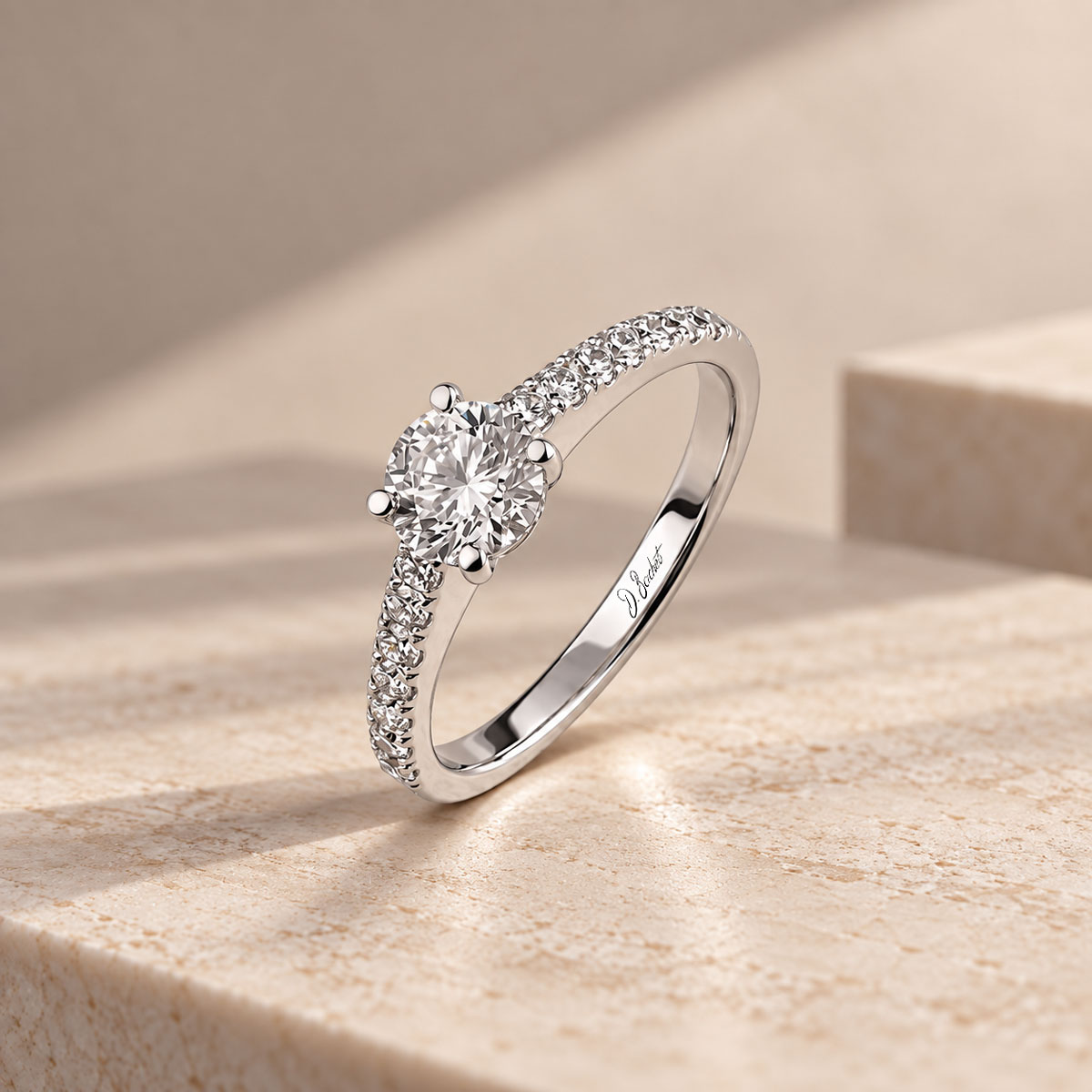
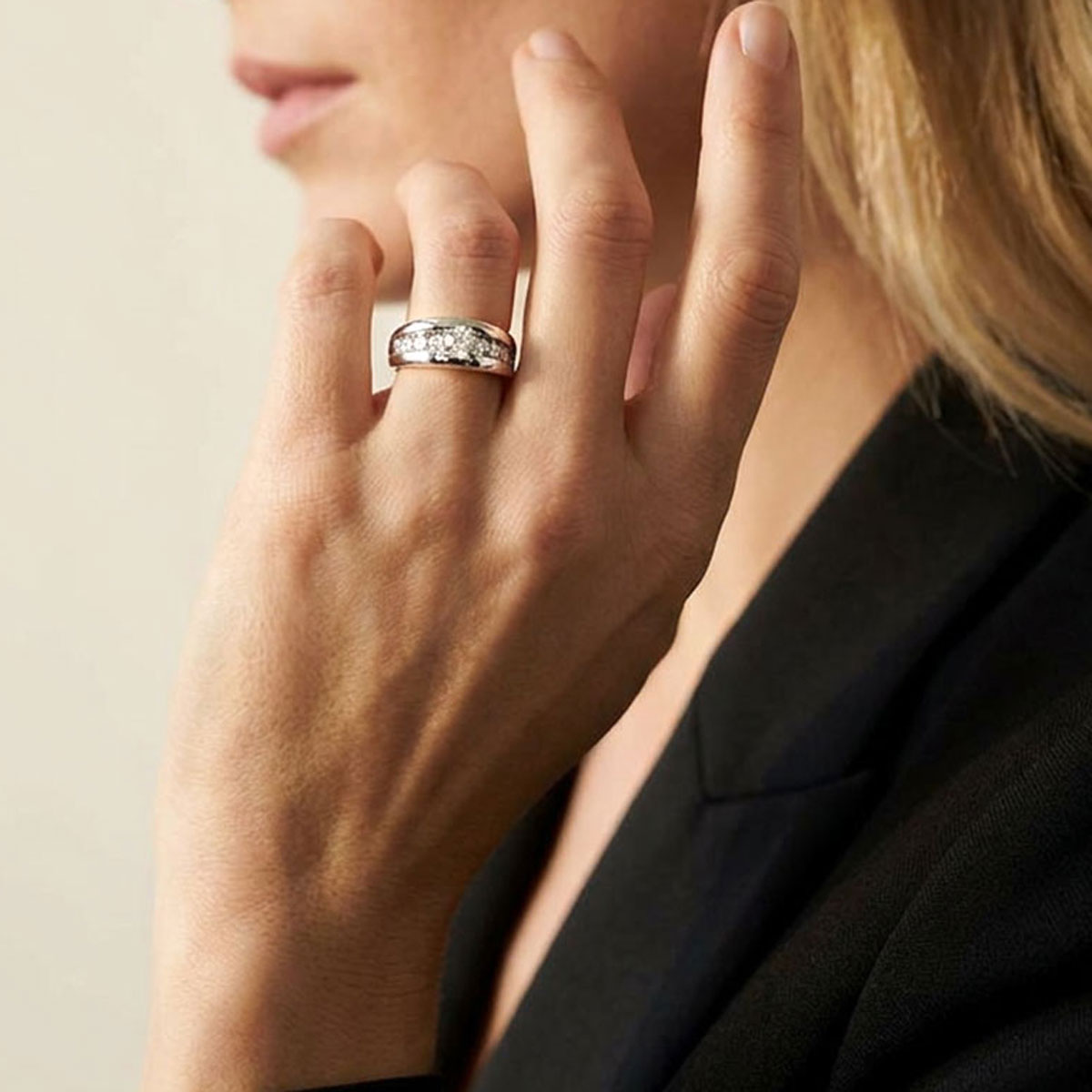
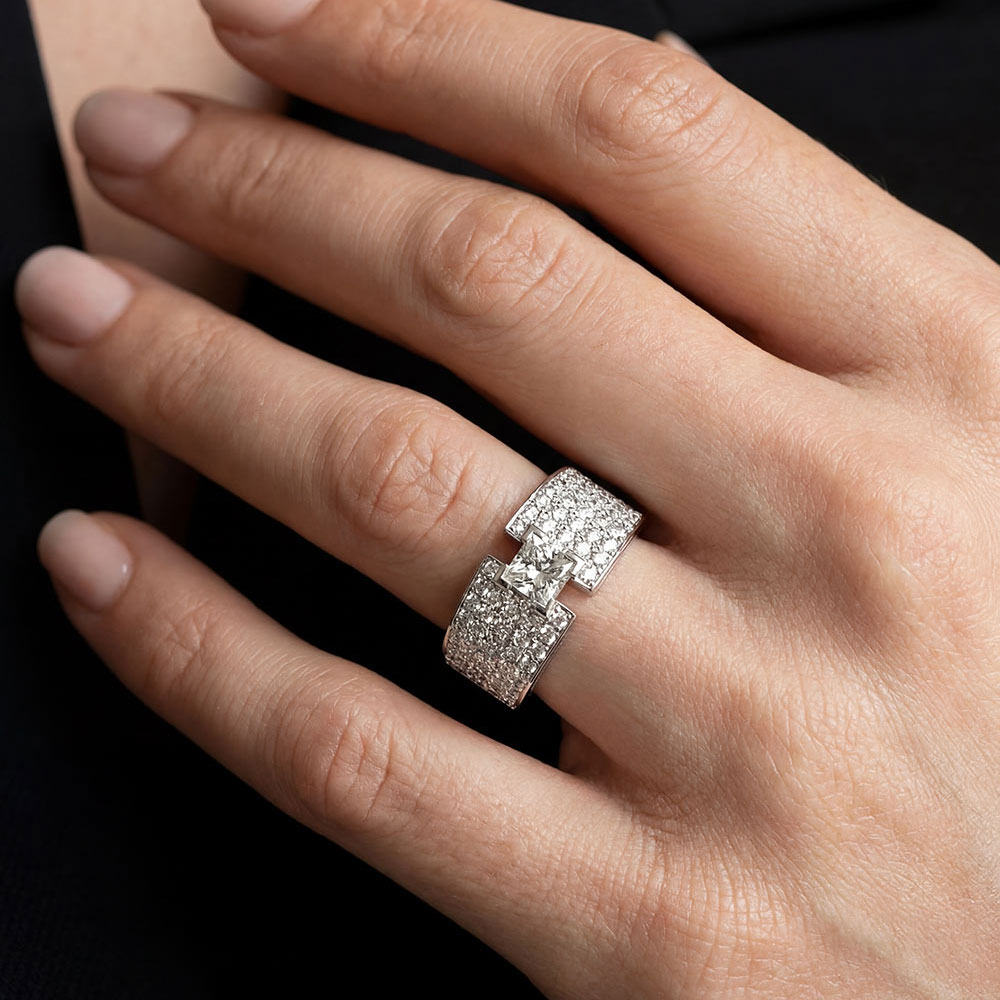
The pavé solitaire ring is a variation on the classic solitaire. It features a central diamond complemented by pavé-set diamonds along the band.
The pavé setting can be crafted in 950 platinum or 18k gold (yellow or rose), giving the engagement ring greater presence. Depending on the proportion and arrangement of the diamonds, the overall look can be subtle or more distinctive.
At D.Bachet, pavé is conceived as an integral part of the design. The diamonds enhance the setting without disrupting its balance, whether the band is slender or wider.
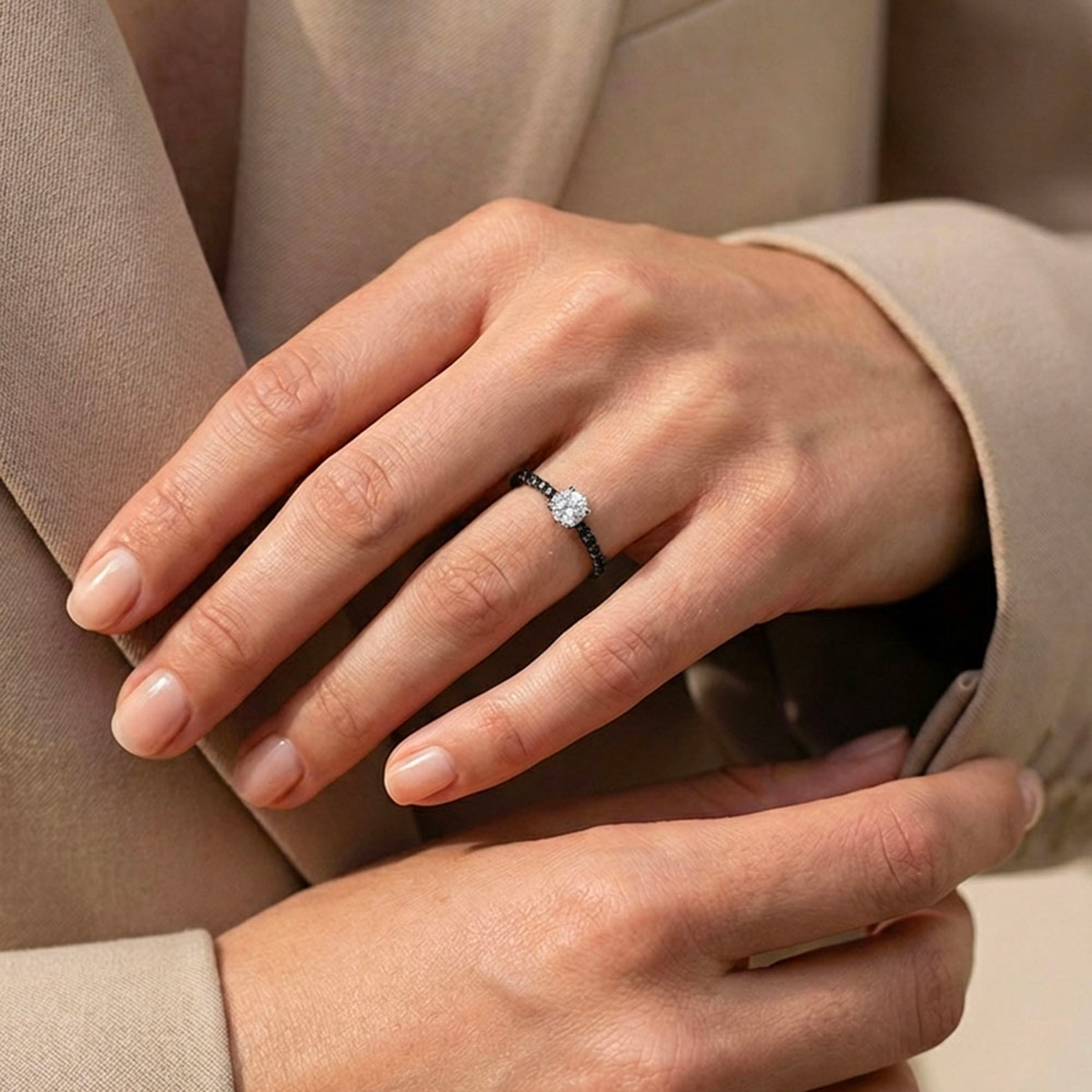
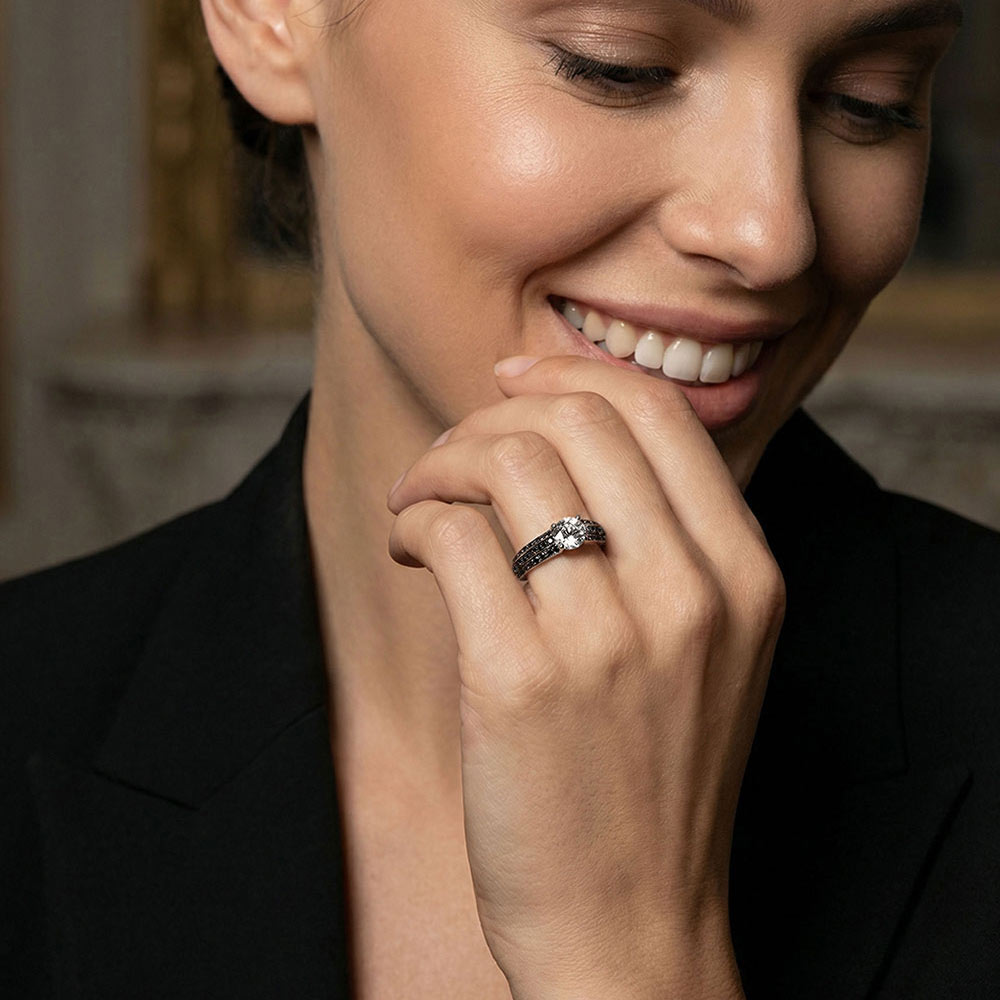
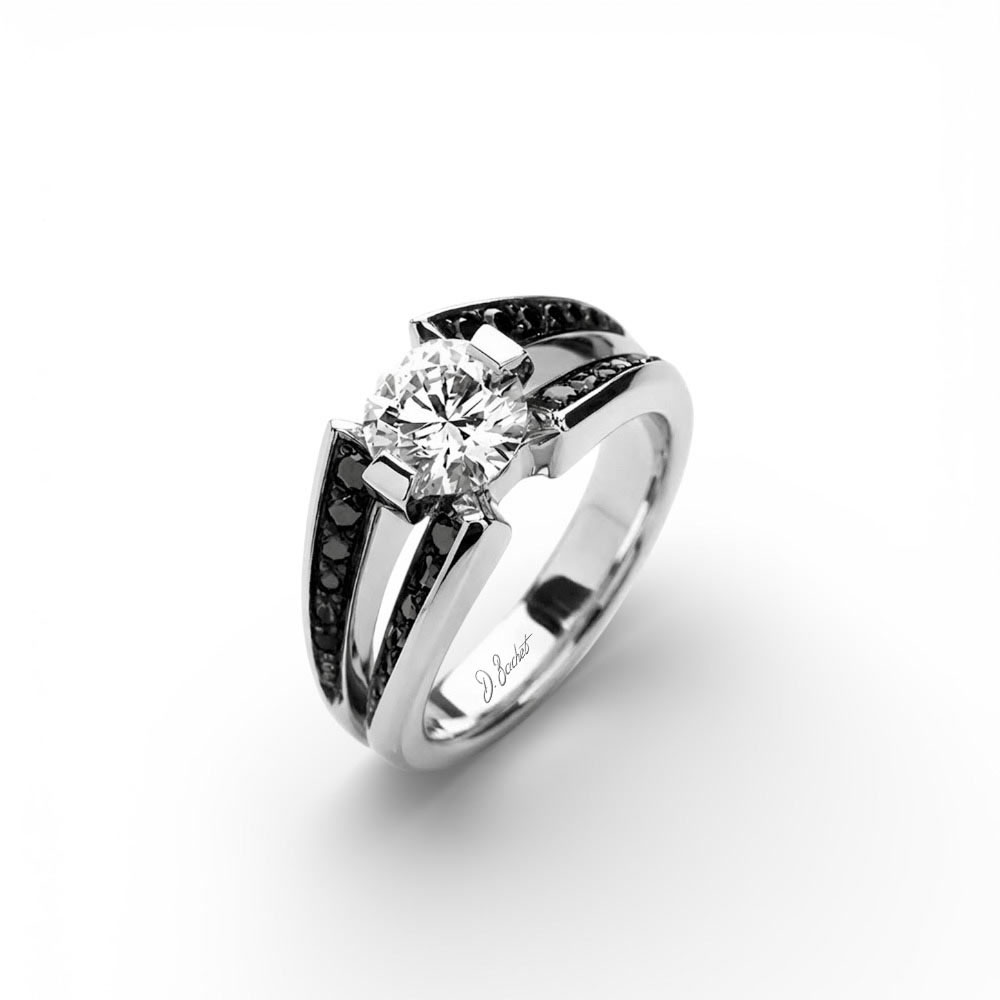
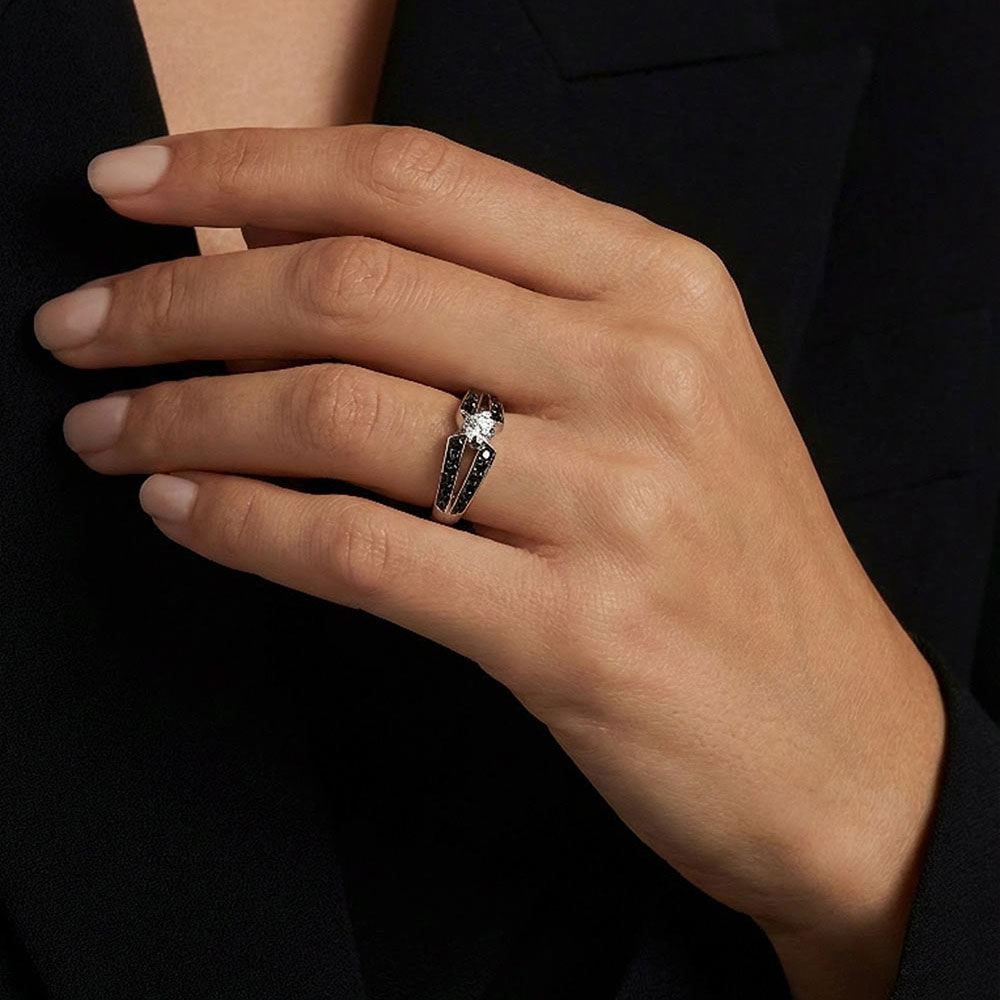
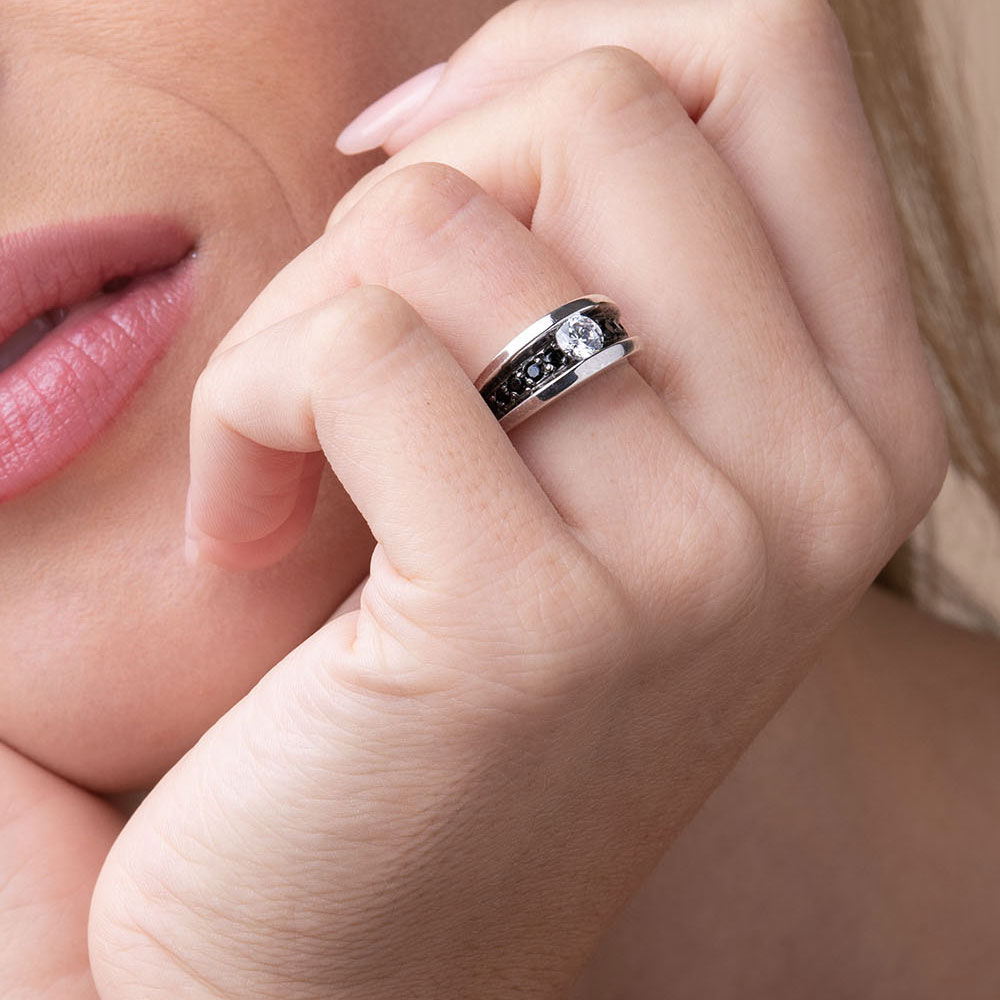
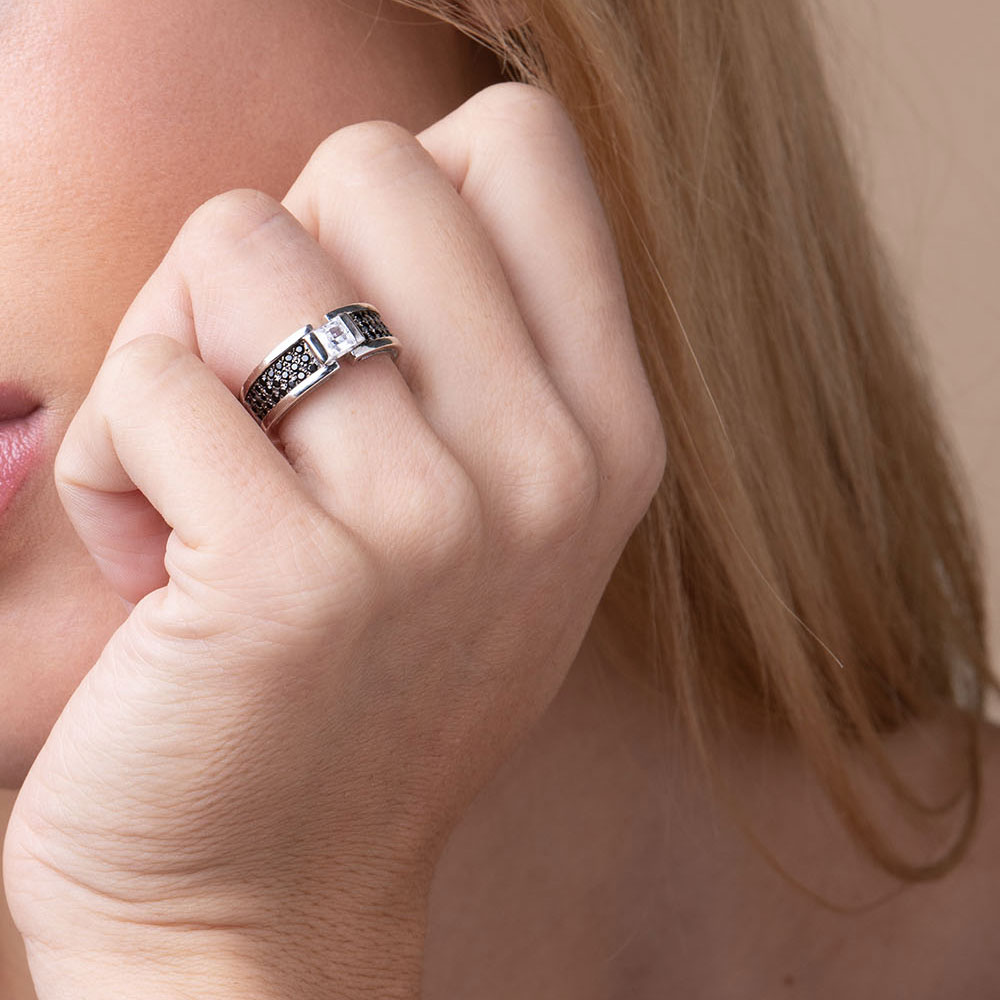
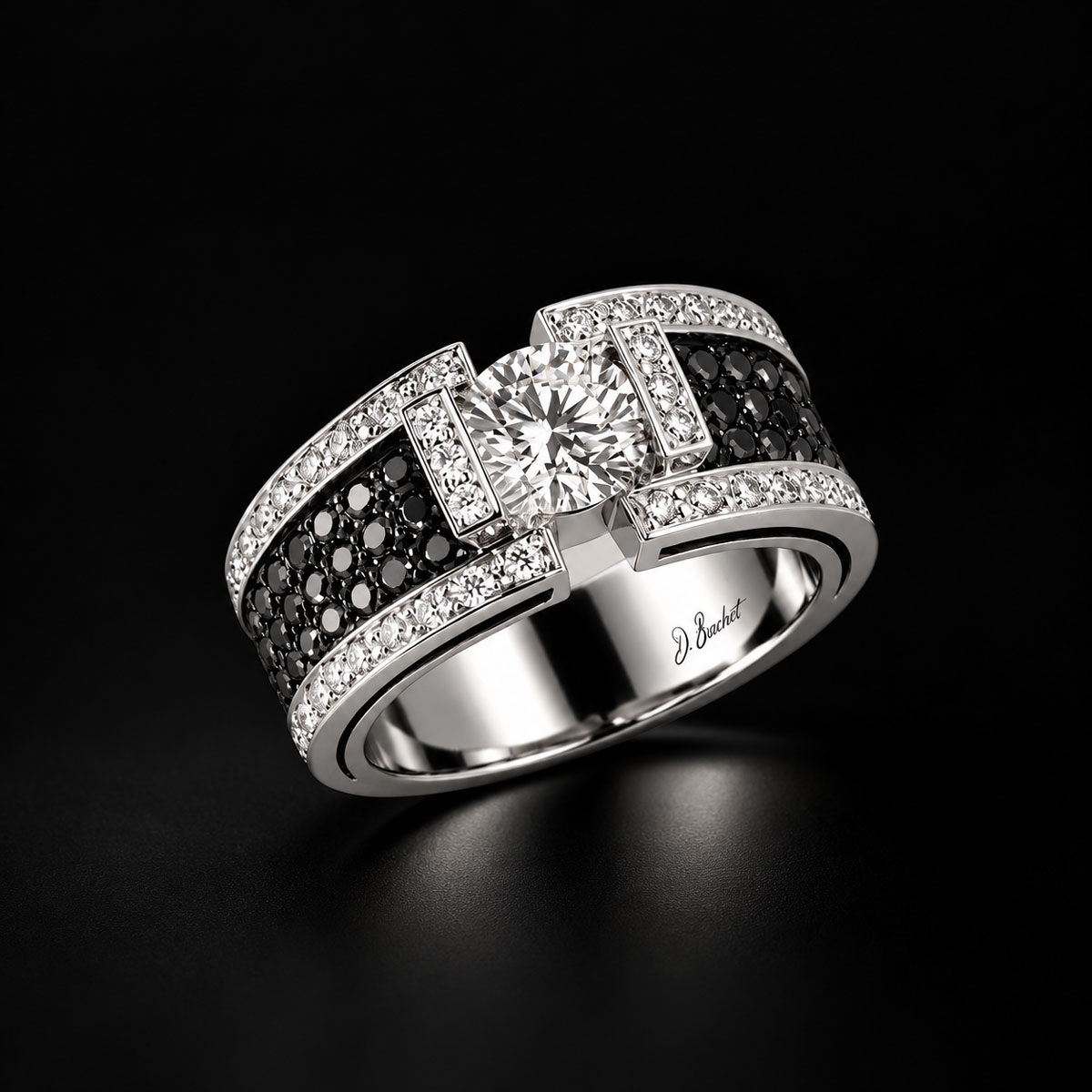
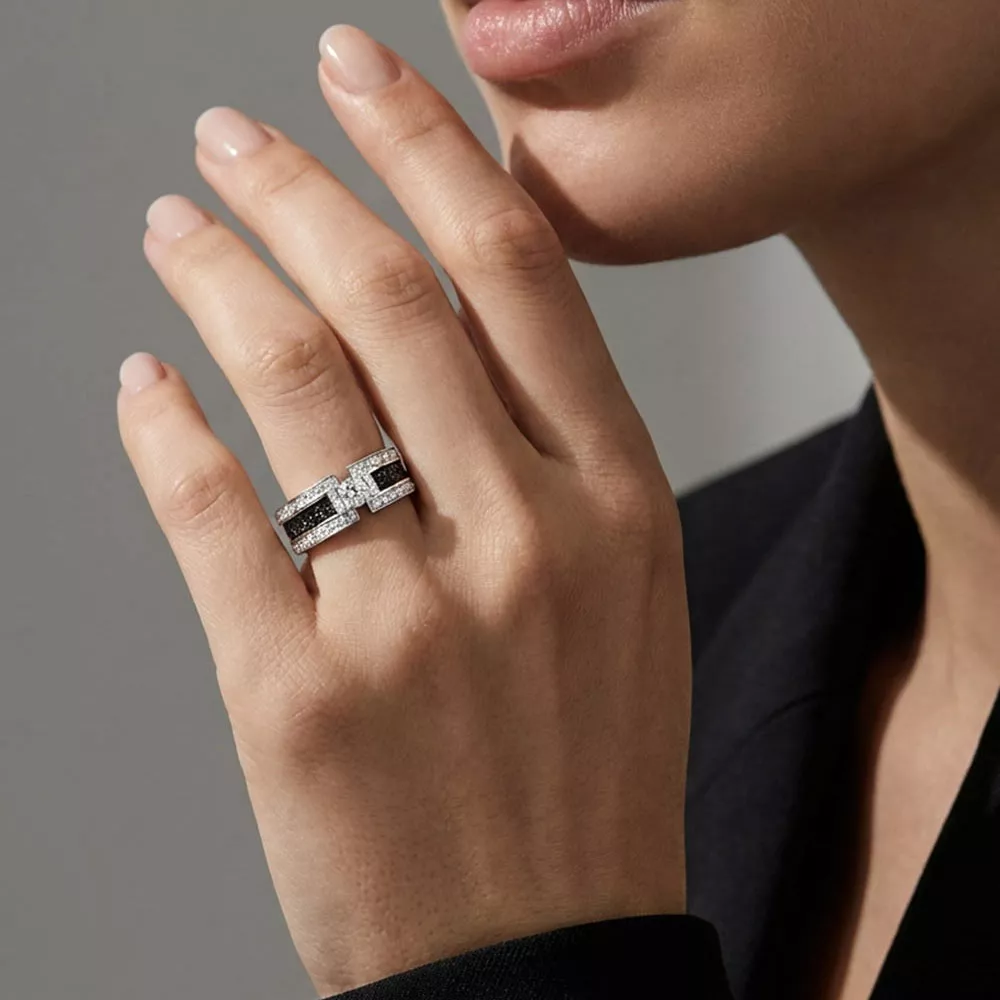
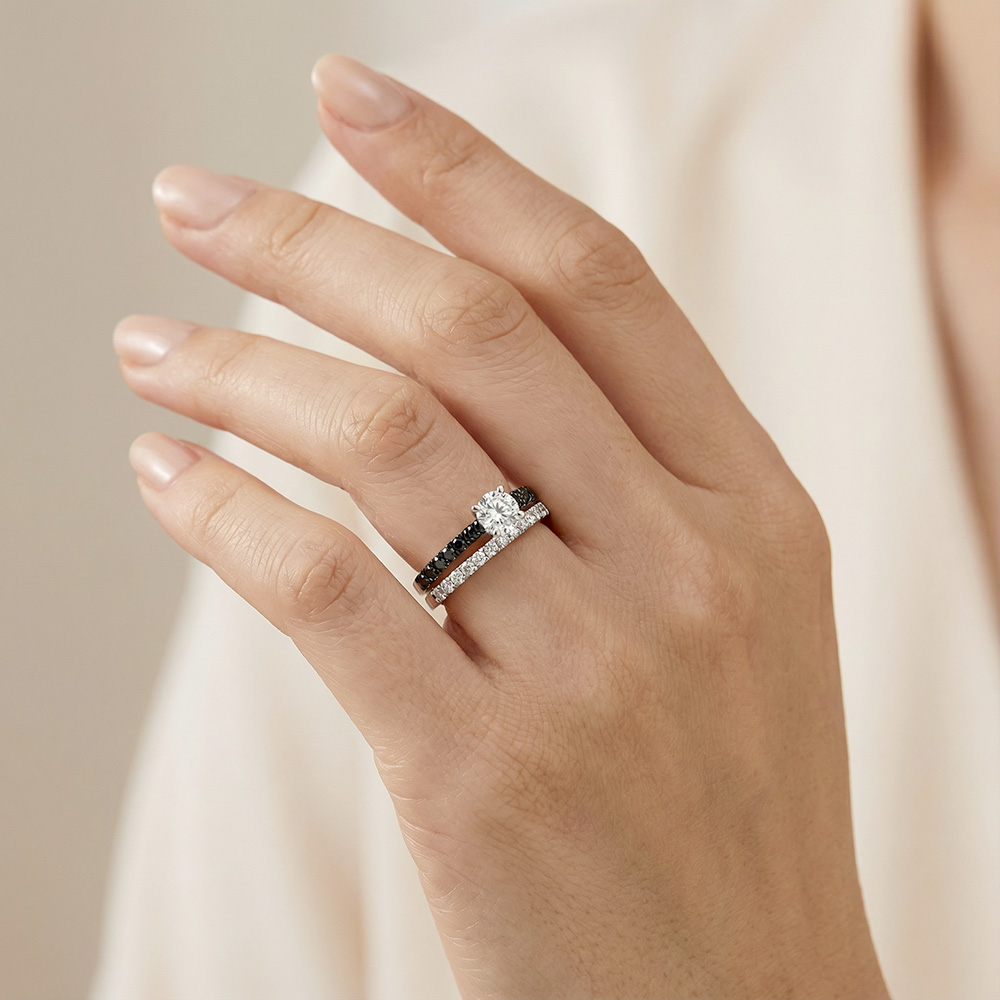
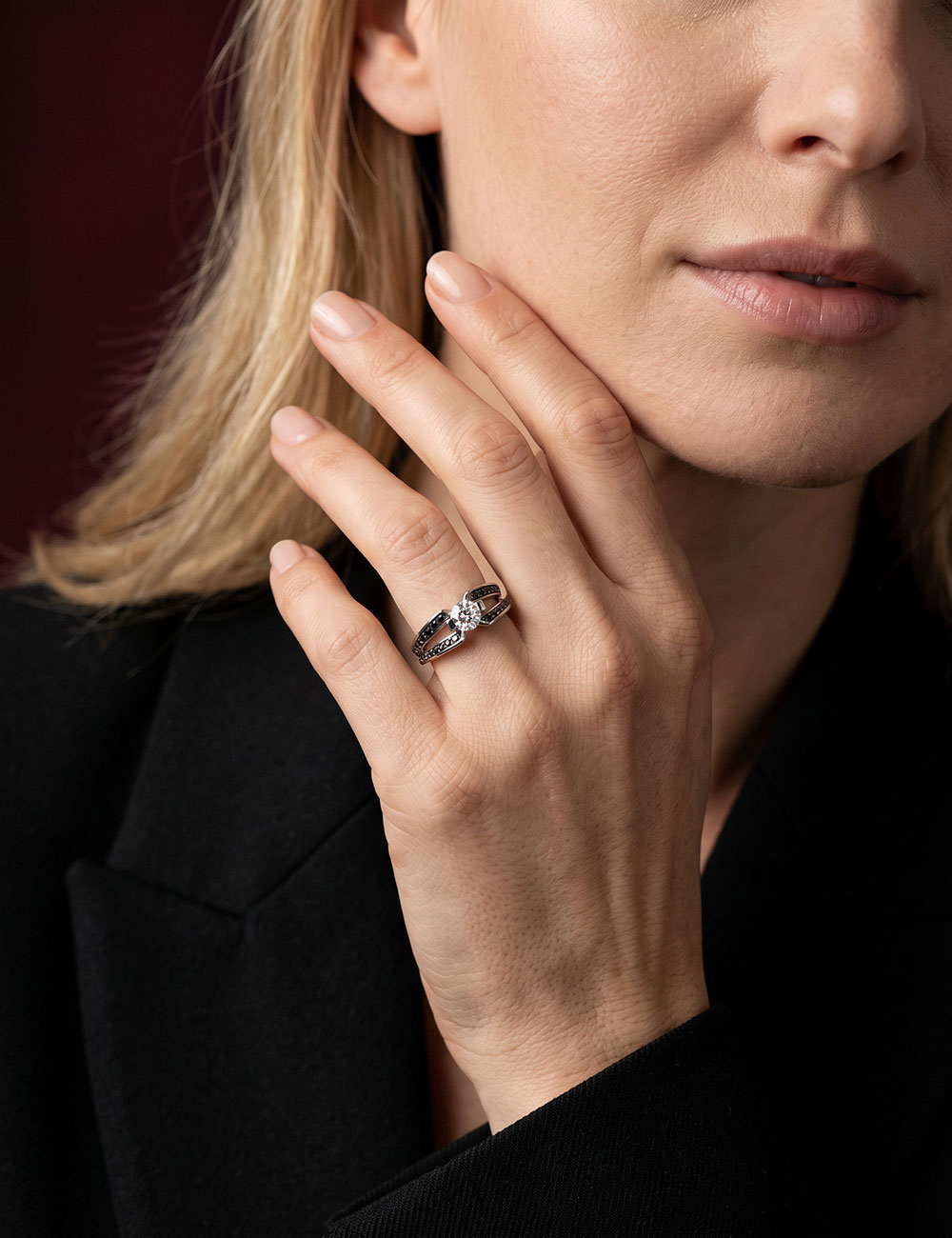
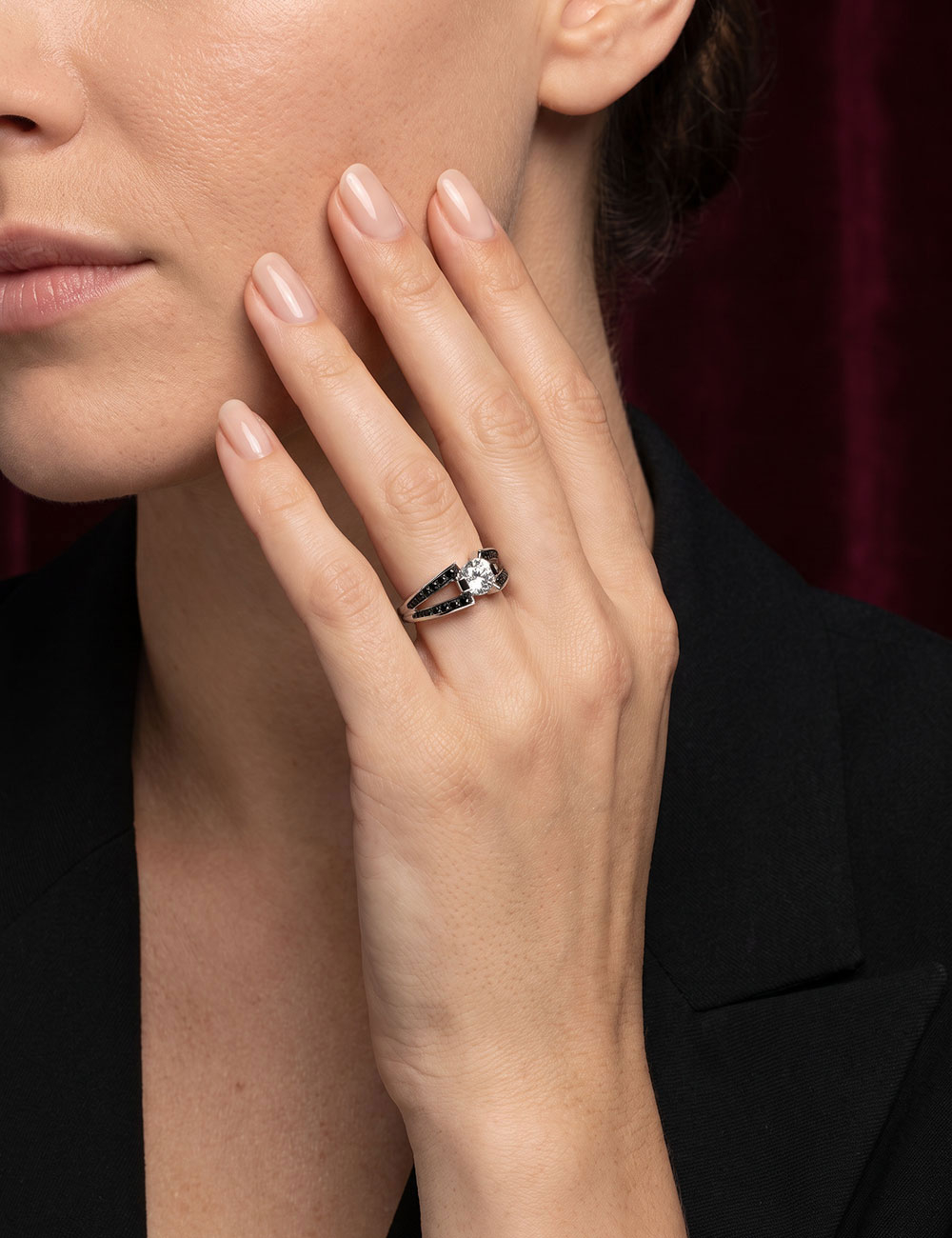
Some designs combine white and black diamonds to create a more graphic, contemporary contrast while keeping the central diamond as the focal point.
This variation on the classic solitaire gives the ring greater presence while keeping the central diamond at the heart of the design.
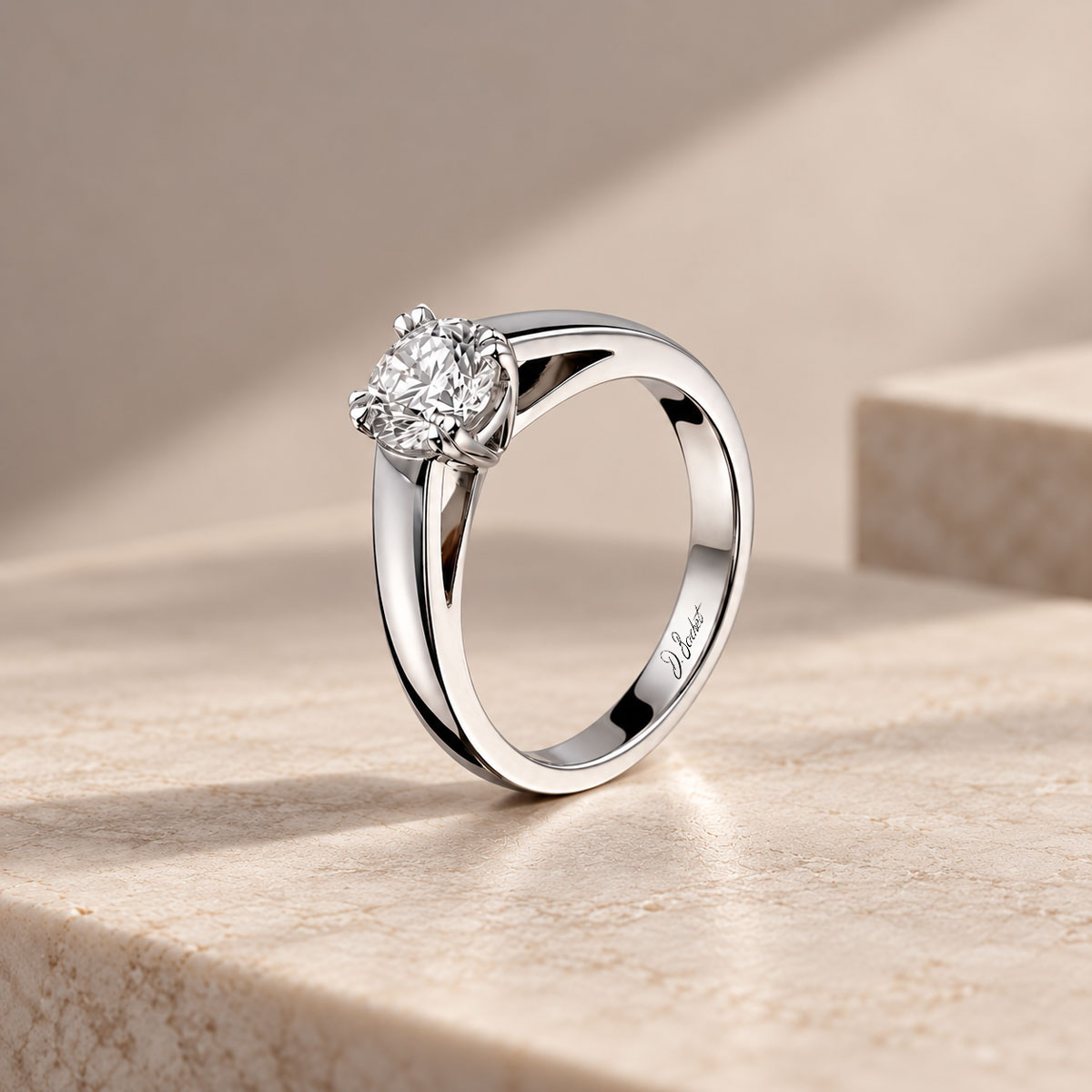
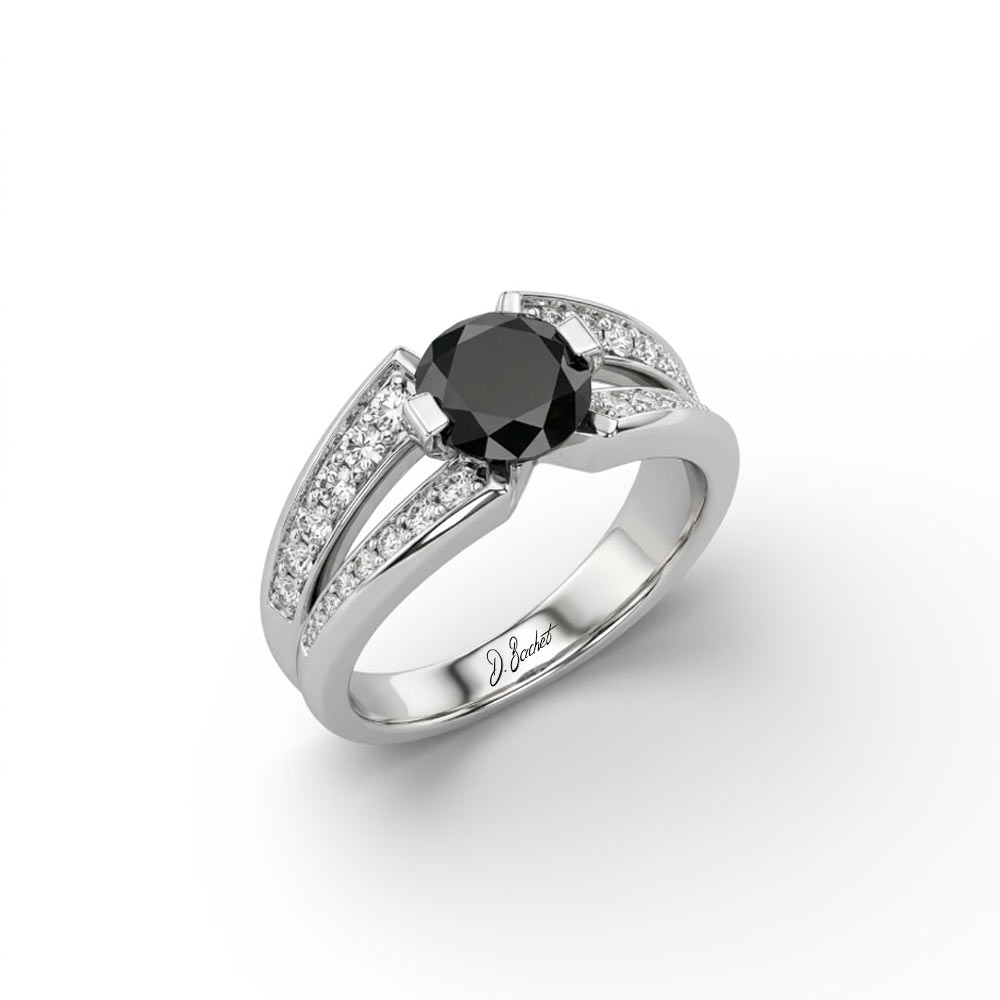
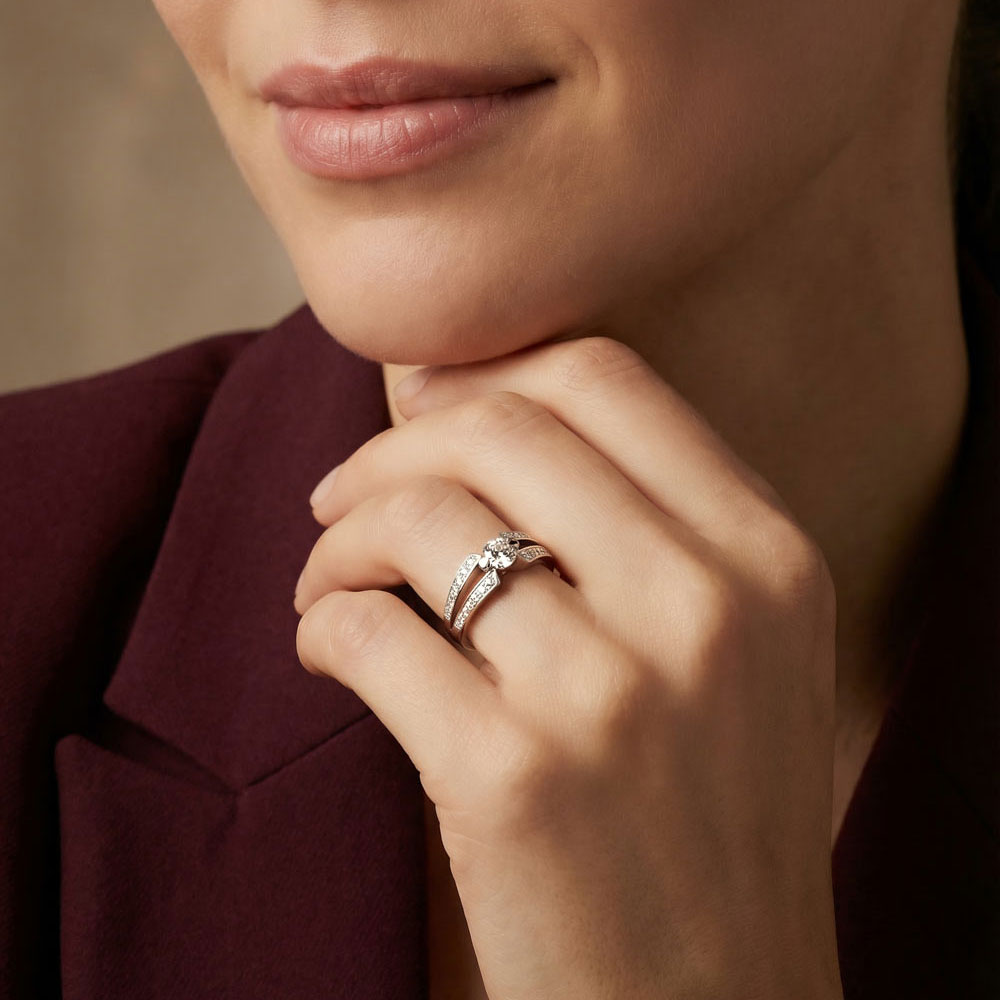
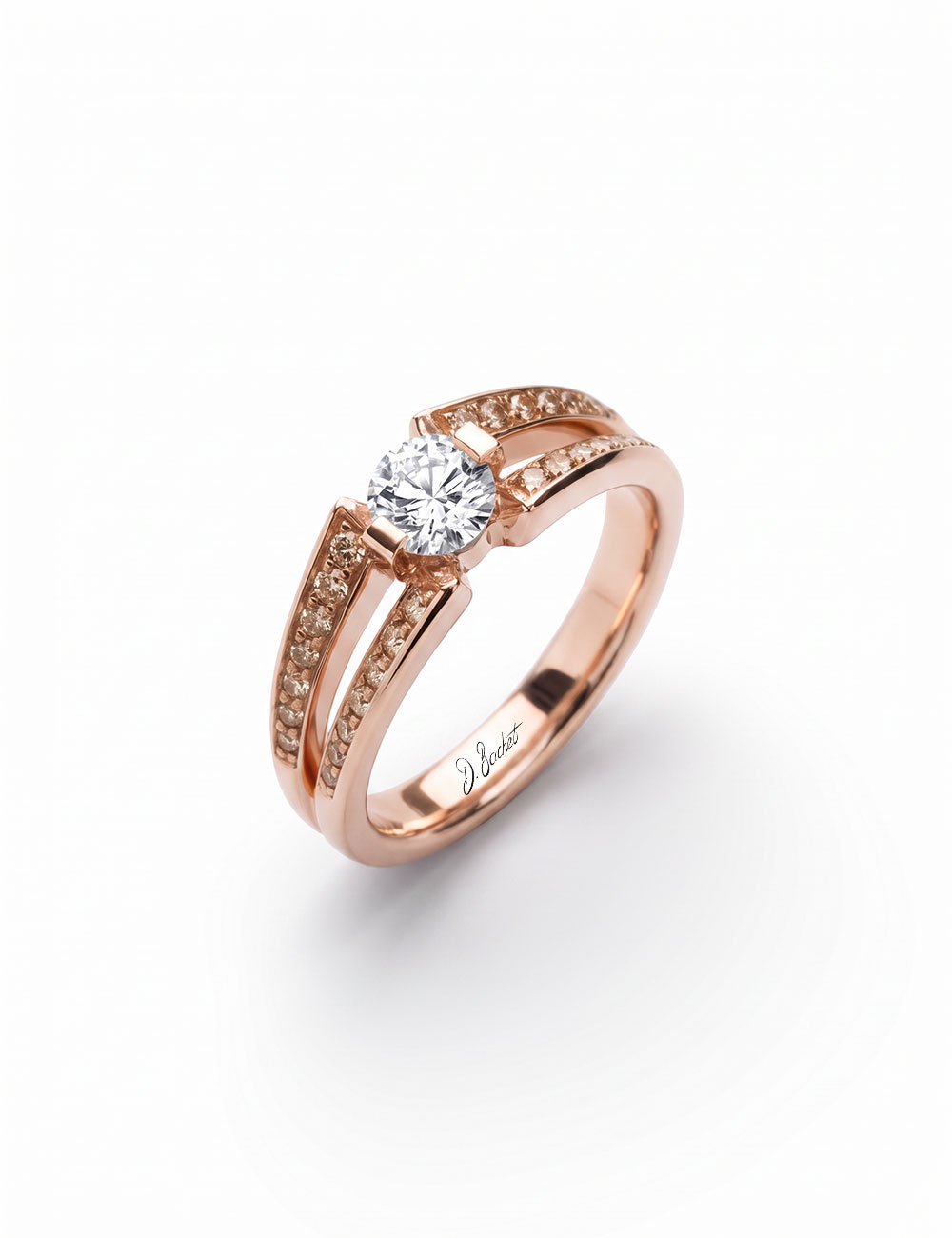
The split-shank solitaire offers a contemporary interpretation of the solitaire engagement ring. In this design, the band splits as it approaches the central diamond, creating an open structure that allows light to flow around the stone.
This structure showcases the diamond and, depending on the design of the setting, can also reveal the stone from the side. The architecture of the ring therefore plays an important role in highlighting the diamond and creating the overall balance of the engagement ring.
With a split-shank setting, the open structure allows light to circulate around the stone and reveal its brilliance. At D.Bachet, this approach reflects a balance between structure and lightness: the setting enhances the stone while preserving the spirit of the solitaire.
The band can feature straight or slightly bevelled lines, with every detail designed to complement the central stone. This architecture highlights the diamond while emphasizing the construction of the ring.
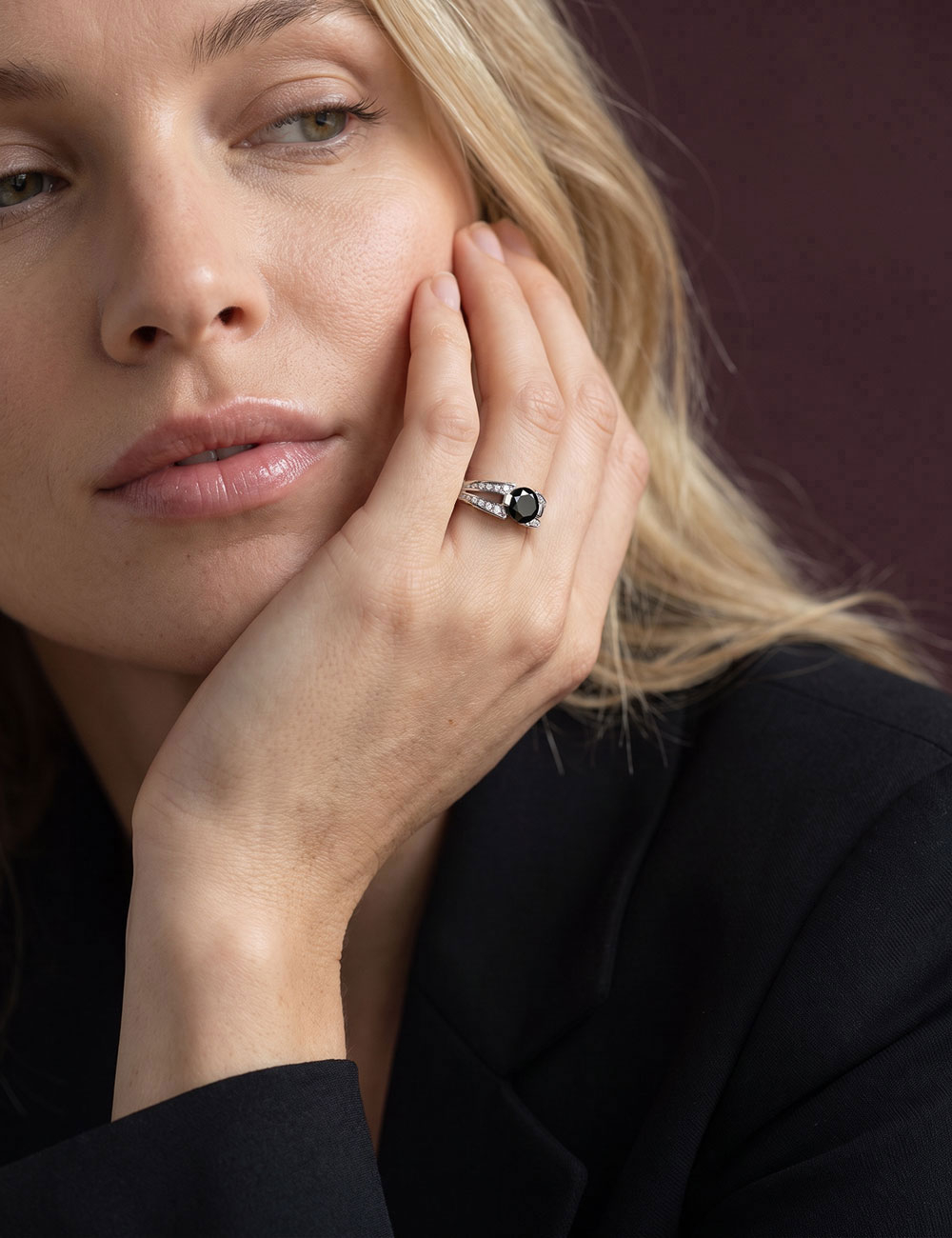
Depending on the design, the ring can be set with a white diamond or a black diamond, creating subtle contrasts that accentuate its lines.
At D.Bachet, the split-shank solitaire is interpreted in several ways. The band can feature clean, straight lines or a bevelled construction with a more graphic design.
Some designs also combine the central diamond with pavé-set white or black diamonds. These different settings create contrasting effects while keeping the central diamond as the focal point of the ring.
Here are a few designs of D.Bachet split-shank engagement rings, featuring straight or bevelled bands and set with white or black diamonds.
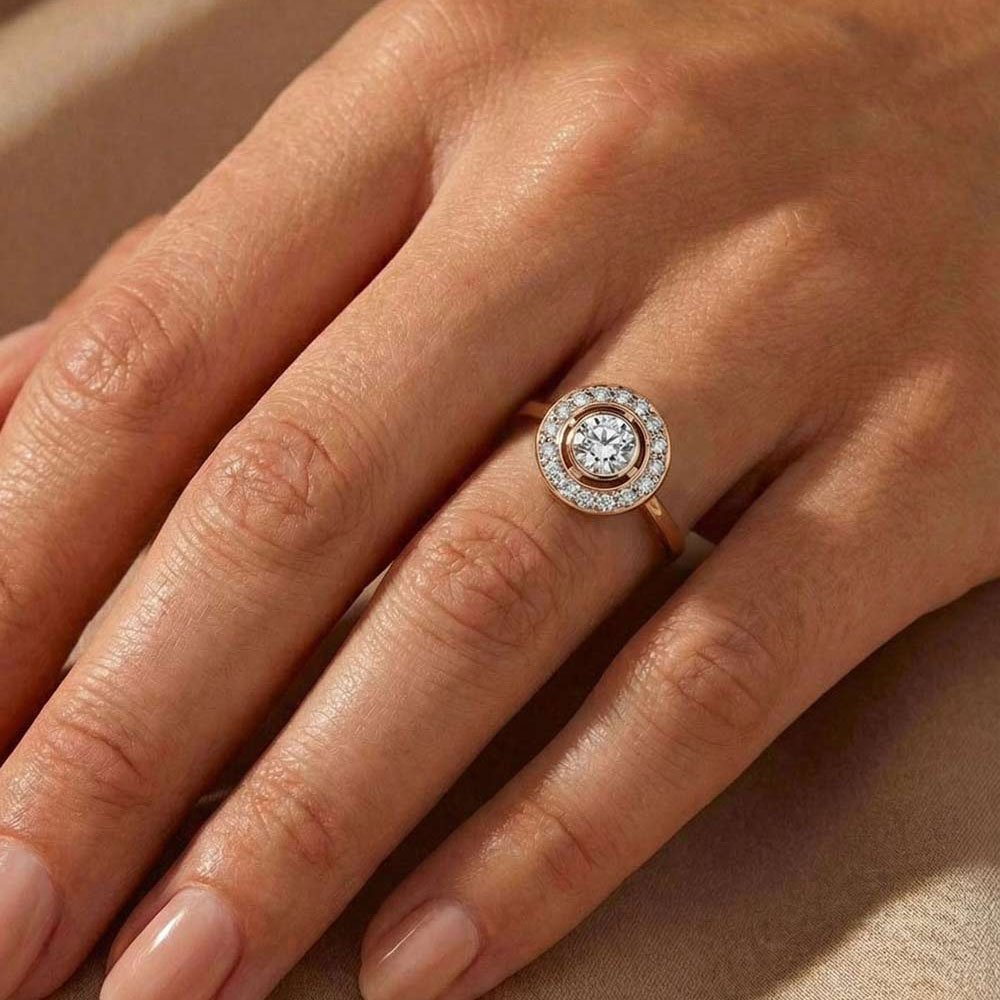
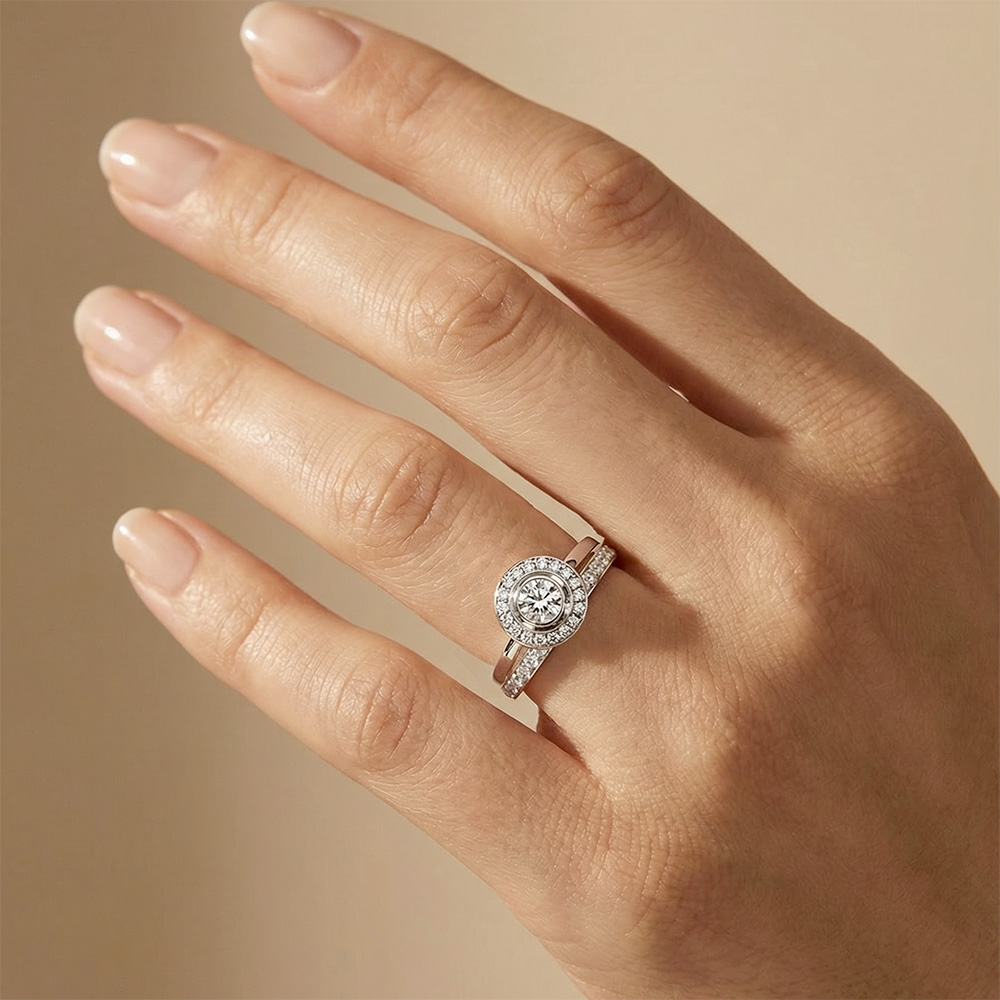
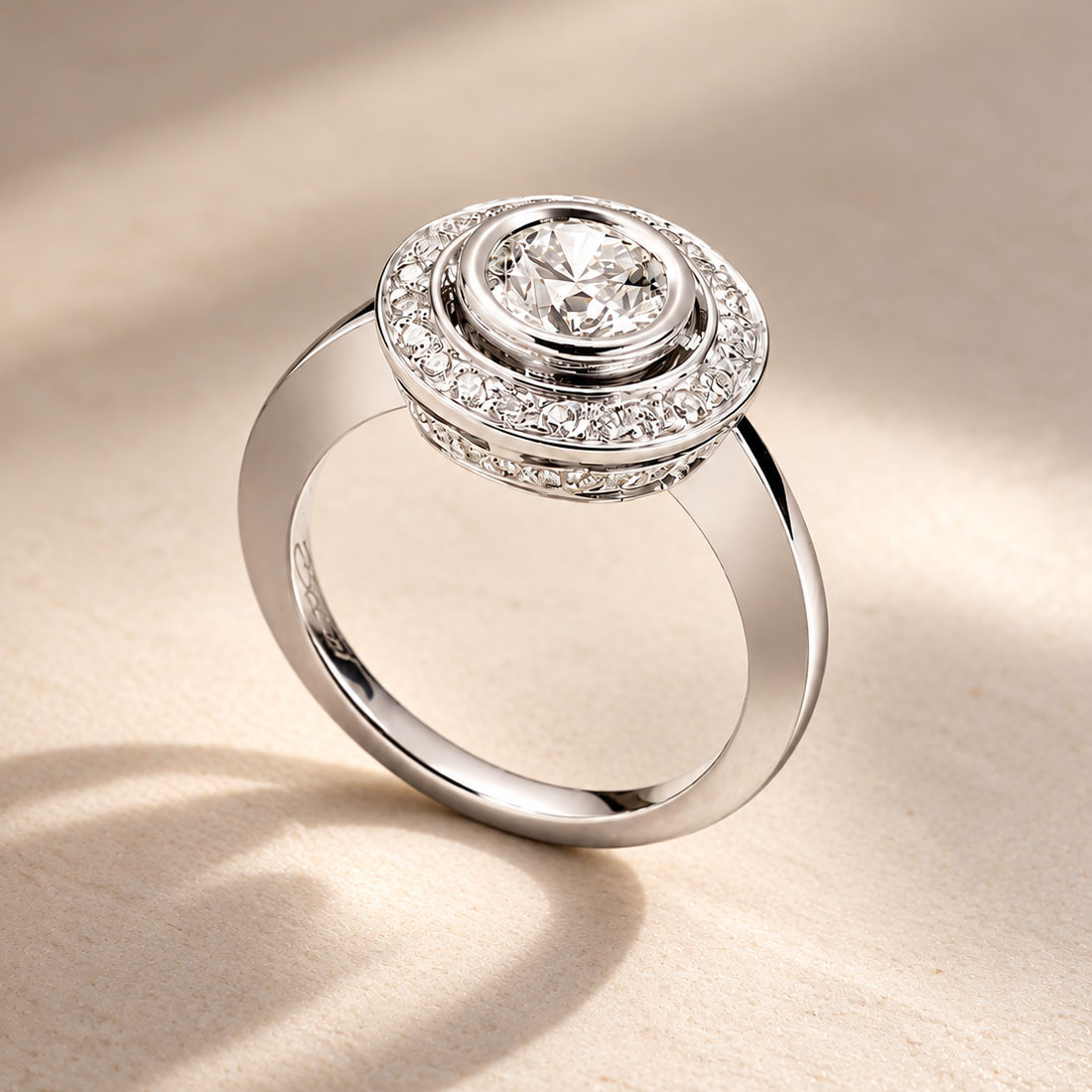
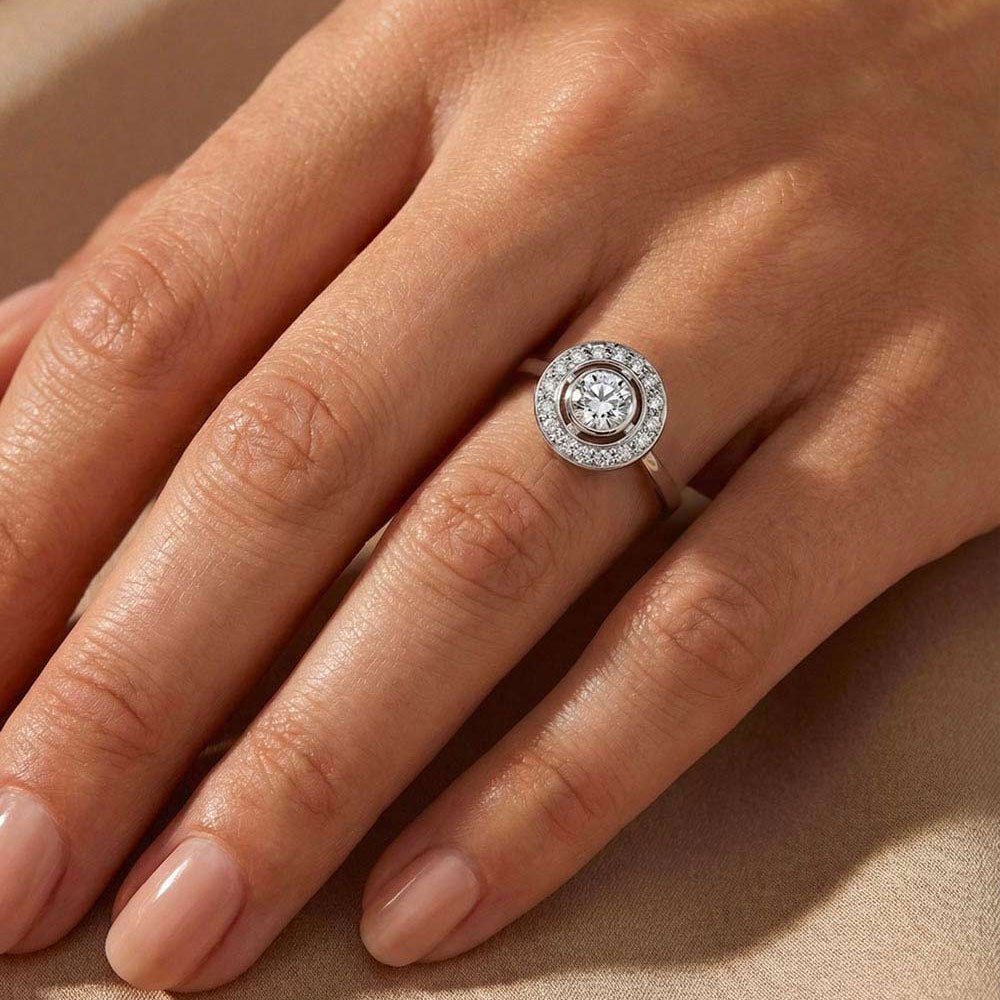
The halo solitaire ring, also known as a halo engagement ring, features a central diamond surrounded by a circle of smaller diamonds. This halo creates a luminous effect around the center stone and enhances its visual presence.
Prized for its brilliance, this engagement ring style can make the central diamond appear larger thanks to the halo of diamonds surrounding it.
The halo solitaire combines a central diamond with delicately set pavé diamonds designed to capture and reflect the light. This setting adds brilliance while preserving the balance of the ring.
At D.Bachet, some interpretations of the halo solitaire feature cleaner, more open lines, giving this style a contemporary feel while keeping the central diamond as the focal point.
L'engagement éthique de la Maison D.Bachet
Au-delà de la perfection technique de la taille, notre atelier s'engage à sélectionner chaque diamant naturel et chaque métal précieux (or 18 carats et platine 950) dans le respect de critères éthiques, sociaux et environnementaux rigoureux.
Some couples are looking for a unique engagement ring, with a design that stands out through distinctive lines, volumes or contrasts. This approach makes it possible to choose a ring that more closely reflects the personality of the person who will wear it.
A unique engagement ring can be defined by an unconventional setting architecture, distinctive stone-setting techniques or a combination of stones such as white and black diamonds.
At D.Bachet, some designs explore these contrasts and structures to create engagement rings with a more graphic character, while preserving the balance of the design and keeping the central diamond as the focal point.
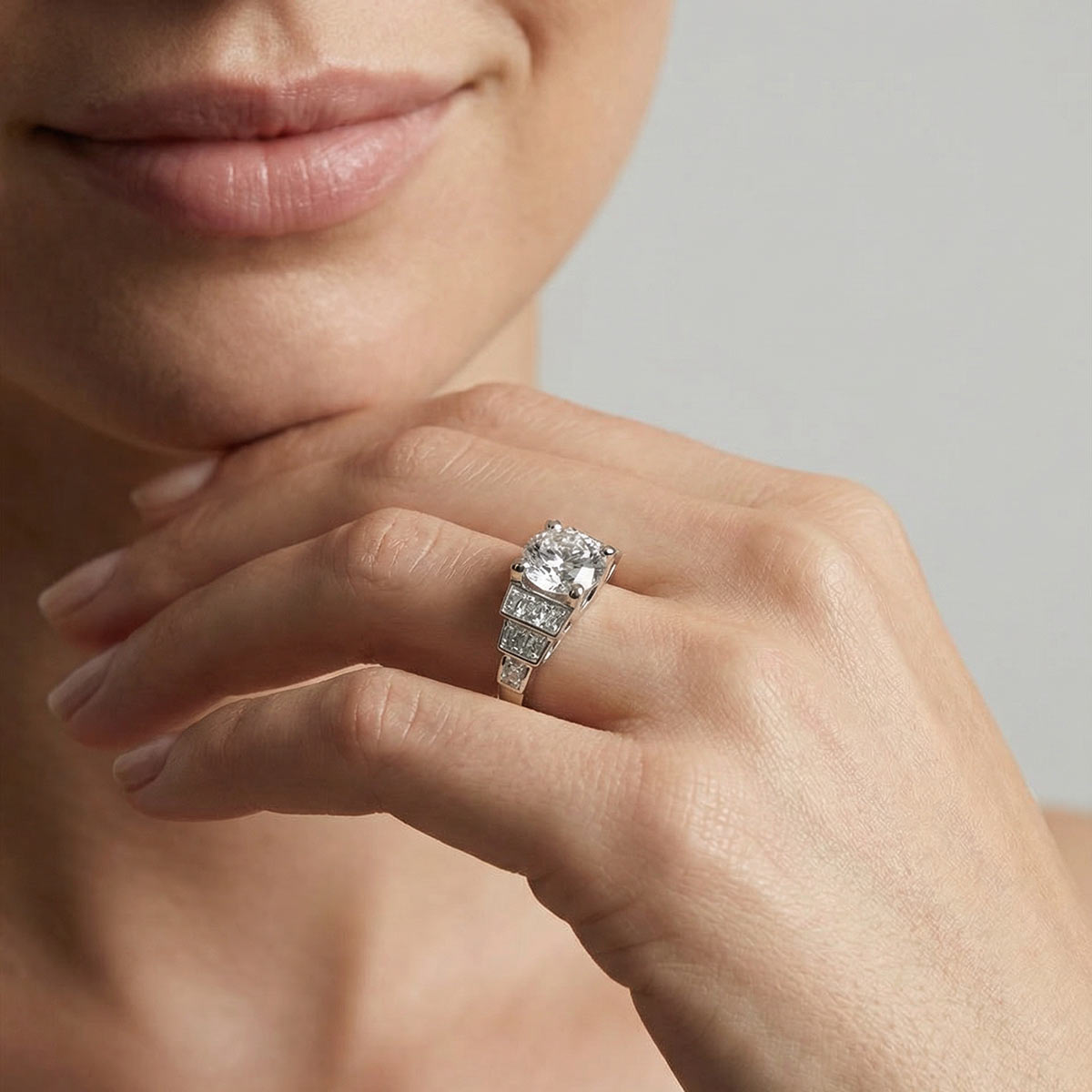
The L’Origine engagement ring embodies this approach with a composition of three natural white step-cut diamonds. Its graphic, contemporary architecture offers a distinctive interpretation of the engagement ring.
From classic solitaires to engagement rings with more architectural lines, each style offers a different way to showcase the diamond. Some designs stand out through more graphic lines or distinctive setting architecture, offering a more individual interpretation of the engagement ring. The design of the setting, its proportions and the stone-setting techniques all contribute to the balance of the ring and to the way the stone interacts with its structure.
For an engagement ring, the choice of metal - gold or platinum - influences the appearance of the ring, its resistance to everyday wear and the way it evolves over time.
At D.Bachet, our engagement rings are handcrafted in 950 platinum or 18k (750) gold, two precious metals renowned for their durability and elegance.
Platinum is distinguished by its naturally white color and high density, giving it excellent resistance to wear. 18k gold, available in yellow or rose gold, offers warmer tones that can influence the way the diamond and the overall design of the ring are perceived.
Depending on the desired style, some designs can also combine precious metal with black diamonds, creating more graphic contrasts. The engagement ring can also be paired harmoniously with a wedding band.
The choice of metal ultimately depends on both the desired aesthetic and the personal style of the person who will wear the ring.
Purity and durability: composed of 95% pure platinum, this precious metal is particularly valued for its strength and long-term stability. Unlike other metals, it does not change color and naturally retains its white hue. A natural patina: over the years, a platinum engagement ring develops a soft patina that reflects the life of the piece without affecting its structure. This natural evolution becomes part of the ring’s character over time. Discover the Soft platinum engagement ring set with a 0.50-carat white diamond |
A rich, luminous color: composed of 75% pure gold, 18k yellow gold offers a warm, radiant hue that has been used in fine jewelry for centuries. Its color beautifully highlights both the diamond and the design of the ring.
A timeless precious metal: thanks to its composition and alloy, a yellow gold engagement ring naturally retains its color over time and offers excellent durability for a ring worn every day.
Discover the Soft 18k yellow gold engagement ring set with a 0.50-carat white diamond
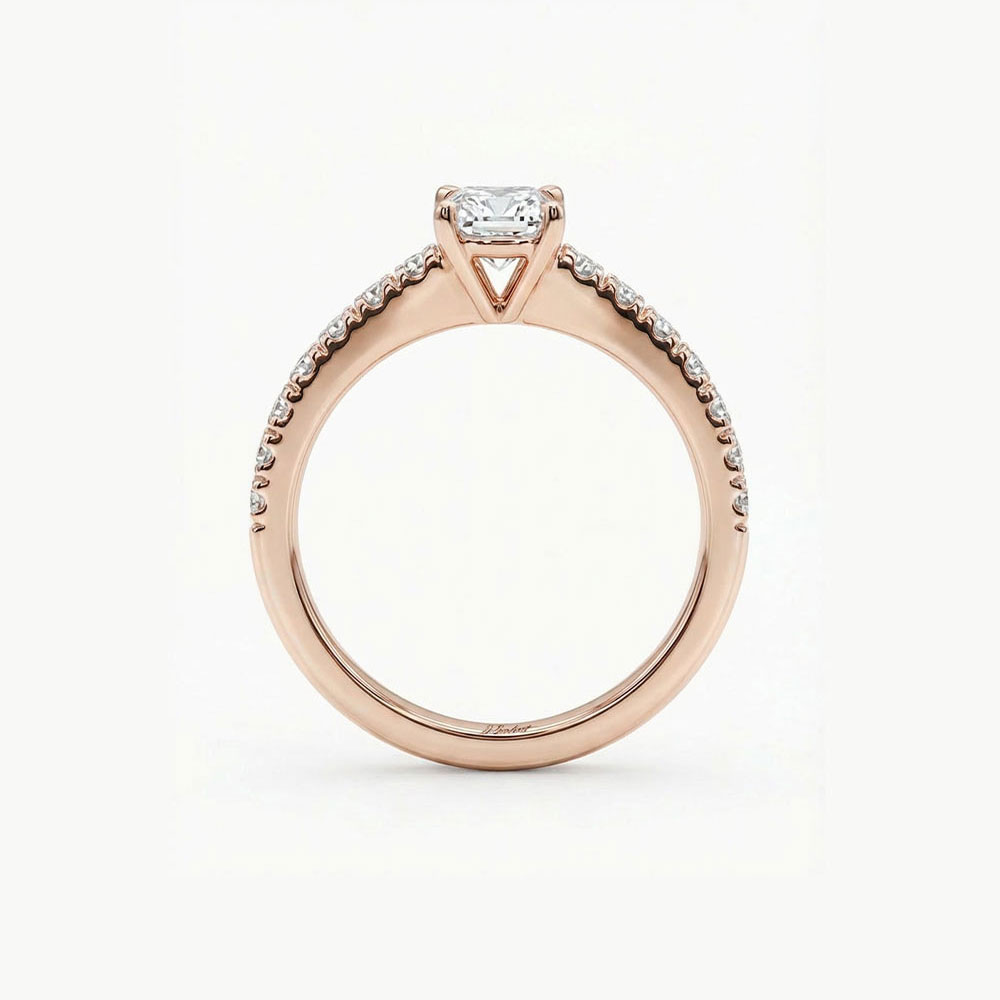
A warm hue: rose gold is created by adding copper to the gold alloy, giving it its subtly pink tone.
A contemporary style: a rose gold engagement ring offers a warm tone while retaining the durability of 18k gold.
D.Bachet jewelry is handcrafted to order in our workshops in France, following the exacting standards of fine jewelry craftsmanship.
Discover the Soft 18k rose gold engagement ring set with a 0.50-carat diamond
It is entirely possible to choose an engagement ring crafted in 18k (750) white gold. This metal is appreciated for its light color and luminous appearance, similar to that of platinum.
Composition and durability: our white gold rings contain approximately 13% palladium. This precious metal strengthens the alloy and helps stabilize its white color.
Finish and care: to enhance its bright white appearance, white gold is coated with a thin layer of rhodium. Over time, this rhodium plating can be renewed to restore the ring’s brilliance.
Compared with platinum: although the two metals have a similar appearance, platinum is naturally white and does not require a surface treatment to retain its color.
| Metal | Characteristics | Key Features |
|---|---|---|
| 950 Platinum | Naturally white, highly dense and durable metal | Does not require rhodium plating and retains its color over time |
| 18k White Gold | Gold alloy containing palladium, among other metals | Rhodium-plated to enhance its white color |
| 18k Yellow Gold | Warm, traditional color | Naturally retains its color over time |
| 18k Rose Gold | Pink hue created by the addition of copper | Offers a softer, more contemporary tone |
Wedding bands and rings are often crafted in platinum to benefit from its durability and long-term stability. This precious metal is particularly well suited to jewelry worn every day.
White gold is frequently used for pendants, bracelets and earrings, which are generally less exposed to friction than rings.
Read also:
Diamonds: Origins, Symbolism and Ethical Commitments
Stone setting is an essential stage in the creation of a piece of jewelry. It consists of securing one or more gemstones in the setting to hold them firmly in place.
Beyond securing the stone, the type of setting also influences the appearance of the engagement ring and the way light interacts with the diamond. The choice of setting therefore plays an important role in the final design of the ring, particularly in showcasing the center stone.
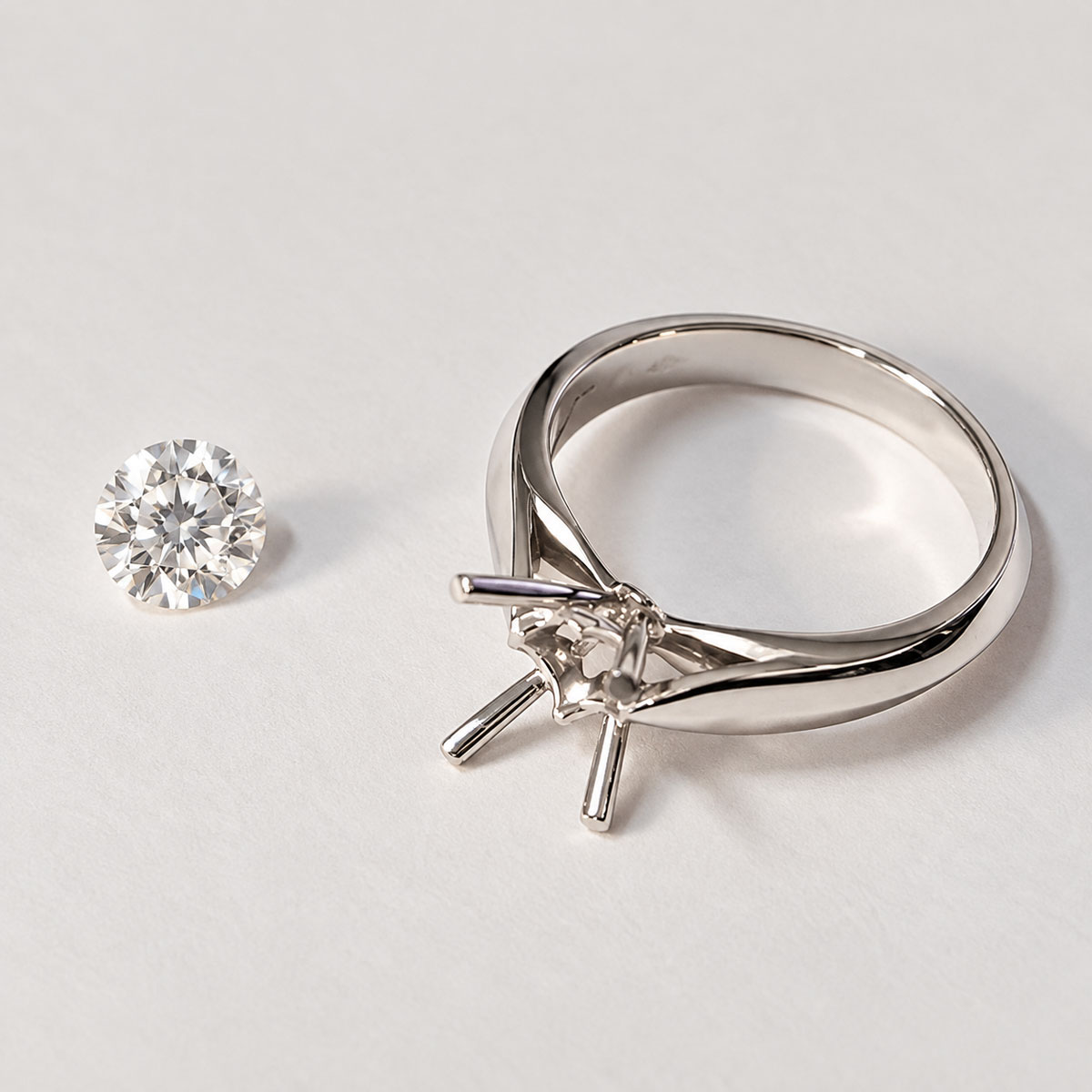
The prong setting is one of the most widely used stone-setting techniques for engagement rings, particularly for diamond solitaire rings. The stone is held in place by several metal prongs, precisely shaped to secure the diamond while allowing light to pass around the stone.
The number of prongs generally ranges from two to six, depending on the size and carat weight of the diamond as well as the design of the ring. This type of setting is particularly valued for its ability to maximize the brilliance of the center stone.
At D.Bachet, particular attention is paid to the architecture of the setting when crafting prong-set designs. The prongs are designed to hold the diamond securely and precisely while allowing light to reach the stone from different angles.
Depending on the design, the prongs can be fine and tapered to create a lighter, more delicate appearance, or more structured to complement a bolder, more graphic design. This approach integrates the diamond into the architecture of the ring while preserving the overall balance of the prong-set engagement ring.
The channel setting is a modern stone-setting technique used for certain engagement rings. Unlike a prong setting, the stone is held between two metal channels formed within the band.
This type of setting creates a clean, continuous line, with the diamond appearing naturally integrated into the band. The channel setting is particularly well suited to diamond engagement rings with a contemporary design.
At D.Bachet, the channel-set engagement ring reflects an architectural approach to jewelry design, with the center stone appearing naturally integrated into the structure of the ring.
The bar setting is a stone-setting technique in which the diamond is held between two metal bars formed within the band. This type of setting is used in certain engagement rings for its modern, structured appearance.
By securing the diamond between two metal bars, this setting provides protection for the stone while allowing light to pass freely around it.
At D.Bachet, the bar-set engagement ring reflects an architectural approach to jewelry design, with the center stone appearing naturally integrated into the structure of the ring.
The bezel setting is a traditional stone-setting technique that gives an engagement ring a classic yet structured appearance. The center stone is completely surrounded by a fine rim of precious metal that holds it securely in place while defining its outline.
This type of setting positions the diamond flush with the setting, creating a smooth, continuous surface that emphasizes the overall design of the ring while showcasing the center stone.
At D.Bachet, the bezel setting is notably used for halo engagement rings, where the center diamond is surrounded by a circle of smaller diamonds that enhances its brilliance.
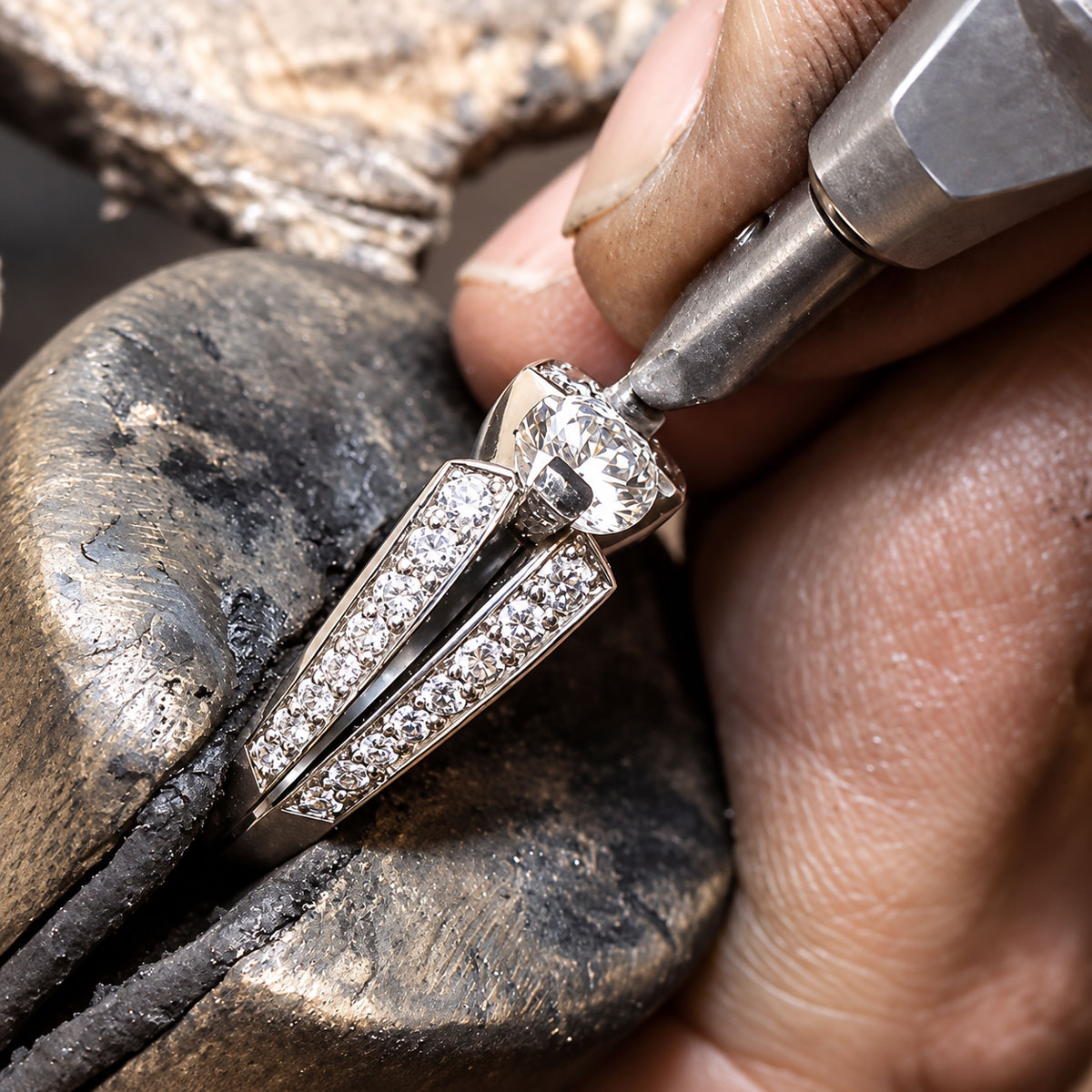
The grain setting is a technique used to secure small diamonds to the setting of an engagement ring. Tiny grains of metal are raised to hold each stone individually in place, creating a delicate, luminous pavé.
This setting technique is particularly well suited to accent diamonds set along the band, adding extra brilliance to the ring.
In the D.Bachet workshop, each diamond in a grain-set engagement ring is set with meticulous precision to ensure a harmonious pavé.
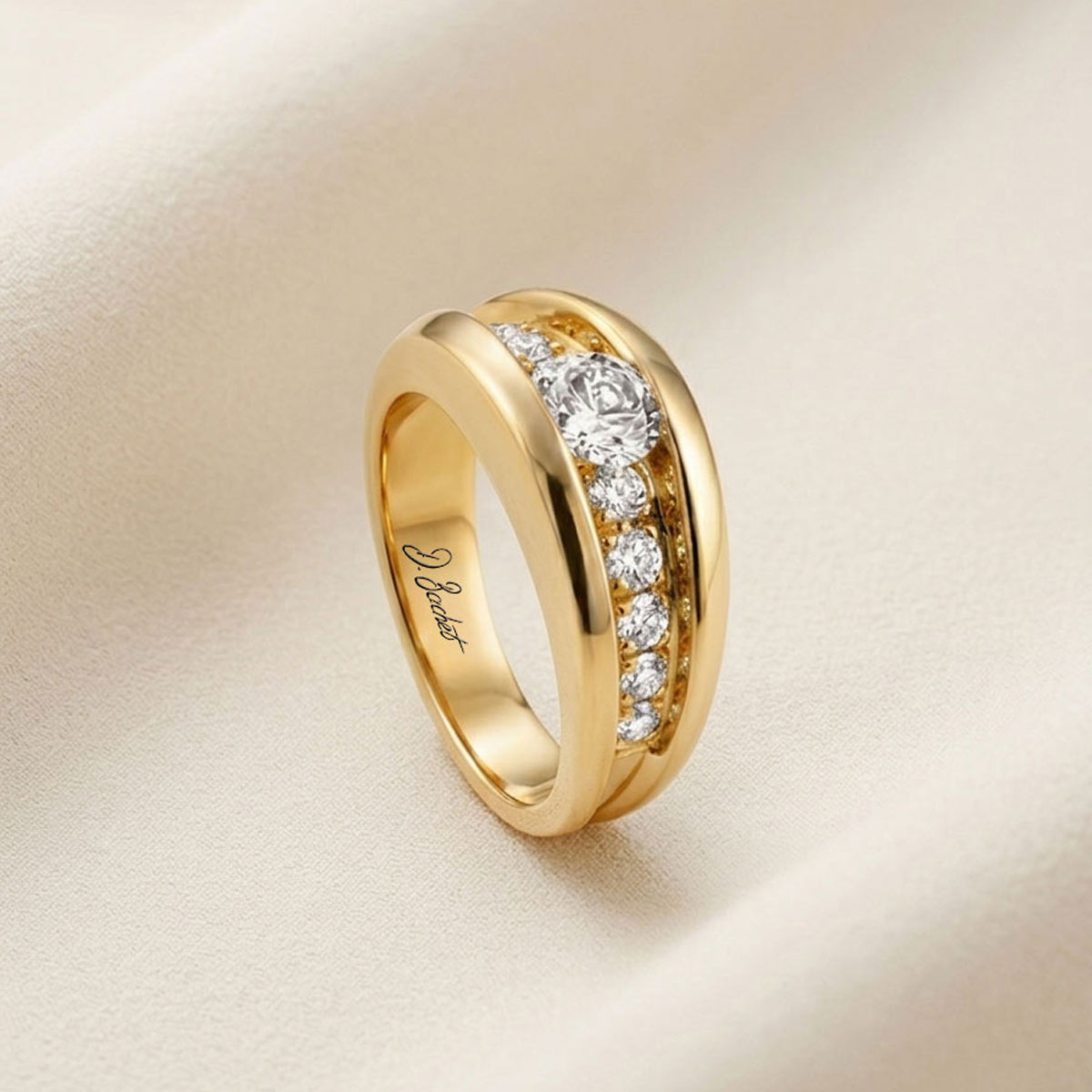
The cut-down setting is a stone-setting technique used to secure accent diamonds along the band with small prongs. This setting exposes more of each stone, allowing the diamonds to catch the light and enhancing their natural brilliance.
On an engagement ring, the cut-down setting extends the brilliance of the center diamond along the band, adding further sparkle to the design.
At D.Bachet, the cut-down setting is given a contemporary interpretation, notably through the use of black diamonds or bands that gently taper towards the center stone, bringing a modern touch to a traditional stone-setting technique.
Whether prong-set, bar-set or cut-down set, the setting plays a direct role in the overall balance of a diamond engagement ring. It determines how the stone is integrated into the setting and how light interacts with the diamond.
At D.Bachet, each engagement ring is conceived as a precise construction in which the diamond is naturally integrated into the structure of the ring.
The engagement ring is designed to be worn every day, with the choice of diamond, precious metal and setting contributing to the character of each piece.
Occasional cleaning with lukewarm water, mild soap and a soft brush will also help maintain the brilliance of the diamonds.
For more detailed advice, read our guide to caring for and cleaning your jewelry.
Explore our engagement ring collections or book an appointment in Nîmes, Paris or Lyon to discuss your project and find the engagement ring that feels right for you.
Discover Our Wedding Bands
To complement your engagement ring, explore our collection of women’s wedding bands.