Français
 English
Guide: How to Choose a Wedding Ring for Women


Set with white or black diamonds, classic or more distinctive in design, every D.Bachet women’s wedding ring has its own character.
A wedding ring is designed to be worn every day, so choosing the right one means finding the right balance between design, comfort and durability. The precious metal, the shape and profile of the ring, how it pairs with your engagement ring and how well it suits your lifestyle are all important factors to consider.
Every D.Bachet creation is designed and handcrafted in our workshop in France. From clean, graphic lines in precious metal to contrasting diamond settings, we offer a contemporary interpretation of the wedding ring, designed to reflect the style of the person who wears it.
Should couples choose matching wedding rings?
The tradition of couples wearing identical wedding rings, often simple gold bands, has gradually given way to a more personal approach.
Today, a women’s wedding ring is chosen first and foremost as a personal piece of jewelry. It should suit your individual style and work naturally with the other rings you wear, particularly your engagement ring.
If you would like your wedding rings to share a visual connection while still choosing a design that suits each of you, there are several subtle ways to create a sense of harmony:
- Choose the same precious metal: You can both choose the same metal, such as platinum 950 or 18k yellow gold, while selecting completely different designs and widths.
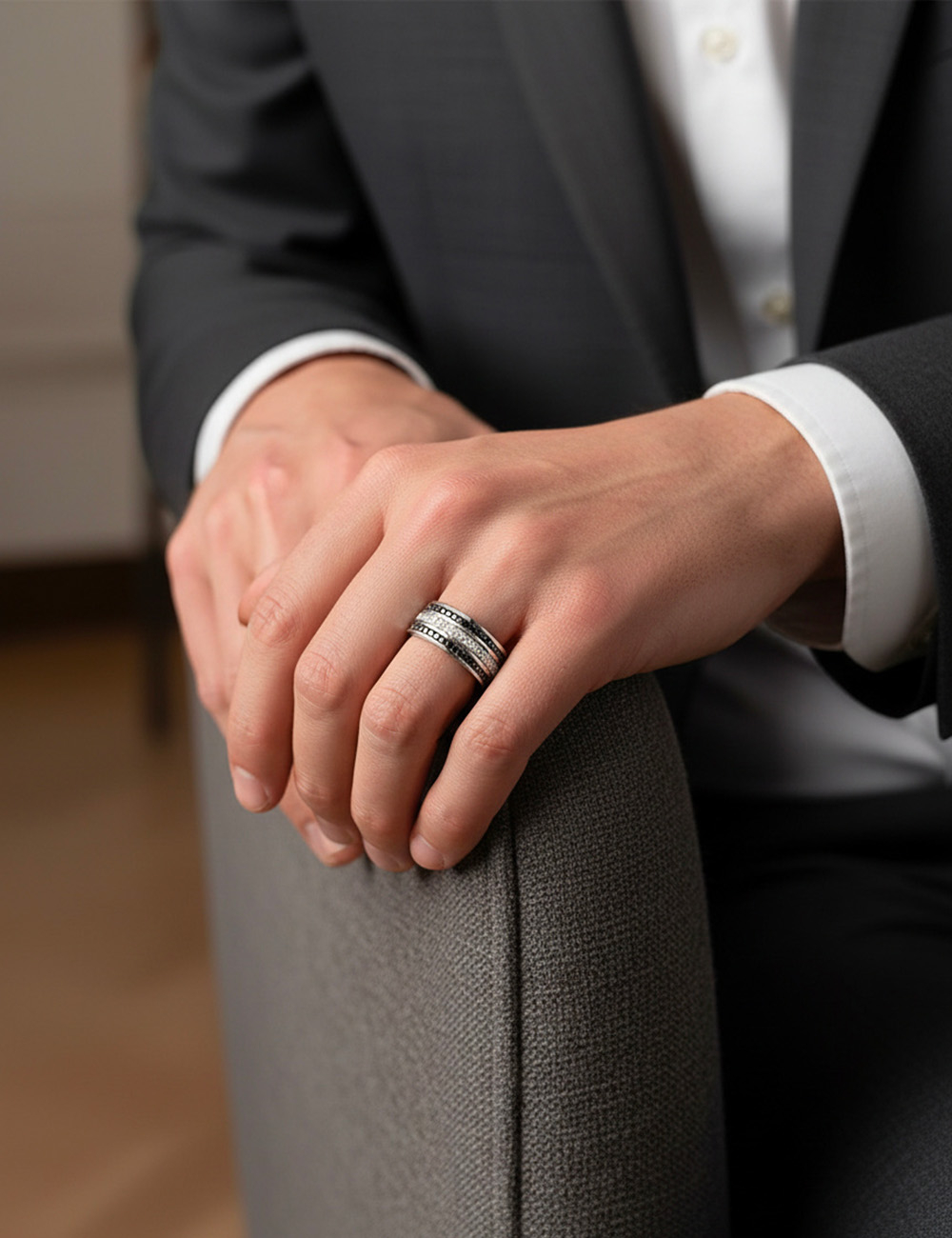
- Share the same design language: Matching wedding rings do not have to be identical. Architectural shapes, geometric lines or similar design details can create a connection between men’s and women’s wedding rings while allowing for different proportions, widths and diamond settings.
The most important consideration is to choose a wedding ring that feels right for you and that you will enjoy wearing every day, while allowing each partner to express their own style.
Choosing a men’s wedding ring: read our complete guide
|
|
|
|

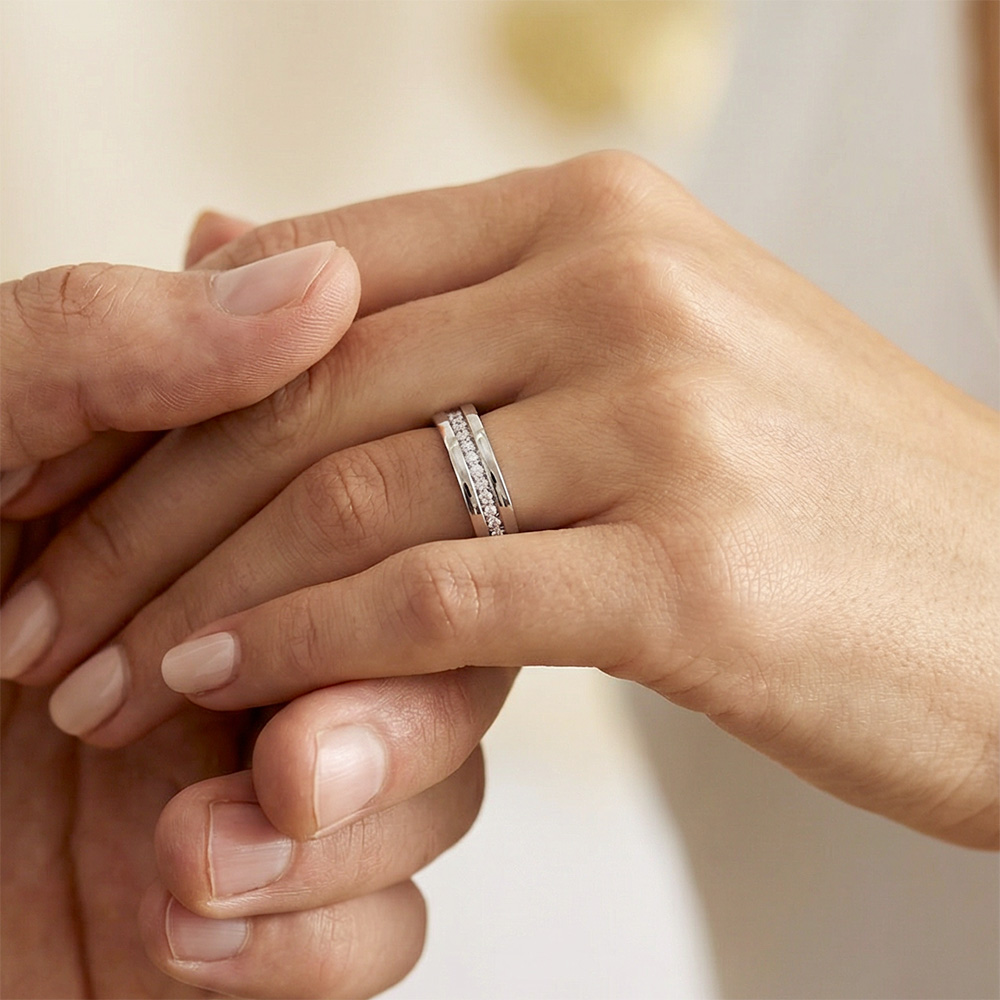
Discover our matching wedding rings
Which metal should you choose for a women’s wedding ring?
The metal you choose influences the appearance of your wedding ring, its durability and the way it will develop over time. At D.Bachet, we work with precious metals selected for both their aesthetic qualities and their suitability for jewelry designed to be worn every day.
Platinum 950: naturally white and highly durable
Platinum is particularly well suited to wedding rings because of its natural white color, density and durability.
Platinum 950 contains 95% pure platinum. Unlike white gold, it is naturally white and does not require rhodium plating to maintain its color over time.
Its high density makes it an excellent choice for a ring designed for everyday wear. Over time, platinum develops a soft, natural patina. If preferred, the ring can also be professionally polished in our workshop to restore a brighter finish.
A platinum wedding ring works equally well with a clean, minimalist design or with diamonds. Platinum is also particularly suitable for diamond-set wedding rings, providing a strong and durable setting for the stones.

Women’s platinum half-eternity wedding ring with white diamonds |
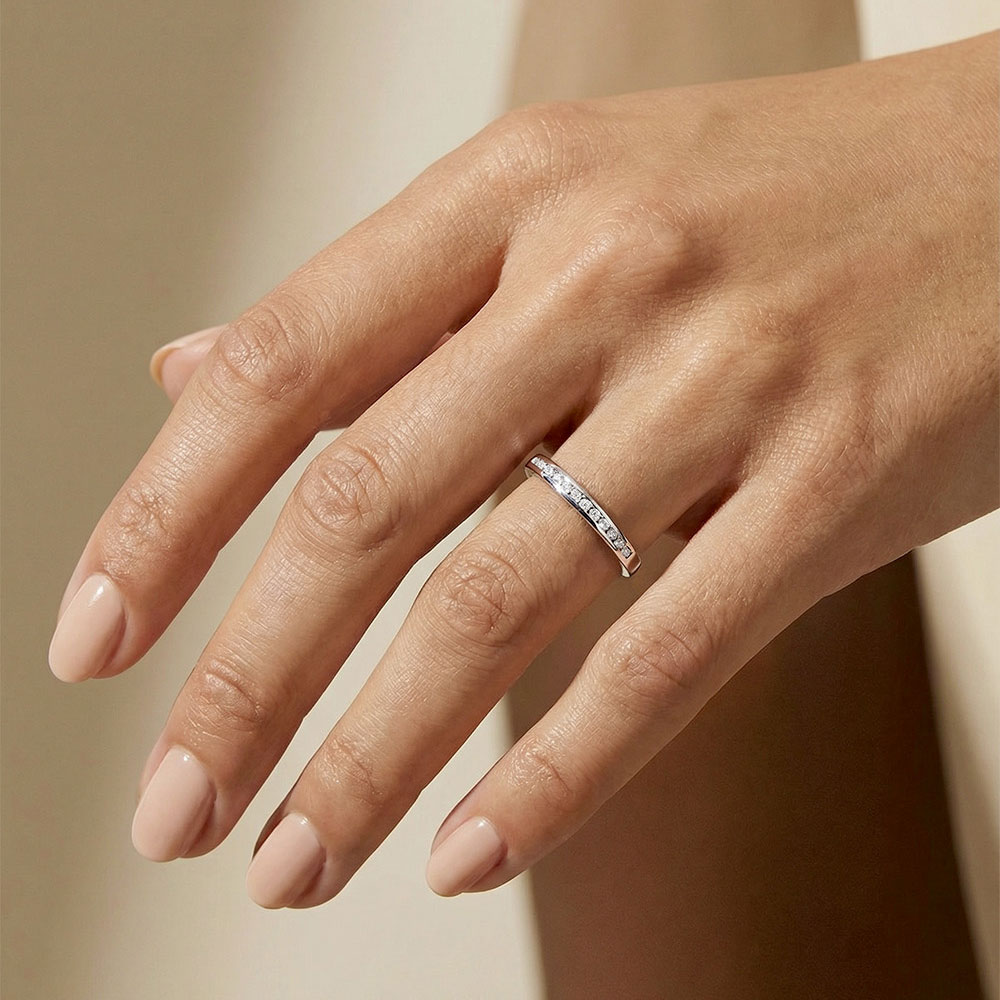
Modern platinum ring with white diamonds |
18k white gold (750/1000)
White gold is a popular choice for bridal jewelry, but the quality and composition of the alloy are important. At D.Bachet, we use 18k white gold (750/1000) containing 13% palladium. Palladium is a precious metal from the platinum family and gives our white gold a whiter, more stable color, which helps reduce the need for rhodium plating compared with more traditional white gold alloys.
While D.Bachet uses 18k white gold for many of its jewelry creations, including bracelets, pendants and earrings, we particularly favor platinum 950 for our wedding rings, signet rings and engagement rings. Its density and naturally white color make it especially suited to pieces designed for long-term wear, while creating a distinctive contrast with our signature white and black diamonds.
18k yellow gold: a classic, luminous choice
|
18k yellow gold contains 75% pure gold, combined with other metals to achieve its characteristic warm golden color. Its rich tone makes it a classic choice for a wedding ring while also lending itself to more contemporary designs. Yellow gold wedding rings can be slim and understated, geometric in design or set with diamonds for a more modern interpretation of this traditional precious metal. Yellow gold complements a wide range of skin tones and creates a beautiful contrast with both white and black diamonds. |
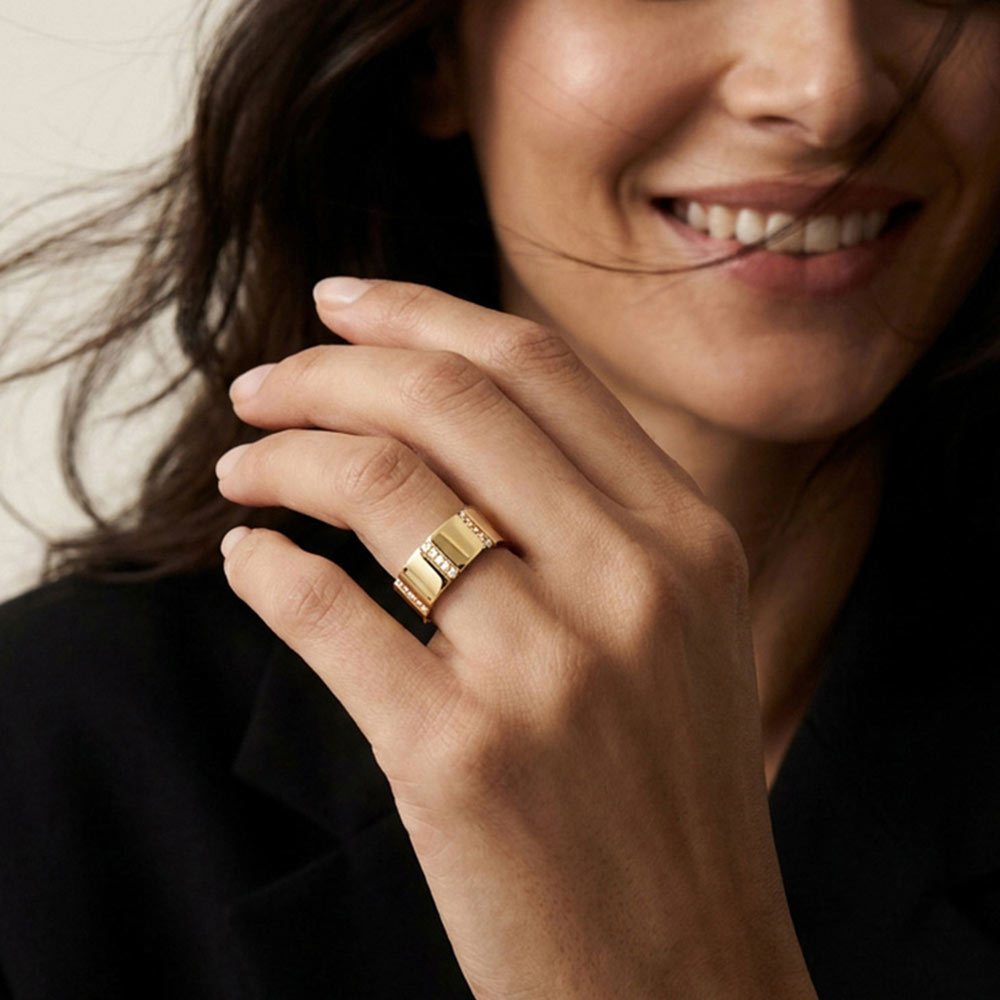
Wide women’s wedding ring in yellow gold with white diamonds |
18k rose gold: a warm and contemporary alternative
Made with 75% pure gold and a carefully balanced proportion of copper, 18k rose gold is characterized by its soft, slightly copper-toned color.
Its warm hue complements a wide range of skin tones and offers a softer alternative to yellow or white metals.
A rose gold wedding ring is a distinctive alternative to yellow or white gold. Its color is part of the alloy itself and remains stable over time. Rose gold works particularly well with minimalist designs as well as wedding rings set with white or black diamonds.
It can also be paired with a platinum engagement ring or a white gold engagement ring to create a subtle contrast between the two rings.

Women’s rose gold wedding ring with black diamonds |

Women’s rose gold wedding ring with white diamonds |
At D.Bachet, every women’s wedding ring is designed and handcrafted in our workshop in France. Our approach combines traditional jewelry-making expertise with careful attention to proportions, volumes and finishing - all essential when creating a ring designed for everyday wear.
We work exclusively with platinum 950 and 18k gold (750 fineness). Chosen for their durability and stability, these precious metals allow us to create wedding rings that are comfortable, resistant and suitable for daily wear. They also provide the ideal foundation for a wide range of designs, from clean and architectural rings to diamond-set wedding bands. Every piece is made to the same exacting standards, from the preparation of the metal through to the final finishing.
To explore these different styles and profiles, discover our collection of women’s wedding rings. Our workshop can also create a bespoke wedding ring, designed around your preferences, the way you wear your jewelry and your personal style.
Which wedding ring style is right for you?
Plain wedding rings: clean and refined
Choosing a wedding ring without diamonds puts the focus on the precious metal itself, whether platinum, yellow gold or rose gold. The shape, proportions and finish of the ring become the defining elements of the design.
A clean, understated wedding band also pairs particularly well with a more elaborate or architectural engagement ring, allowing the center stone and setting to remain the focal point. Plain wedding rings are also generally easier to maintain and resize over the years.
At D.Bachet, wedding rings without diamonds are made to order, allowing us to adapt the proportions, width and design to your engagement ring and the way you prefer to wear your jewelry.
You can contact us directly through our contact form to discuss a bespoke wedding ring.
Diamond wedding rings: brilliance and personalization
A diamond wedding ring can be set as a half-eternity band, which generally allows greater flexibility for future resizing, or as a full-eternity band for diamonds around the entire ring. Each diamond is carefully selected to create a balanced, consistent line of brilliance across the design.
Paired with an engagement ring, a diamond wedding band can bring additional light to the combination while creating a balanced relationship between the proportions and design of both rings.
Discover our collections of women’s diamond wedding rings and men’s diamond wedding rings.
Diamond settings: how the setting shapes the look of your wedding ring
The character of a diamond wedding ring depends not only on the number of diamonds, but also on how they are set. Each setting creates a different balance between light, metal and volume:
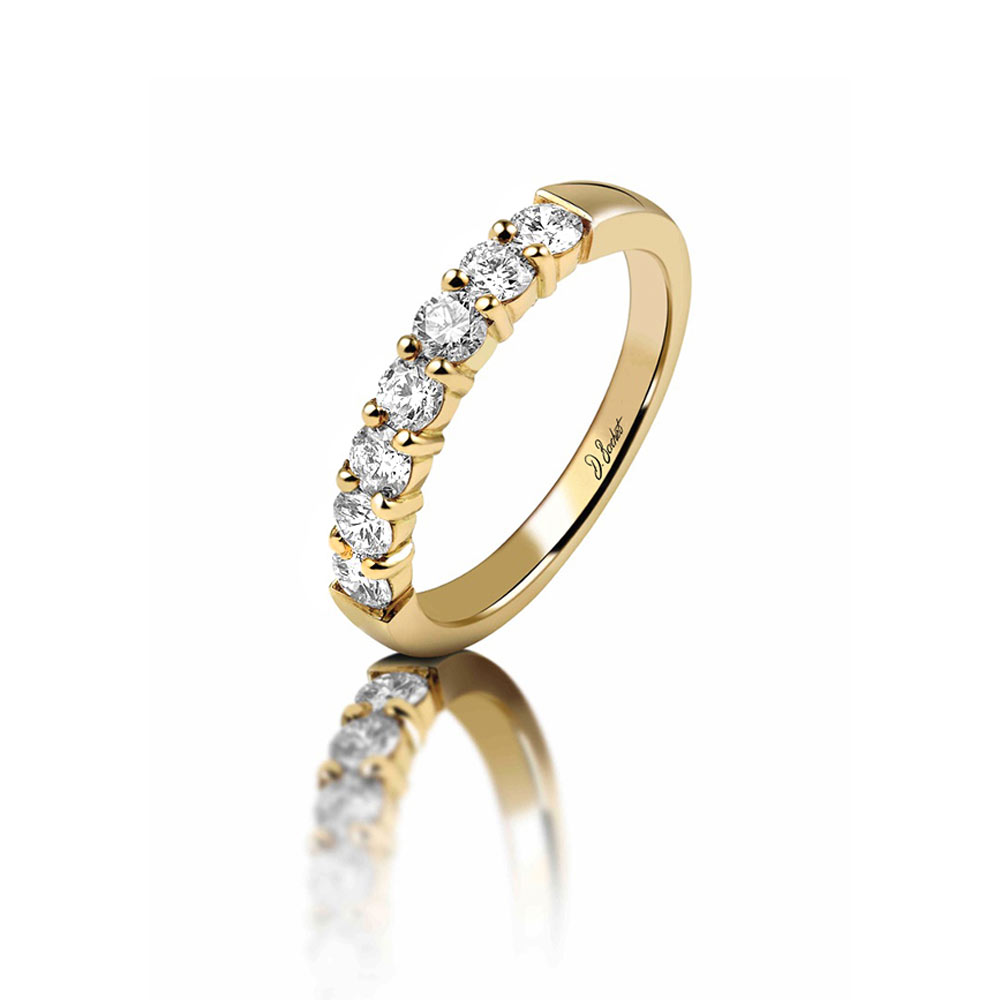
Prong-set diamond wedding rings: Fine prongs of precious metal hold each diamond in place while leaving much of the stone exposed to the light. This creates an open, delicate setting that emphasizes the brilliance of the diamonds.
Pavé diamond wedding rings (bead setting): The diamonds are set closely together and secured with tiny beads of gold or platinum. With very little visible metal between the stones, the setting creates a continuous line of diamonds across the ring.
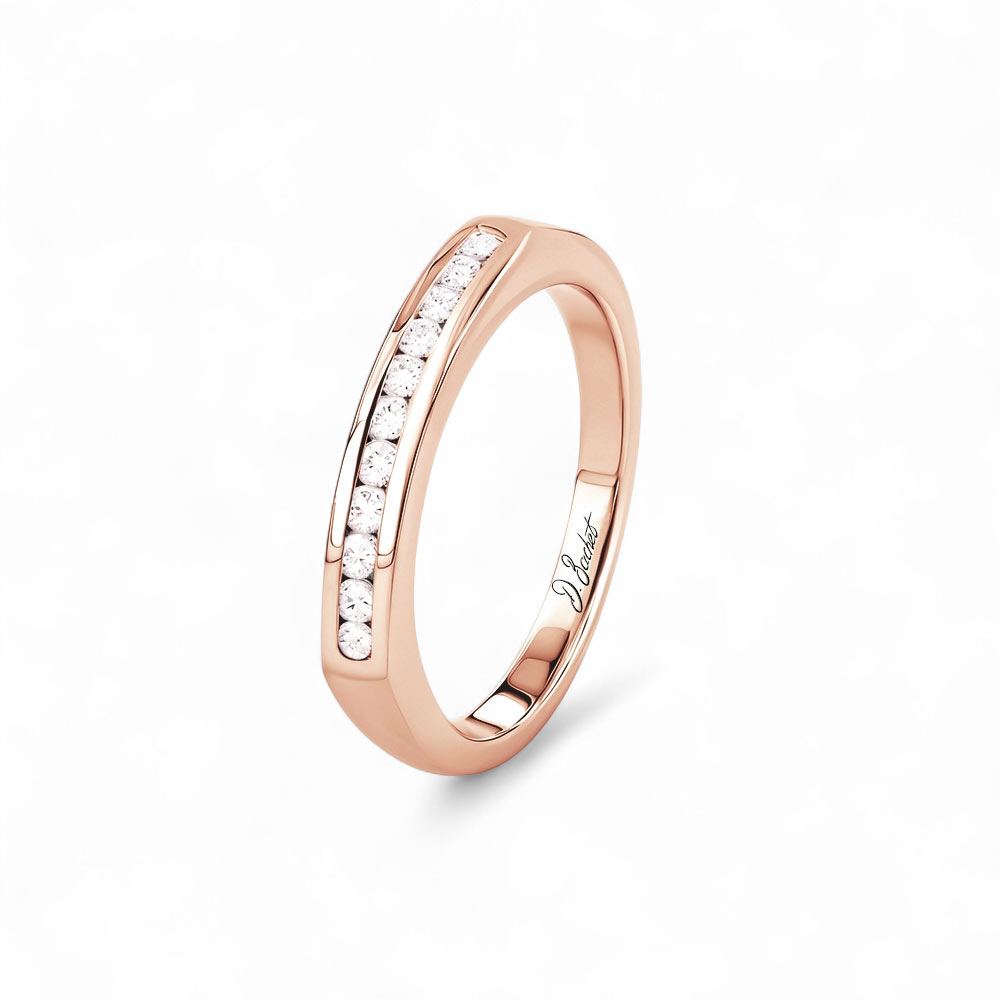
Channel-set diamond wedding rings: Particularly suited to geometric designs, the diamonds are aligned between two parallel edges of precious metal. The result is clean and contemporary, while the surrounding metal provides additional protection for the stones.
|
Prong-set diamond wedding ring |
Pavé diamond wedding ring with bead setting |
Channel-set diamond wedding ring |
Wide and modern wedding rings: a statement design
For women who want their wedding ring to have a stronger presence on the hand, a wider band offers a distinctive alternative. These contemporary designs explore proportions, geometric lines and sculpted volumes, highlighting the precious metal and creating a more architectural silhouette.
A wide women’s wedding ring combines presence with refined proportions. Worn on its own or paired with a slimmer engagement ring, it creates a contemporary look while remaining suitable for everyday wear.
Whether crafted in platinum, yellow gold or rose gold, a wide wedding band offers another way to express personal style through precise lines, proportions and volumes - key elements of contemporary jewelry design.
|
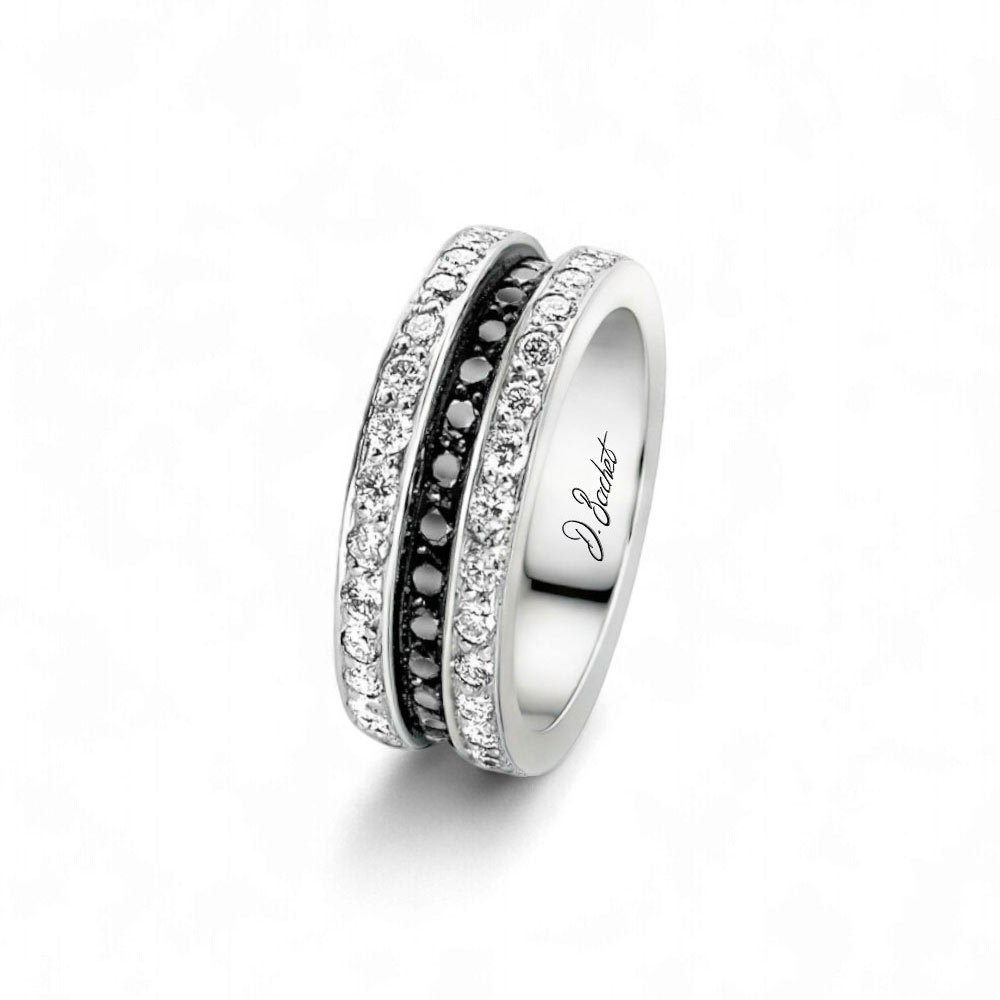
Women’s platinum wedding ring with white and black diamonds |

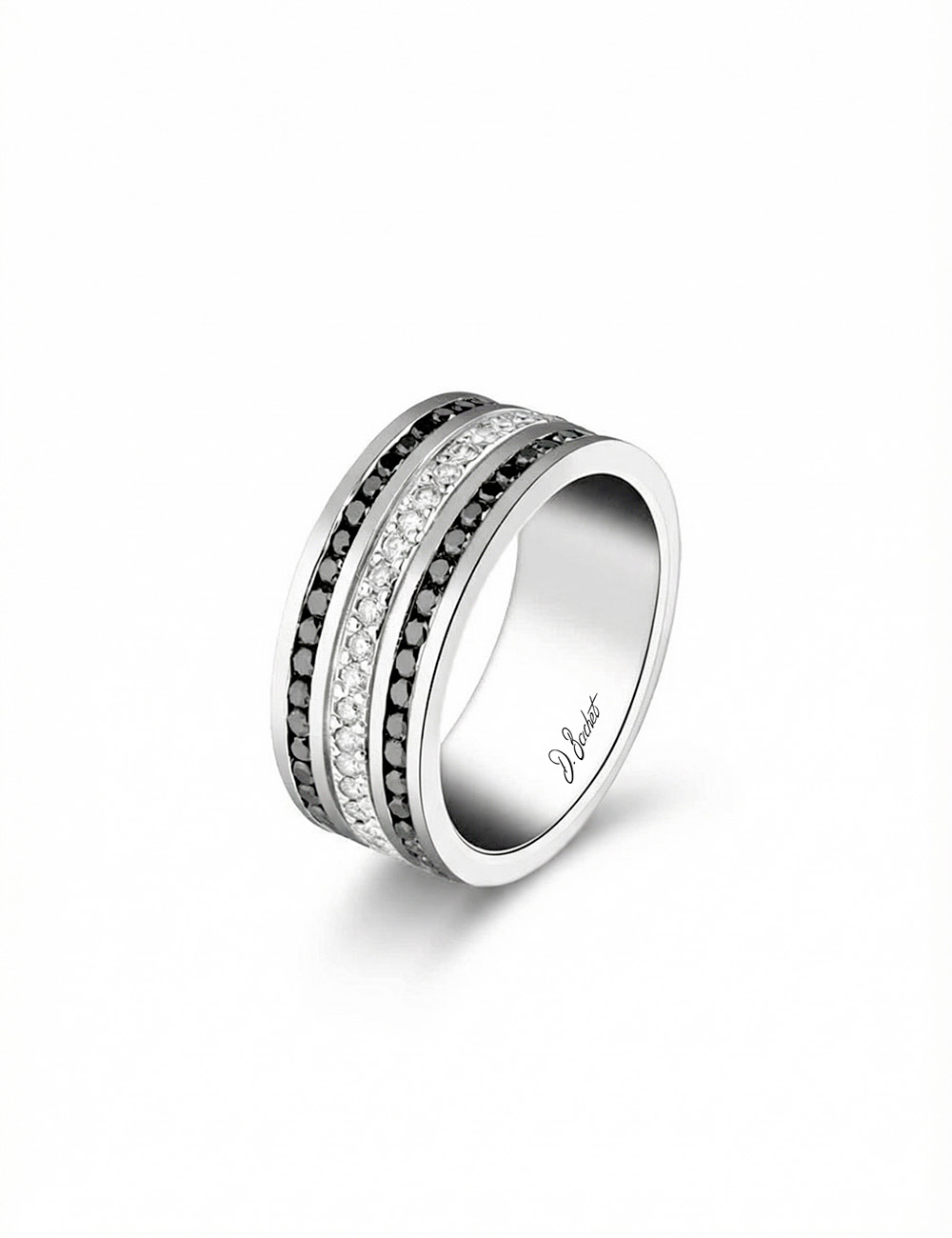
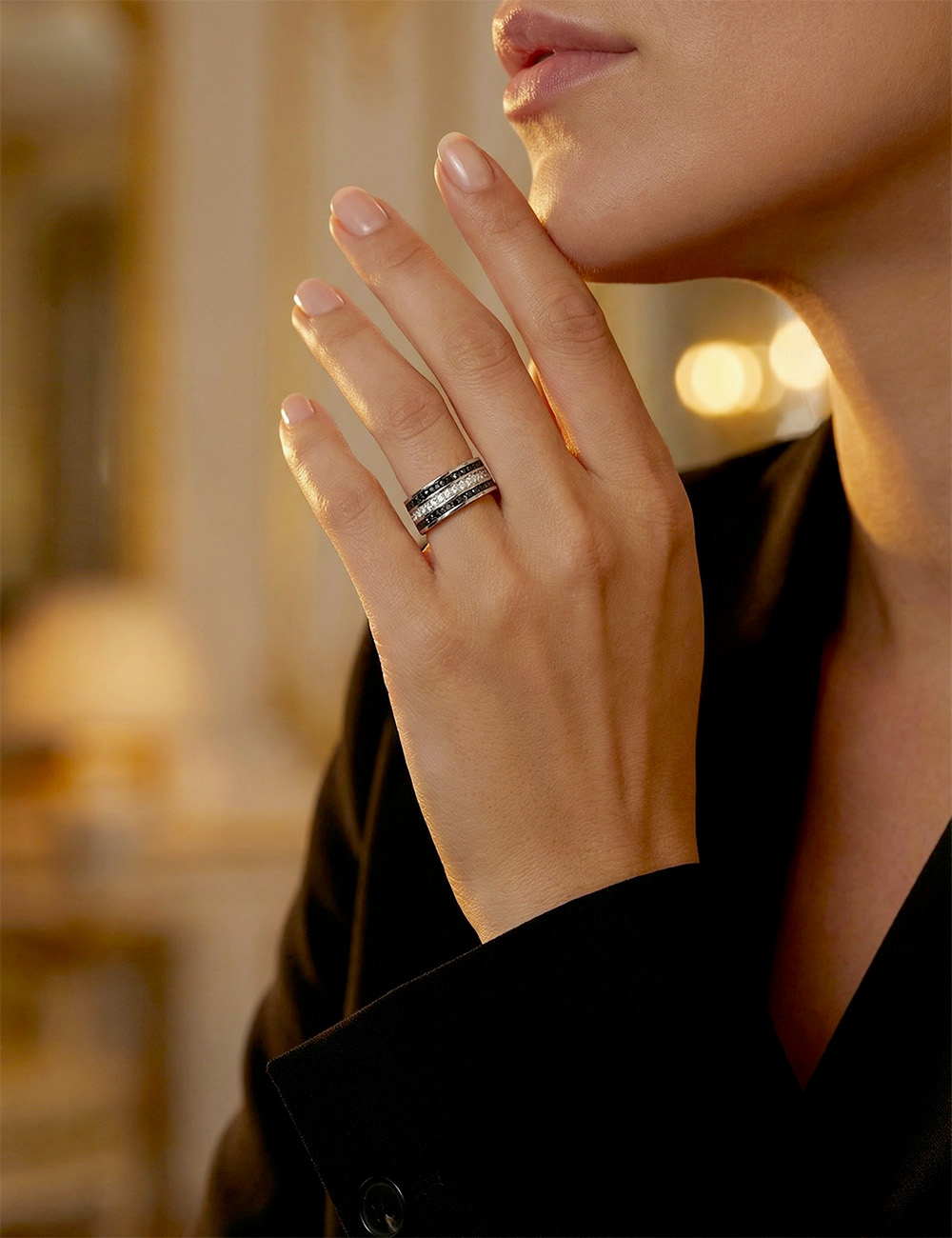
Wide women’s platinum wedding ring with white and black diamonds |

Which wedding ring shape should you choose?
The profile of a wedding ring - its cross-sectional shape - influences both how the ring looks on the hand and how it feels when worn. From rounded profiles to flatter, more geometric shapes, each design creates a different silhouette. The right choice will depend on your personal preferences, the level of comfort you are looking for and how you plan to wear your wedding ring with your engagement ring.
Classic rounded profiles
The classic court-shaped ring has a rounded exterior and interior, creating the traditional curved profile most commonly associated with a wedding band.
The D-shaped ring has a flatter interior that sits against the finger and a gently rounded outer surface. Its balanced profile makes it a versatile and comfortable option for everyday wear.
The low-domed profile offers a more subtle curve and a lower height than a traditional rounded band. Its discreet proportions make it particularly suitable for wearing alongside another ring.
The key to everyday comfort: a comfort-fit wedding ring
Because a wedding ring is worn every day, its shape should feel as considered on the inside as it looks on the outside. At D.Bachet, our rings are crafted with a gently curved interior, known as a comfort fit. This subtle internal curve allows the ring to pass more easily over the knuckle and sit comfortably on the finger throughout the day.

Women’s domed platinum wedding ring with white and black diamonds
|
A rounded wedding ring creates a smooth, fluid silhouette that highlights either the natural finish of the precious metal or the brilliance of the diamonds. Beyond comfort, a rounded profile can also help create a balanced pairing with an engagement ring: • Soften geometric lines: When worn alongside a solitaire engagement ring with strong geometric lines or an architectural setting, the curved profile of the wedding band introduces a softer contrast and helps balance the overall look. • Work with the proportions of the engagement ring: Whether your engagement ring features a classic solitaire, a halo setting or diamond pavé, the gentle curve of a rounded or low-domed wedding band can sit naturally alongside the main setting without visually overpowering it. At D.Bachet, rounded wedding rings combine a soft profile with the clean, contemporary lines that define our approach to jewelry design. |
Women’s platinum wedding ring with white diamonds |

Geometric wedding rings: an architectural approach
|
Geometric wedding rings are defined by structured lines and a distinctly contemporary aesthetic. Flat surfaces, sharper angles and precise contours highlight the precious metal and offer a modern interpretation of the traditional wedding band. From flat band profiles to more sculptural designs, geometric wedding rings explore volume, symmetry and the way light interacts with the different surfaces of the ring. This type of wedding ring also offers considerable freedom in terms of design. Whether slim or wide, set with natural white diamonds or crafted entirely in precious metal, a geometric wedding ring can be adapted to suit individual preferences. Paired with a solitaire engagement ring, a geometric wedding band can create an interesting contrast between the simplicity of the solitaire and the more structured lines of the wedding ring. The two rings remain visually distinct while working together as a balanced combination, offering a contemporary approach to wearing an engagement ring and wedding band together. D.Bachet geometric wedding rings are characterized by precise lines and carefully considered proportions. Each volume is designed to create a modern presence on the hand while remaining comfortable to wear. Crafted in platinum or 18k gold, these pieces play with light, shadow and contrasting surfaces — elements that are central to the architectural design language of our Maison. |
Wide women’s platinum wedding ring with white diamonds |

Beyond the shape and profile of the ring, the type of diamond setting also has a significant influence on its appearance and everyday wear. A prong setting secures each diamond with fine prongs of precious metal, exposing more of the stone to the light and emphasizing its brilliance. In a channel setting, the diamonds are positioned between two parallel edges of metal to create a clean, continuous line. A bead setting uses tiny beads of metal raised from the setting to secure each diamond, creating a more delicate finish, while a bezel setting surrounds the stone with precious metal, providing greater protection against everyday knocks. Each setting has its own aesthetic and influences both the style of the wedding ring and how it performs in daily wear.
Prong-set wedding rings: maximizing the brilliance of the diamonds
|
Prong-set wedding rings are designed to expose more of each diamond to the light. Fine prongs hold the stones securely while leaving their sides largely visible, allowing light to enter from multiple angles and enhancing their brilliance. This open setting creates a light, refined appearance while still giving the ring a distinctive presence on the hand. It is particularly suited to those who appreciate clean lines and diamond jewelry with minimal visible metal. The prongs are discreet but essential to the design. By reducing the amount of metal surrounding each stone, they create a lighter, more sculptural setting and allow the diamonds to become the main focus of the ring. Paired with a solitaire engagement ring or a diamond-set engagement ring, a prong-set wedding band creates a natural connection between the center stone and the diamonds of the wedding ring. The two pieces complement one another while allowing each design to retain its own character. In the D.Bachet collections, prong-set wedding rings are defined by precise proportions and carefully considered settings. Each design is developed to balance refinement, comfort and durability while allowing the diamonds to remain at the center of the composition. This approach reflects the design language of our Maison: architectural jewelry with clean lines, carefully balanced volumes and a strong focus on light. |
Women’s yellow gold wedding ring with white diamonds |

Original women’s wedding rings: choosing a more distinctive design
Choosing an original wedding ring allows you to move beyond traditional shapes and select a design that feels more personal. Sculpted volumes, subtle asymmetry, contrasts between precious metal and diamonds, and graphic lines can all give a wedding ring a more distinctive character.
This type of wedding ring is particularly suited to those who are drawn to contemporary design or want their ring to reflect something personal about their style. Rather than following a conventional shape, the design can focus on proportions, materials, diamonds or architectural details that give the piece its own identity.
Paired with a classic engagement ring, a distinctive wedding band can introduce a subtle contrast. Worn alongside a modern solitaire engagement ring, it can create a stronger contemporary combination, with the lines of each ring complementing one another.
At D.Bachet, originality comes through precise design, carefully considered volumes and the balance between light, precious metal and architectural lines. Our wedding rings offer a contemporary approach to a symbolic piece of jewelry designed to be worn every day.
|
Women’s platinum wedding ring with white and black diamonds |
Modern women’s platinum wedding ring with white diamonds |


Bespoke design offers the freedom to create a wedding ring that reflects your preferences, the way you wear your jewelry and the style you are looking for. A bespoke wedding ring can be developed around specific proportions, materials, diamonds and design details to create a piece that feels entirely personal.
At D.Bachet, the bespoke process begins with a conversation. We translate your ideas into a jewelry design, guiding you through each stage from the first sketches to the final finishing. Every detail is considered to create a wedding ring that reflects your aesthetic and the way you intend to wear it.
The choice of precious metal — platinum, yellow gold or rose gold — defines much of the ring’s appearance and presence on the hand. Gemstones offer an additional level of personalization, from the brilliance of white diamonds and the intensity of black diamonds to rubies or the different shades of sapphire.
Each bespoke wedding ring is handcrafted in our workshop in France. Whether adapting one of our existing designs or creating an entirely new piece, we combine jewelry-making expertise with careful attention to proportions, materials and finishing.
Contact us for more information
How to pair your wedding ring with your engagement ring
When choosing a wedding ring to wear with an engagement ring, consider the shape, proportions and setting of both pieces. An engagement ring with a prominent center stone often pairs well with a slim wedding band, while a more understated solitaire can be combined with a diamond-set wedding ring. The metals, profiles and overall proportions should also work comfortably together for everyday wear.
Your engagement ring and wedding ring will often be worn together, so it is important to consider them as a pair. The aim is to create a balanced combination in which the two designs complement one another while remaining comfortable on the finger.
Complementary designsYour wedding ring should work naturally with your engagement ring. Whether you wear a solitaire with a prominent center diamond or a more architectural design, the wedding band should complement its silhouette rather than compete with it. A slim wedding ring or a delicately diamond-set design, such as those in our collection of women’s diamond wedding rings, can add brilliance while keeping the overall combination balanced. The height of the engagement ring setting, the size of the center stone and the structure of the mounting can all influence how closely a wedding ring will sit beside it. These details should therefore be considered when choosing a wedding band to ensure the two rings are comfortable to wear together and visually well balanced. Balancing shapesShape plays an important role when pairing an engagement ring and wedding band. An engagement ring with geometric lines can work particularly well with a wedding ring that subtly repeats the same design language. Softer, curved engagement rings often pair naturally with rounded wedding bands, creating a smoother transition between the two pieces. |

|
 |
Choosing metals that work togetherThe choice of metal has a strong influence on the overall appearance of the two rings. Matching metals — platinum, yellow gold or rose gold — creates visual continuity. For a more contemporary look, contrasting metals can also work well, such as pairing a platinum engagement ring with a rose gold wedding band. Explore different combinations in our women’s wedding ring collection or discuss a made-to-order design with our team. Finding the right proportionsThe width and proportions of each ring also affect how they look together. A slim wedding band can emphasize a more substantial engagement ring, while a slightly wider wedding ring can give greater presence to a minimalist solitaire. The aim is to find proportions that feel balanced on your hand. |
Create a combination that feels right for you
A made-to-order wedding ring allows the proportions and design to be adjusted specifically to your engagement ring. Beyond general design principles, the right combination is the one that suits your personal style, feels comfortable and works with the way you wear your jewelry every day.
Trends can provide inspiration, but your engagement ring and wedding band should ultimately feel natural to you and suit your lifestyle. These are pieces you will wear regularly, so both aesthetics and comfort should guide your choice.
At D.Bachet, we can help you explore our collections or adapt a design to find a wedding ring that works naturally with your engagement ring.
Engraving: a personal detail inside your wedding ring
Engraving adds a discreet personal detail to a wedding ring. A date, initials or a few meaningful words can be engraved inside the band, creating a detail known only to you. Our jewelers engrave your chosen message into the precious metal as the final touch to your ring.
How to try on a wedding ring before buying
Choosing a wedding ring is not only about design. Ring size, comfort and lifestyle should all be considered before your ring is made.
Finding the right wedding ring size
During an appointment, we measure your finger using professional ring sizers. For the most reliable measurement, it is generally best to try on rings later in the day, when your fingers are closer to their usual size. Hot weather and physical activity can temporarily cause your fingers to swell and may affect the measurement. If you are unable to visit us in person, we can also send you a ring sizer so that your finger can be measured before your wedding ring is made.
Bring your engagement ring into the process
If you plan to wear your wedding ring and engagement ring together on the same finger, let us know from the beginning of the project. This allows us to consider the lines, proportions and metals of both rings and ensure they work well together.
Choose the right proportions
The width and profile of a wedding ring have a direct impact on how it feels on the finger. During your appointment, we can help you compare different proportions and determine which dimensions best suit your hand and preferences.
Consider your lifestyle
Your work, hobbies and daily activities can influence which wedding ring is most suitable. If your routine involves frequent manual work or certain sports, a plain metal band or a more protective diamond setting may be preferable. A full-eternity diamond ring or a more open setting may require additional care. Discussing how you intend to wear your ring helps us recommend a design that works with your everyday life while protecting the precious metal and diamonds over time.
Which finger should you wear your wedding ring on?
In many countries, the wedding ring is traditionally worn on the ring finger of the left hand. An ancient belief associated this finger with the “Vena Amoris,” or vein of love, which was thought to connect directly to the heart. In other countries and cultures, wedding rings are traditionally worn on the right hand instead.
Today, which hand you choose is largely a matter of culture, personal preference and comfort.
You can wear your wedding ring on its own or together with your engagement ring. If you choose to wear both on the same finger, there is no universal rule about their order. Some people wear the wedding band first, closer to the hand, while others prefer to place the engagement ring first.
The most important consideration is to choose the arrangement that feels comfortable and best showcases your rings.
When should you buy your wedding ring?
Give yourself enough time to choose your wedding rings without rushing the process. Ideally, begin looking around three to four months before your wedding, and earlier if you are considering a bespoke wedding ring. This allows time for production and any adjustments that may be required before the wedding.
Even if you already have a clear idea of what you want, choosing the design, precious metal, proportions and diamonds can take time. Because a wedding ring is designed for everyday wear, it is worth considering not only its appearance but also how it feels on your hand and how well it suits your lifestyle.
Whether you choose your wedding ring online or during an appointment in Paris, Lyon or Nîmes, we can guide you through each stage of the process. You can contact us for more information or discover our women’s wedding rings and personalization options.
D.Bachet wedding rings combine contemporary design with traditional jewelry-making expertise. Available in different proportions, precious metals and diamond combinations, each design is created to sit naturally and comfortably on the hand.
Every wedding ring is handcrafted in our workshop in France. Whether you choose a bespoke design or an adaptation of one of our existing creations, each piece is made with the same attention to design, materials and finishing.
You can also discover our guide to choosing a men’s wedding ring, with advice on finding a design suited to your style and the way you wear your jewelry.
How to care for your wedding ring
A wedding ring is designed for everyday wear, but certain activities can expose the metal and diamonds to knocks, scratches or premature wear. We recommend removing your ring for DIY, gardening, heavy manual work and household tasks that could damage the precious metal or diamond settings.
For regular cleaning at home, use lukewarm water, a few drops of mild dish soap and a soft toothbrush to gently remove residue that can accumulate around the diamonds and setting.
We also recommend having the diamond settings and overall condition of your wedding ring checked periodically in our workshop. Regular inspection helps ensure that the stones remain secure and that the ring can continue to be worn safely over time.
Need advice choosing your wedding ring? Book an appointment with D.Bachet